Category: Travel Blog

Tezels on the Road is our family’s travel journal—capturing the adventures, mishaps, and magic of life on the move. From scenic drives and national parks to hidden gems and roadside surprises, we share stories, tips, and snapshots from the journey.

  • Pullman National Historical Park

    Ranger PamPaw’s Guide To

    Pullman National Historical Park

    Chicago, Illinois  ·  America’s First Planned Industrial Community

    ▶  A Note from Ranger PamPaw

    I’ll be honest — I wasn’t sure what to expect from a national park sitting squarely inside one of America’s great cities. But Pullman stopped me in my tracks. Stand on the corner of 111th and Cottage Grove and the whole story presses in on you at once: the brick rowhouses still occupied, the clock tower freshly restored, and the weight of three overlapping American dramas — industrial ambition, labor uprising, and a civil rights movement born from railroad cars. This isn’t history under glass. It lives in the neighborhood around you. Don’t rush it.

    ▶  Quick Facts

    DesignationNational Historical Park (redesignated 2022; originally National Monument 2015)
    Location610 E. 111th Street, Chicago, IL 60628 (Pullman community area, Far South Side)
    EstablishedFebruary 19, 2015 (as National Monument); redesignated National Historical Park, December 2022
    SignificanceAmerica’s first planned industrial company town; site of the landmark 1894 Pullman Strike; birthplace of the Brotherhood of Sleeping Car Porters
    Visitor Center HoursTuesday–Sunday, 11 AM–3 PM (or by appointment); closed Mondays
    AdmissionFree (NPS Visitor Center); Historic Pullman Foundation museum: free, donations welcome
    Getting ThereBy car: exit I-94 at 111th St. (#66A); by Metra Electric: 111th St.–Pullman station (express ~20 min from Millennium Park)
    Suggested Visit Length2–3 hours minimum; half day recommended to explore all three sites
    Park PartnersNPS · State of Illinois (Pullman State Historic Site) · City of Chicago · Historic Pullman Foundation · A. Philip Randolph Pullman Porter Museum
    Annual Passport StampAvailable at the NPS Visitor Center

    ▶  The Vision: George Pullman’s Model Town

    Building a Utopia — on Someone Else’s Terms

    George Pullman was already a wealthy man by the time he turned his ambitions to urban planning. Having made his first fortune raising Chicago’s buildings above their flooded foundations in the 1850s, he went on to build the Pullman Palace Car Company in 1867, transforming long-distance rail travel with luxury sleeping cars staffed by a workforce of formerly enslaved men. By 1880, with demand for his cars soaring and labor unrest simmering across the city, Pullman purchased 4,000 acres of land south of Chicago between the Illinois Central Railroad line and Lake Calumet — and set out to build the ideal industrial community from scratch.

    He commissioned architect Solon Spencer Beman and landscape designer Nathaniel Franklin Barrett to design every element: over 1,300 housing units built primarily as red brick rowhouses with indoor plumbing, a library, a church, an arcade of shops, a market hall, a school, and the showpiece Hotel Florence — named for his daughter — opened in 1881. Construction began in early 1880 and the first factory buildings were essentially complete by fall of that same year. By 1883, more than 8,000 people called Pullman home. Advertised as a model of worker welfare and civic design, the town drew national and international attention, becoming a celebrated attraction at the 1893 World’s Columbian Exposition in Chicago.

    The architecture was deliberately ornate for an industrial site. The Administration and Factory Complex — designed for efficient linear manufacturing in what was an early precursor to the assembly line — faced the Illinois Central tracks with a handsome Queen Anne and Romanesque facade mirrored in an artificial cooling reservoir called Lake Vista. What passengers on passing trains saw was not a smoky factory but something approaching a civic monument. That was entirely the point. But beneath the gleaming design, the terms were Pullman’s alone: rents were set to return a six percent profit, deducted automatically from paychecks, and no resident could own their home. The town was a controlled environment as much as a model one.

    ▶  The Strike of 1894: When a Nation Walked Off the Job

    Wages Cut, Rents Unchanged — and the Country Stopped

    The Panic of 1893 devastated the railroad industry. Orders for sleeping cars collapsed, and Pullman responded by slashing worker wages — in some cases by as much as a third — while leaving the rents on company housing entirely unchanged. Since rent was automatically deducted from paychecks, many workers were left with almost nothing to live on. Corporate dividends, meanwhile, remained untouched. On May 11, 1894, Pullman employees walked out. The company, having built up financial reserves to weather a short work stoppage, simply waited.

    What no one anticipated was the response of the American Railway Union, led by Eugene V. Debs. The ARU — whose 150,000 members included many Pullman workers — launched a nationwide boycott, refusing to handle any train carrying Pullman cars. Since Pullman cars ran on virtually every major railroad in the country, the boycott crippled rail traffic from Chicago to the coasts. The federal government, arguing that stalled mail cars violated the Sherman Antitrust Act, dispatched thousands of U.S. Marshals and Army troops to Chicago. Violence broke out. Dozens were killed or injured. After Debs and other ARU leaders were jailed, the strike and boycott collapsed. Most workers never got their jobs back on the original terms.

    The legal and political aftermath reverberated for decades. The Supreme Court upheld the government’s intervention in In re Debs (1895), affirming federal authority to crush strikes threatening interstate commerce. But the scale of the walkout also forced a reckoning: President Grover Cleveland, eager to repair his image with labor, signed legislation making Labor Day a federal holiday just days after ordering troops into Chicago. George Pullman died in 1897, ordering his grave encased in concrete and steel — reportedly fearing desecration by former workers. The Illinois Supreme Court forced the Pullman Company to sell its non-industrial holdings in 1898.

    ▶  The Porters and the Civil Rights Movement

    A. Philip Randolph and the Brotherhood That Changed America

    While African Americans had been explicitly barred from living in the Pullman district during the company town era, they had long formed the backbone of Pullman’s most visible workforce: the sleeping car porters. By the 1920s, porters made up 44 percent of the entire Pullman workforce, making the Pullman Company the single largest employer of African Americans in the United States. The work offered steady income and a degree of mobility unavailable in most other industries, but it also came with long hours, demanding service expectations, chronic disrespect, and wages set unilaterally by the company.

    In 1925, A. Philip Randolph — a New York labor organizer and editor of the socialist magazine The Messenger — founded the Brotherhood of Sleeping Car Porters in New York City. It was the first major labor union organized and led by African Americans. Organizing took twelve years of sustained effort against a company with enormous resources and a workforce that feared retaliation. But in 1937, the Brotherhood reached a landmark agreement with the Pullman Company: the first major labor contract ever negotiated between a corporation and an African American union. The NAACP recognized it as a watershed moment for the economic standing and dignity of Black workers across the country.

    The significance of the porters and the Brotherhood extends far beyond the railroad. Pullman porters carried Black newspapers — most famously the Chicago Defender — into the Jim Crow South, seeding the Great Migration. They built a Black middle class. Their children and grandchildren became lawyers, doctors, and civil rights leaders. Randolph himself went on to organize the 1963 March on Washington, at which Martin Luther King Jr. delivered his “I Have a Dream” speech. The story of the porters is not a footnote to the civil rights movement — it is one of the movement’s foundation stones.

    Why Pullman Matters

    Pullman National Historical Park preserves the convergence of three of America’s most consequential stories: the rise of industrial capitalism and the company town experiment, the labor movement’s hardest-fought battles for worker dignity, and the long arc of African American civil rights. No other national park site holds all three threads in the same square mile. It is also — still — a living neighborhood, which means the stakes of preservation here are immediate and human in a way that feels different from a battlefield or a wilderness area.

    ▶  Touring the Park: Three Experiences in One Visit

    Start at the Clock Tower

    Begin your visit at the NPS Visitor Center inside the beautifully restored Pullman Administration Clock Tower Building at 610 E. 111th Street. The building itself — the iconic landmark that survived the 1998 arson that destroyed much of the adjacent factory — opened as a visitor center on Labor Day 2021 after years of environmental cleanup and structural restoration. Inside, audio and visual exhibits walk you through the layered history of the district: the company town, the strike, and the porters’ civil rights story. Rangers are on hand, the gift shop carries Pullman-specific memorabilia, and this is where you’ll find your passport stamp. Plan at least 45 minutes here before venturing out.

    Walk the Historic District

    Step outside and you are immediately inside the historic district itself — a still-inhabited neighborhood of late 19th-century red brick rowhouses stretching between East 103rd and East 115th Streets. Many of these homes have been lovingly maintained and restored by residents over the past five decades, since the Pullman Civic Organization mobilized in the 1960s to prevent demolition. A self-guided walking tour takes you past workers’ cottages, supervisors’ homes (notably larger), the former market hall, and the Greenstone Church — the only church Pullman built for workers, its distinctive green serpentine stone imported from Pennsylvania. Hotel Florence, at the northeast corner of the district, recently completed extensive rehabilitation of its first floor and is worth a stop to see the original Victorian-era dining room.

    The A. Philip Randolph Pullman Porter Museum

    Located at 10406 S. Maryland Avenue, the A. Philip Randolph Pullman Porter Museum is the third anchor of the Pullman experience and arguably its most moving. Operated by the Historic Pullman Foundation, it tells the story of the Brotherhood of Sleeping Car Porters, the porters’ working lives, and A. Philip Randolph’s extraordinary career as an organizer, orator, and civil rights strategist. Exhibits include porter uniforms, tools of the trade, oral histories, and materials documenting the long campaign to win the 1937 contract. The museum is free to enter; a donation supports ongoing preservation work. Confirm hours in advance — the museum operates by request and appointment.

    ▶  Know Before You Go

    This is a multi-partner site. The NPS, the State of Illinois, the City of Chicago, and the Historic Pullman Foundation all operate pieces of the district. Which organization runs which tour and which building depends on where you are standing. Check ahead for each attraction’s current hours, especially for guided tours of the factory complex and Hotel Florence.

    The NPS Visitor Center is open Tuesday–Sunday, 11 AM–3 PM. It is closed on Mondays. If you are making a special trip, call ahead or check the NPS website for any seasonal or operational changes before you drive down.

    Consider taking the Metra. The Metra Electric line stops at 111th Street–Pullman station, just steps from the visitor center, with express trains running approximately 20 minutes from Millennium Station in the Loop. Arriving by train to a site where the railroad is the whole story adds a layer that a parking lot simply cannot.

    Wear comfortable shoes. Fully exploring the district — visitor center, Hotel Florence, the Randolph Museum, and the residential streets — involves a mile or more of walking. The neighborhood is flat, but the experience rewards a slow pace.

    Preservation is ongoing. Sections of the factory complex and the Hotel Florence annex remain under rehabilitation. New acquisitions are in progress. The park is actively growing — what you see today may be expanded the next time you visit.

    ▶  Park Map

    ▶  First Encounters: Watch Our Video Episode

    Join us for our First Encounters episode at Pullman National Historical Park — walking the streets of the historic district, exploring the restored clock tower, and reflecting on the stories that shaped American labor and civil rights.

    ▶  Further Exploration

    Dig deeper into the history of Pullman with these resources:

    • NPS Pullman National Historical Park — Official park site with hours, alerts, and programming updates.
    • Historic Pullman Foundation — Tour information, museum access, and preservation news.
    • A. Philip Randolph Pullman Porter Museum — The story of the Brotherhood of Sleeping Car Porters.
    • Recommended Reading: Pullman: An Experiment in Industrial Order and Community Planning by Stanley Buder — the definitive scholarly history of the company town.
    • Recommended Reading: The Brotherhood of Sleeping Car Porters by Jervis Anderson — a thorough account of Randolph’s organizing campaign and its civil rights legacy.
    • NPS America the Beautiful Pass — Admission to Pullman NHP is free, but the pass covers entrance fees at hundreds of other federal lands. Learn more here.

    Listen to The Ranger PamPaw Podcast

    Stories, perspective, and park wisdom from a lifetime in the National Parks. New episodes wherever you listen.

  • Indiana Dunes & a Chicago Night Out

    Day 7 | Wednesday, April 15 | Indiana Dunes National Park, Deep Dish & the Adler Planetarium

    An overcast day, a national park adventure, Chicago Dogs, deep dish pizza, and a night under the stars. Day 7 had everything.


    The weather wasn’t exactly cooperating as we picked up our rental car from National Car Rental and headed east toward Indiana Dunes National Park. But a few clouds were not going to stop us — and as it turned out, we had a secret weapon waiting for us at the park: a friend who works there and was kind enough to show us around.

    He met us at West Beach and pointed us straight to the Dune Succession Trail — and what a recommendation it was. The trail takes you up and over the dunes, through a hauntingly beautiful grove of Jack Pines, and down to the beach on the shores of Lake Michigan. The Jack Pines are one of those unexpected highlights — gnarled, resilient trees that thrive in the harsh sandy environment, giving the landscape an almost otherworldly feel.

    At the beach, the overcast skies dampened the view across Lake Michigan toward Chicago — but even on a grey day, standing on that shore with the dunes at your back and the vast lake stretching out in front of you is genuinely impressive. The dunes themselves are enormous, and the scale of the place surprises you.

    From West Beach we made our way to the Bally Homestead, one of the historic structures within the park — unfortunately closed for restoration, but still worth a look from the outside. Next up was the Dunes Learning Center, a great stop for understanding the ecology and history of this remarkable landscape.

    By this point we had worked up an appetite, and lunch did not disappoint. We drove into Chesterton for Chicago Dogs at The Original George’s Gyros Spot. If you’re in the area and you haven’t stopped here — fix that immediately. Classic, delicious, and exactly what you want after a morning on the dunes.

    Fueled up and ready for more, we headed to the Century of Progress Architectural District — one of the more unusual corners of Indiana Dunes. This quirky collection of homes was originally built for the 1933 Chicago World’s Fair and later relocated to the lakeshore. It’s a fascinating little time capsule of modernist design hiding in plain sight among the dunes.

    We wrapped up the park with a stop at the Indiana Dunes Visitor Center and a peaceful hike on the Great Marsh Trail — a nice contrast to the dune climbing earlier, winding through wetlands teeming with bird life and spring color.

    Back in Chicago for the evening, we kicked things off the right way: deep dish pizza at Lou Malnati’s Pizzeria. If you visit Chicago and leave without eating at Lou Malnati’s, did you even go to Chicago? Rich, buttery crust, chunky tomato sauce on top, and enough cheese to make you question all your life choices — in the best possible way. Worth every bite.

    We capped the evening at the Adler Planetarium, spending a Wednesday night exploring the universe. The Adler sits right on the Museum Campus peninsula jutting into Lake Michigan, and the views of the Chicago skyline from outside are spectacular. Inside, the shows and exhibits did not disappoint. There’s something wonderfully humbling about ending a full day of earthly adventures by contemplating the cosmos. 🌌

    One more day to go. Tomorrow we visit the Shedd Aquarium before pointing the car south toward home in San Antonio. It’s hard to believe this trip is almost over.


    Next up: Day 8 — Shedd Aquarium and the road home to San Antonio. Stay tuned!

  • Chicago 2026 — Day 6: The Chicago Riverwalk

    Tuesday, April 14 | The Chicago Riverwalk

    A slow morning, a riverside stroll, and a quiet evening before the next adventure.


    After the whirlwind of the Gala the night before, Day 6 called for something a little more relaxed. I was happy to oblige with a lazy morning — coffee, no agenda, just enjoying the view from our 20th floor corner room. Alicia even had a later start. Sometimes the best travel days start slowly.

    By afternoon, Alicia finally had a break from the conference, and we made the most of it. We headed out together to walk the Chicago Riverwalk — and what a perfect way to spend an afternoon. The Riverwalk stretches along the south bank of the Chicago River through the heart of the city, and it’s one of those places that reminds you why Chicago is considered one of the great architectural cities of the world.

    We strolled at a leisurely pace, taking in the canyon of buildings rising on either side of the river — a stunning mix of historic and contemporary architecture that you simply can’t appreciate the same way from street level. Bridges, towers, reflections on the water — it was a feast for the eyes at every turn. After days of Mark exploring solo, it was especially nice to share this one together.

    The evening was quiet and intentional. With tomorrow marking the end of our Chicago stay and the beginning of the next leg of the trip — Indiana Dunes National Park — we kept things low-key, packed up, and got ready to move on. Eight nights at the Hilton Chicago have been wonderful, but the road (and the dunes) are calling.

    Chicago, you’ve been incredible. 🏙️


    Next up: Day 7 — Indiana Dunes National Park. Stay tuned!

  • Chicago 2026 — Day 5: Millennium Park, Grant Park & the Gala

    Monday, April 13 | Millennium Park, Grant Park & the Gala

    A perfect spring day along Michigan Avenue, and a glamorous evening to cap it all off.


    With Alicia back in conference sessions, I headed out to spend the day exploring two of Chicago’s most iconic green spaces right along Michigan Avenue: Millennium Park and Grant Park. I couldn’t have asked for a better day for it — the spring weather was doing its thing, flowers were blooming, and the trees were just beginning to bud. Chicago in April can be unpredictable, but today it was showing off.

    First stop, of course: Cloud Gate — the Bean. I know, I know — Alicia and I had already made the pilgrimage on Saturday morning. But honestly, it deserved a second visit. There’s something irresistible about that giant mirror-polished ellipse. I dare anyone to walk past it without stopping. The spring light hitting the skyline reflection was even more stunning than the first time.

    From there I made my way over to Crown Fountain, one of those public art installations that’s hard to describe but impossible to ignore. Two 50-foot glass block towers flank a shallow reflecting pool, each displaying a rotating cast of Chicago residents’ faces. There’s something quietly captivating about watching the faces change — a reminder that this city is made of people, thousands of them, all with their own stories. I spent more time there than I expected.

    The gardens throughout Millennium Park were absolutely beautiful — bursts of spring color everywhere, and the trees showing the first fresh green of the season. It’s the kind of scenery that makes you slow down and just take it in.

    I then crossed over into Grant Park, which stretches right across Michigan Avenue from the Hilton Chicago — practically our front yard for the week. The flowers here were equally gorgeous. I wandered over to the John A. Logan Monument, a dramatic equestrian statue honoring the Union Civil War general and Illinois senator. It’s an impressive piece of sculpture, and it commands the park beautifully.

    One of the unexpected highlights of the afternoon was simply paying attention to the architectural details of the park’s bridges. Chicago is famously a city of architecture, and even the park infrastructure reflects that — ornate stonework, decorative ironwork, and elegant design details that most people walk right past. I made a point not to.

    And then — the evening. After a day on my feet, it was time to clean up and join Alicia for the Urgent Care Foundation Gala, held in the Hilton Chicago’s Grand Ballroom. I’ll be honest: I was not prepared for how spectacular that room is. Soaring ceilings, crystal chandeliers, ornate details at every turn — it’s the kind of ballroom that makes any event feel like a genuinely special occasion. The gala was a wonderful evening celebrating the work of the Urgent Care Foundation, and it was a perfect way to cap one of the best days of the trip.

    Parks by day, Grand Ballroom by night. Not a bad Monday in Chicago. 🌷✨


    Next up: Day 6 — More Chicago adventures ahead. Stay tuned!

  • Science and Conservation Trail

    Where the Only Tropical Rainforest in the U.S. Meets the Work of Puerto Rican Artists

    The Science and Conservation Trail at El Yunque National Forest is a short loop — about half a mile — that manages to deliver two entirely different kinds of experiences. A paved spur from the El Portal del El Yunque visitor center leads into the forest with interpretive signs explaining the ecology and ongoing recovery of the only tropical rainforest in the United States National Forest System. The loop itself adds a second dimension: works by Puerto Rican artists set directly into the forest — Brota el agua by Lena Galíndez, De Río a Río by Edra Soto, and La Madre de Yocahú by Daniel Lind-Ramos. It is a walk where science and art share the same canopy, and both are made richer for it.

    Trail Facts

    • Distance: ~0.5 miles (loop)
    • Elevation Gain: Minimal — gentle grade throughout
    • Difficulty: Easy
    • Trail Type: Loop (paved path)
    • Typical Hiking Time: 20–30 minutes
    • Trailhead: El Portal del El Yunque Visitor Center, off PR-191, Río Grande, Puerto Rico
    • Accessibility: Paved surface throughout; accessible for most visitors
    • Pets: Allowed on leash
    • Entry Fee: Day-use vehicle fee required for entry to El Yunque National Forest

    The Science and Conservation Trail is one of several walking paths accessible from the El Portal visitor center area. Its combination of interpretive science content and public art installations makes it unlike any other trail in the National Forest System — and the rainforest setting makes it unlike anything else in the continental United States.

    Getting to the Trailhead

    The trail begins at El Portal del El Yunque, the main visitor center for El Yunque National Forest. El Portal is located along Puerto Rico Highway 191 (PR-191) near the northern entrance to the forest, just outside the town of Río Grande on Puerto Rico’s northeastern coast. From San Juan, the drive takes approximately 45 minutes. El Portal is the recommended first stop — the center provides maps, orientation, and context for the forest before you head into the canopy.

    El Yunque National Forest is located in the Sierra de Luquillo mountains in the northeastern corner of Puerto Rico, roughly 25 miles east of San Juan. The forest is the only tropical rainforest in the United States National Forest System, and El Portal sits at its edge — the gateway between the island’s coastal communities and one of the most biodiverse places in the country.

    Hiking the Trail

    From El Portal, a short paved spur path leads from the visitor center directly into the forest. This opening section is where the trail’s interpretive content lives — signs along the spur explain El Yunque’s ecology, the ongoing research being conducted in the forest, and the remarkable recovery underway since Hurricane Maria struck the island in September 2017. The spur is accessible, unhurried, and sets the scientific frame for everything that follows.

    The loop itself begins where the spur enters the forest proper. Here the character of the walk shifts. The canopy closes in — sierra palms, tabonuco trees, and towering tree ferns rise on either side, draped in bromeliads and mosses. The air is heavy and cool, carrying the particular quality of a place that receives over 100 inches of rain per year in its upper elevations. And woven into this setting, at intervals along the loop, are works by Puerto Rican artists — installations placed directly in the forest, responding to this place and to the island’s history and culture. Brota el agua by Lena Galíndez meets you on the north segment, deep in the canopy. De Río a Río by Edra Soto anchors the westernmost point of the loop. And La Madre de Yocahú by Daniel Lind-Ramos — a monumental assemblage invoking the Taíno goddess Atabey — marks the southern return.

    The loop is short enough to walk without hurry and rich enough to reward stopping. The combination of science interpretation on the spur and art on the loop gives the trail two distinct registers — both worth paying attention to. The return brings you back out to El Portal through the same forest edge, the transition from canopy to open sky feeling different on the way out than it did on the way in.

    Highlights Along the Way

    The Forest Itself

    El Yunque is the most visited national forest in the United States — and the most biodiverse. The forest is home to more than 240 tree species, 50 of which are found nowhere else on Earth. The understory along the Science and Conservation Trail is dense with tree ferns, some belonging to genera that predate the dinosaurs. Epiphytes — bromeliads, orchids, mosses — coat nearly every surface. The sounds of the forest are as layered as the canopy: coquí frogs, birds, insects, and the constant movement of water.

    Brota el agua — Lena Galíndez

    Brota el agua — Water Springs Forth — by Lena Galíndez is installed on the northern segment of the loop, where the trail is deepest in the forest. The title speaks directly to El Yunque’s defining element: water is everywhere here, rising through the roots, dripping from the canopy, moving constantly through the soil. Galíndez’s work places that relationship between water and life at the center, inviting a kind of attention to the forest that pure ecology interpretation can only gesture toward.

    De Río a Río — Edra Soto

    Edra Soto is a Chicago-based artist born in Puerto Rico whose practice engages deeply with Puerto Rican identity, domestic space, and visual culture. De Río a Río — From River to River — is installed at the westernmost point of the loop, its title resonant in a place where water is everywhere: in the canopy, in the soil, running through the roots of every tree. Soto’s work in El Yunque places Puerto Rican artistic expression directly in the landscape that shaped the island’s culture, creating a conversation between the forest and the people who have always lived within and beside it.

    La Madre de Yocahú — Daniel Lind-Ramos

    Daniel Lind-Ramos is one of Puerto Rico’s most celebrated contemporary artists, known for large-scale assemblage sculptures that draw on Afro-Caribbean spiritual traditions, the island’s agricultural history, and the natural world. La Madre de Yocahú — The Mother of Yocahú — takes its name from Atabey, the Taíno goddess of fresh water and fertility, and mother of Yocahú, the supreme deity of the Taíno people. The title is a deliberate invocation of the forest’s deep human history: El Yunque takes its name from the Taíno word Yuké, and the mountain has been a sacred place for far longer than it has been a national forest. Lind-Ramos’s work on the southern return of the loop anchors the trail’s artistic program in the spiritual and cultural landscape that predates European contact — and that the forest has always carried.

    The Recovery Story

    The interpretive signs along the spur tell a story that is still unfolding. Hurricane Maria made landfall on Puerto Rico on September 20, 2017 as a Category 4 storm and stripped the canopy from nearly the entire forest. Scientists who had studied El Yunque for decades described it as unrecognizable. But the forest’s species have survived hurricanes for millennia — the trees here evolved to come back — and the regrowth in the years since has been extraordinary. Walking the trail today, it is possible to see both the evidence of the storm and the evidence of recovery in the same glance.

    What Makes This Trail Special

    The Science and Conservation Trail asks very little of your legs and a great deal of your attention. In half a mile, it moves through science, art, ecology, and culture without any of them feeling forced together. The forest is extraordinary on its own terms — there is nothing else like a tropical rainforest in the National Forest System, and the sensory experience of the canopy, the ferns, the heavy air, and the sound of coquís is genuinely unlike any other trail in this series. The three art installations add a layer that most trails never attempt: the idea that this landscape is also a cultural space, shaped by and belonging to the people of Puerto Rico. Galíndez listens to the water. Soto traces the rivers. Lind-Ramos reaches back to the Taíno. Together they make the loop something more than a walk — they make it a conversation with the island itself.

    Tips for Visiting

    • Start at El Portal — the visitor center provides maps, restrooms, and orientation to the forest before you head out.
    • Come prepared for rain. El Yunque receives over 100 inches annually in its upper elevations — a light rain layer or poncho is worth carrying year-round.
    • Bring bug spray. The forest is prime mosquito territory, especially after rain.
    • Walk the spur slowly before the loop — the interpretive signs establish context that makes the art installations more meaningful.
    • Give each art installation time — Brota el agua, De Río a Río, and La Madre de Yocahú each reward a slow look. They are not roadside stops; they are part of the forest.

    El Yunque and the National Forest System

    El Yunque National Forest has been under federal protection longer than the National Forest System itself. The forest was first set aside by President Theodore Roosevelt in 1903 as the Luquillo Forest Reserve — one of the earliest federal forest reserves in the United States — and was formally incorporated into the National Forest System in 1935. It is administered by the USDA Forest Service and covers approximately 28,000 acres in the Sierra de Luquillo mountains. El Yunque is the only tropical rainforest in the National Forest System, and as such it serves as one of the most important sites for tropical ecology research in the country. The Luquillo Long-Term Ecological Research site — part of a network funded by the National Science Foundation — has produced decades of data on forest structure, species diversity, disturbance, and recovery, much of which informs the interpretive content along the Science and Conservation Trail.

    The forest sits within the traditional territory of the Taíno people, whose presence in Puerto Rico predates European contact by more than a thousand years. The name Yuké — meaning white lands, likely a reference to the clouds that perpetually wrap the upper peaks — is the Taíno name for the mountain at the forest’s heart, and the source of the name El Yunque. The forest’s long history of human connection, from the Taíno through Spanish colonial administration to U.S. federal protection, is part of what makes El Portal and its trails a layered experience. The Science and Conservation Trail, with its combination of ecological research and Puerto Rican artistic expression, sits squarely in that tradition.

    Tuesdays on the Trail Video

    This trail guide pairs with our Tuesdays on the Trail video episode, where we walk the Science and Conservation Trail and explore the forest, the art, and the story of El Yunque’s recovery.

    Final Thoughts

    Half a mile is a short walk by almost any measure. But the Science and Conservation Trail at El Yunque earns its place in this series not through distance but through density — the density of the forest itself, the density of its ecology and history, and the particular richness of a trail that has the ambition to place art in a rainforest and trust that both will be better for it. El Yunque is the only tropical rainforest in the United States National Forest System. There is nothing else like it. If Puerto Rico is on your map, make sure the forest is too.

    Helpful Links & Resources


    Tezels on the Road

    More trails. More stories. More perspective.

    Tezels on the Road | Tuesdays on the Trail Channel

  • Chicago 2026 — Day 4: Pullman National Historical Park

    Sunday, April 12 | Pullman National Historical Park

    A train ride to a town built by trains. NPS unit #249 is in the books!


    With Alicia deep in conference sessions, I had the day to myself — and I had one destination in mind: Pullman National Historical Park. And fitting for a park steeped in railroad history, I got there the right way: aboard the Metra Electric train. Taking the train to Pullman isn’t just convenient — it’s part of the experience. Riding the rails into a neighborhood that was literally built around the railroad industry felt exactly right.

    This was a new one for me — NPS unit #249! There’s always a special thrill walking into a national park site for the first time, and Pullman did not disappoint.

    I started at the Administration Clock Tower Building, which houses the visitor center. The exhibits inside are genuinely excellent — telling the layered story of the Pullman company, the planned town George Pullman built for his workers in the 1880s, and the people who made it all run. A standout for me was the exhibit on the Pullman Porters — the predominantly Black workforce who staffed Pullman’s sleeping cars and played a pivotal role in the growth of the Black middle class and the labor movement in America. It’s a powerful and important story, and the park tells it well.

    Just outside the visitor center, I explored the factory grounds — a mix of standing structures, atmospheric ruins, and interpretive railroad track installations that help you visualize the enormous industrial operation that once hummed here. At its peak, this was one of the largest manufacturing complexes in the country.

    From there I walked over to Hotel Florence, currently undergoing restoration. Named after George Pullman’s daughter, the hotel was built to house Pullman’s distinguished guests and was the only place in the neighborhood where alcohol was served. Even mid-restoration, you can feel the elegance it once had.

    I then wandered through the residential neighborhood — row after row of handsome red brick rowhouses that Pullman built for his workers. It’s remarkable how intact it all remains, and walking those streets gives you a real sense of what life in this planned utopian (and, critics would say, paternalistic) company town must have felt like.

    Two more highlights rounded out the day: the striking Greenstone Church — built from serpentine stone and currently being lovingly restored — and the Pullman Firehouse, another beautifully preserved piece of this remarkable neighborhood.

    Pullman is one of those places that surprises you. It’s not as well known as some of the marquee national parks, but the history here — of industry, labor, race, and the American working class — is as rich and relevant as anywhere I’ve visited. If you’re ever in Chicago, don’t skip it. 🚂


    Next up: Day 5 — More Chicago adventures ahead. Stay tuned!

  • Chicago 2026 — Day 2: Millennium Park & Wrigley Field

    Friday, April 10 | Millennium Park & Wrigley Field

    A cloudy morning, a giant silver bean, and a bucket-list baseball game. Day 2 had it all.


    We woke up to a cloudy, damp Chicago morning — the kind of day that makes you want to linger over coffee a little longer. But with Alicia’s conference sessions starting at noon, we laced up and headed out to make the most of the morning. Our destination: Millennium Park.

    The walk over was a perfect introduction to Chicago on foot. The city has an energy in the morning that’s hard to describe — locals heading to work, the lake peeking between buildings, the grand architecture framing every block. And then, there it was: Cloud Gate — or as everyone calls it, the Bean. No matter how many photos you’ve seen of it, nothing quite prepares you for standing underneath that massive mirror-polished sculpture and watching the city — and yourself — reflected in infinite curves above you. We spent more time there than we expected. Worth every minute.

    With Alicia heading off to her first conference sessions, Mark had the afternoon all to himself. And he had exactly one item at the top of the list: Wrigley Field.

    Bucket list. Checked. ✅

    There’s something genuinely special about walking up to Wrigley for the first time. The famous red marquee sign, the ivy (still dormant in early April), the hand-operated scoreboard in center field, the rooftop bleachers on Waveland Avenue — it all feels like baseball the way baseball was meant to be experienced. The Cubs were hosting the Pittsburgh Pirates, and while the rain mercifully held off all afternoon, the Cubs couldn’t quite pull out the win. But honestly? On a day like this, the score almost didn’t matter.

    Mark fueled up with the only acceptable ballpark meal: a Chicago Dog (mustard, relish, onion, tomato, pickle, sport peppers, and celery salt — no ketchup, never ketchup) and a bag of ballpark peanuts. Classic. Perfect. Chicago.

    It was a great afternoon. One of those days where everything just clicks — the right place, the right food, the right vibe. Chicago keeps delivering. ⚾


    Next up: Day 3 — Pullman National Historical Park

  • Chicago 2026 — Day 1: Arrival

    Chicago 2026 — Day 1: Arrival

    Thursday, April 9 | Arrival Day

    We made it! After months of anticipation, the Tezels are officially in Chicago.


    The adventure began with an afternoon flight — smooth, direct, and mercifully uneventful. The trip was prompted by Alicia’s attendance at the Urgent Care Association Conference, so while she’ll be deep in sessions over the coming days, Mark is along for the ride with a long list of Chicago sights to explore. Eight nights in the city. No complaints here.

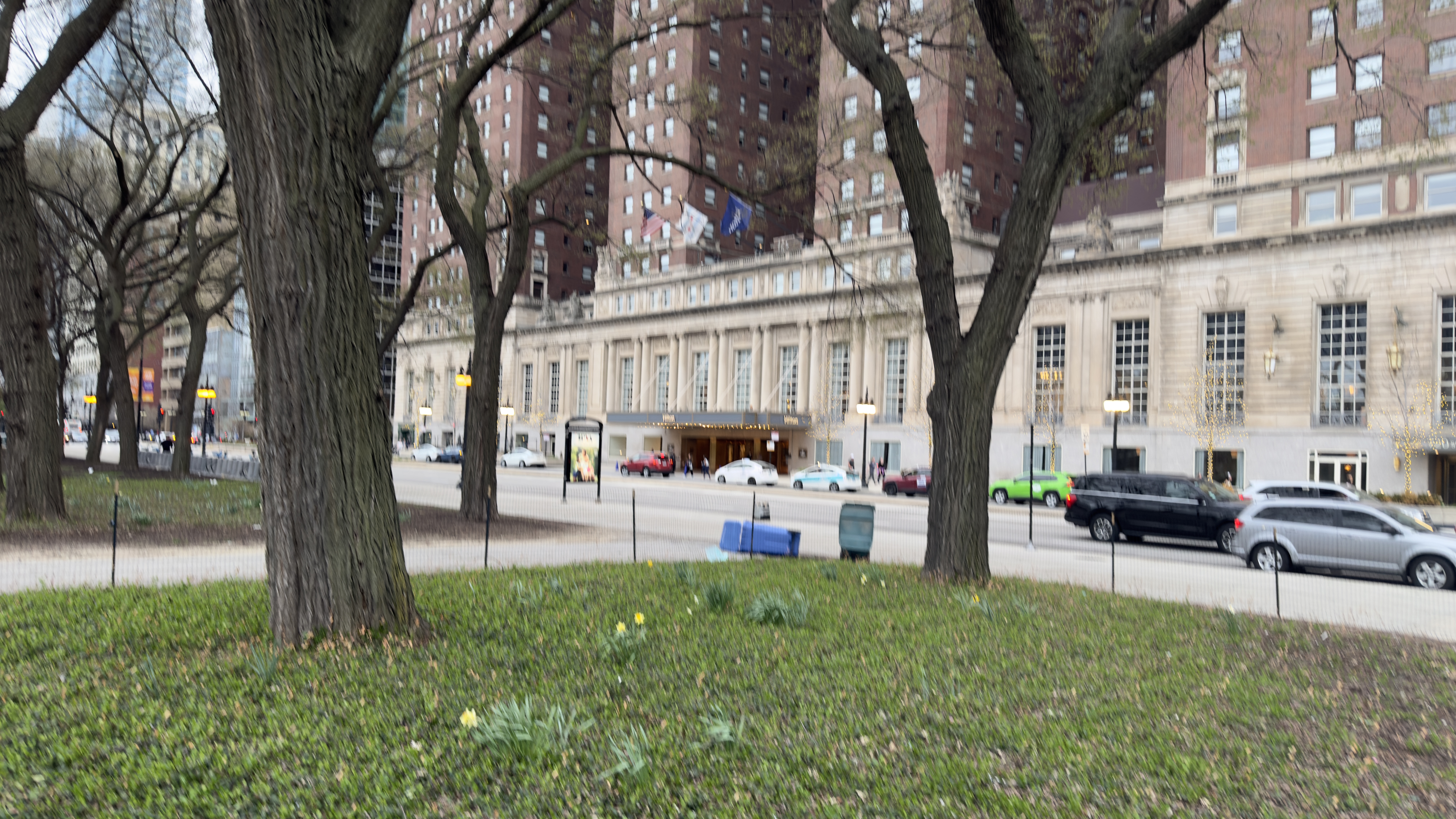
    Landing was easy enough, but Chicago had one classic welcome gift waiting for us: 5 o’clock traffic. Our Uber crawled through the city like everyone in Illinois had somewhere to be at the exact same moment (because they did). But patience prevailed, and we finally pulled up to our home for the next eight nights — the iconic Hilton Chicago.

    Now, we’ve stayed in nice hotels before, but this room? This room is something. We scored a corner room on the 20th floor, and the views are genuinely jaw-dropping — sweeping vistas of Lake Michigan, the Museum Campus, and the lush green expanse of Grant Park stretching out below. We may have stood at that window a little longer than we’d like to admit.

    After settling in and shaking off the travel fog, we laced up our shoes and headed out for an evening walk along the lakeshore. The air was crisp, the lake was vast and moody, and the skyline behind us glittered in the early evening light. It was exactly the kind of slow, unhurried arrival moment that makes travel feel worth it.

    Back at the hotel, we capped the night with a light dinner and a well-earned glass of wine at the 720 Bar and Grill. Nothing extravagant — just good food, good wine, and a quiet moment to take stock of the fact that we’re really here.

    Eight more nights to go. Chicago, we’re just getting started. 🍷


    Next up: Day 2 — Mark hits the streets while Alicia dives into the conference. Stay tuned!

  • Antietam National Battlefield

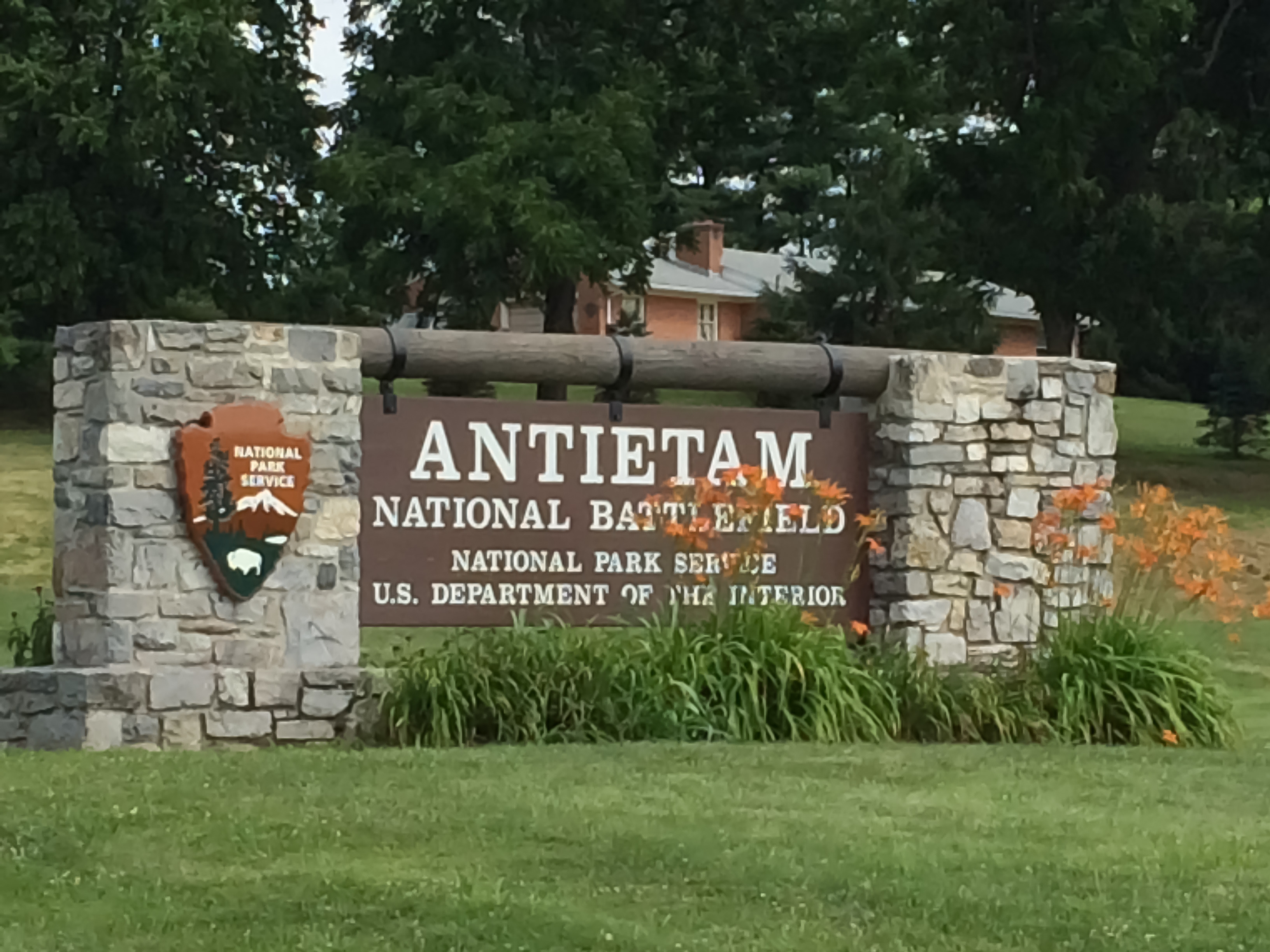
    Antietam National Battlefield

    Antietam National Battlefield

    ▶ A Note from Ranger PamPaw

    “There are places in this country where the ground itself seems to carry the weight of what happened there. Antietam is one of those places.”

    September 17, 1862. A single day. More than 22,000 soldiers killed, wounded, or missing before the sun went down. The numbers alone are staggering — but the numbers don’t tell you what it felt like to walk those farm fields, to stand at Burnside Bridge and understand what it cost to cross it, or to look out over the Cornfield and try to comprehend what those men endured in less than three hours.

    What makes Antietam different from most Civil War sites is how well it has been preserved. The landscape is remarkably intact. The farm fields, the sunken road, the creek crossings — they are still there, still recognizable. When you walk this ground, you are not imagining a battle. You are standing on it. That kind of connection to history is rare, and it deserves your full attention.

    And then there is the bigger picture. The tactical outcome at Antietam was a draw. But it gave Lincoln the military footing he needed to issue the Emancipation Proclamation. The fate of slavery in America — and with it the soul of the Republic — turned on this one terrible day in a Maryland farm country. Go slowly when you visit. This place has earned it.

    — Ranger PamPaw

    ▶ Quick Facts

    Location5831 Dunker Church Road, Sharpsburg, MD 21782 · Washington County, western Maryland
    Established1890 — one of the first four national military parks established by Congress
    Size3,230 acres of preserved battlefield, farmland, and river corridor
    Admission$10 per person (ages 16+); Annual Pass and America the Beautiful Pass accepted · Free for ages 15 and under
    Visitor CenterOpen daily 9 a.m. – 5 p.m. (extended summer hours) · Closed Thanksgiving, Christmas, and New Year’s Day
    Phone(301) 432-5124
    Park Drive8.5-mile self-guided auto tour with 11 marked stops — audio tour available via the NPS App
    TrailsApproximately 8.5 miles of maintained hiking trails; mostly flat to gently rolling
    PetsLeashed pets permitted on all trails and in picnic areas; not permitted inside buildings
    Nearby ParksHarpers Ferry NHP (15 mi.), Monocacy NB (25 mi.), C&O Canal NHP (adjacent)

    ▶ The Battle

    Maryland Campaign, September 1862

    By the summer of 1862, Robert E. Lee had driven Union forces from the Virginia Peninsula and routed a Federal army at Second Bull Run. Sensing an opportunity to shift the war onto Northern soil — and perhaps earn British and French diplomatic recognition for the Confederacy — Lee led his Army of Northern Virginia across the Potomac into Maryland in early September.

    A stroke of extraordinary luck changed the campaign’s trajectory. Union soldiers discovered a copy of Lee’s operational orders — Special Orders No. 191 — wrapped around three cigars in a Maryland field. The document revealed that Lee had divided his army. General George B. McClellan, commanding the Army of the Potomac, knew exactly where Lee’s forces were scattered. He had the chance to destroy them piecemeal. He moved — but not fast enough.

    Lee managed to reunite most of his army near Sharpsburg, Maryland, with his back to the Potomac River. On September 17, McClellan attacked. The battle that followed was not a model of Federal coordination — attacks came piecemeal across three separate sectors of the field — but the fighting was savage at every point of contact.

    Three Phases, One Day

    The battle unfolded in three overlapping phases across the landscape you can still walk today:

    • The North Woods and the Cornfield (Morning): Fighting began around dawn in the East Woods and the 30-acre cornfield owned by farmer David Miller. Units charged and countercharged across the same ground repeatedly. In roughly two hours, approximately 8,000 men fell in and around that cornfield alone. Union General Joseph Hooker later wrote that the corn was cut as closely as could have been done with a knife — by musket fire.
    • Bloody Lane (Midday): A sunken farm road in the center of the Confederate line — worn down by years of wagon traffic — became a natural rifle trench. Confederate soldiers held it for nearly four hours against wave after wave of Union assaults. When it finally fell, the road was so choked with Confederate dead that witnesses said you could walk its length without stepping on the ground. History named it Bloody Lane.
    • Burnside Bridge (Afternoon): On the Union left, General Ambrose Burnside spent most of the day trying to cross a narrow stone bridge over Antietam Creek — defended by just a few hundred Georgia sharpshooters on the bluffs above. His forces finally crossed in the early afternoon and pushed toward Sharpsburg — only to be driven back by A.P. Hill’s Confederate division, which arrived at the last moment after a 17-mile forced march from Harpers Ferry.

    When darkness fell, both armies held roughly the positions they had started with. More than 22,700 soldiers were killed, wounded, or missing. Lee retreated across the Potomac the following night. McClellan did not pursue.

    ▶ The Larger Meaning

    The Emancipation Proclamation

    Abraham Lincoln had been waiting for a Union military victory. He had drafted the Emancipation Proclamation months earlier but was advised not to issue it after a string of Federal defeats — it would look like an act of desperation. Antietam gave him the opening he needed.

    Five days after the battle — on September 22, 1862 — Lincoln issued the preliminary Emancipation Proclamation, declaring that all enslaved persons in states still in rebellion would be “forever free” as of January 1, 1863. The final proclamation followed on New Year’s Day.

    The political impact was immediate and far-reaching. It reframed the war’s purpose — from a conflict to preserve the Union into a crusade to end slavery. It made it nearly impossible for Britain or France to formally recognize the Confederacy, as both countries had abolished slavery and could not be seen siding with a slaveholders’ rebellion. And it opened the door for nearly 180,000 Black soldiers to serve in the Union Army, a force that would prove decisive in the war’s final years.

    Antietam was not the end of anything. Terrible battles lay ahead. But the direction of the war — and the nation — shifted in those Maryland farm fields on September 17, 1862. That is why this ground matters.

    ▶ Touring the Battlefield

    Start at the Visitor Center

    The Henry Kyd Douglas Visitor Center should be your first stop. The museum inside provides essential context — particularly if you’re not already familiar with the Maryland Campaign. The 26-minute film Antietam Visit is well-produced and highly recommended before you head out onto the field. Rangers are available to answer questions and can help you prioritize based on your available time.

    The 8.5-Mile Auto Tour

    The self-guided driving tour follows the battle’s progression through 11 numbered stops, beginning at the Dunker Church and moving generally from north to south. Allow at least two hours if you plan to get out of your car at the major stops — longer if you want to walk any of the trails. The NPS App includes a free audio tour keyed to each stop.

    • Stop 1 — Dunker Church: The white-washed brick church of the German Baptist Brethren (a pacifist sect) became a landmark for both armies and changed hands several times during the battle. The restored building is a quiet, powerful place to begin.
    • Stop 2 — North Woods / The Cornfield: The open farmland where the battle’s first and most ferocious fighting erupted at dawn. A walking trail crosses the Cornfield and connects to the East and West Woods.
    • Stop 5 — Bloody Lane (Sunken Road): Walk the entire length of the sunken road — about a quarter mile. The observation tower at the east end provides a sweeping view of the central battlefield that is essential for understanding the day’s middle phase.
    • Stop 9 — Burnside Bridge: The three-arched stone bridge over Antietam Creek is one of the most photographed sites in the National Park System. A short loop trail takes you across the bridge and up to the Georgia sharpshooters’ firing positions on the bluffs — an eye-opening perspective on why those few hundred Confederates were able to hold it for hours.
    • Antietam National Cemetery: Located at the north end of the tour, the cemetery holds the remains of more than 4,700 Union soldiers. A solemn and important stop. (Confederate dead were largely buried in local church cemeteries and in Hagerstown’s Rose Hill Cemetery.)

    ▶ Trails & Walking Routes

    Antietam offers approximately 8.5 miles of maintained foot trails. The terrain is mostly flat to gently rolling Maryland farmland — accessible for most visitors. Several trails connect directly to auto tour stops, making it easy to combine driving and walking.

    • Cornfield / North Woods Trail (approx. 1.5 mi.): Loops through the East Woods, the Cornfield, and the North Woods. Interpretive markers throughout. Best done in the morning when the light across the open fields is extraordinary.
    • Bloody Lane Trail (approx. 0.5 mi.): Follows the sunken road from Mumma Farm to the observation tower. Short, flat, and historically dense — don’t skip it.
    • Burnside Bridge Trail (approx. 1.3 mi.): Loops from the bridge parking area across Burnside Bridge, up to the Confederate bluff positions, and returns along Antietam Creek. The creek-side section is particularly pleasant in spring and fall.
    • Final Attack Trail (approx. 1.75 mi.): Traces the route of A.P. Hill’s division and Burnside’s late-afternoon advance. Less visited than the northern trails and a good choice for those who want a quieter walk.

    ▶ Know Before You Go

    • No food or gas inside the park. The town of Sharpsburg (immediately adjacent) is very small. Hagerstown, about 12 miles north, is the best base for dining, lodging, and services. Shepherdstown, WV (just across the Potomac) is a charming alternative with good restaurants and lodging.
    • September 17 is the battle’s anniversary. The park holds commemorative programs each year around the anniversary. It is also one of the busiest days of the year — plan accordingly.
    • Summer heat is real. There is almost no shade on the open battlefield. Bring water, wear sunscreen, and consider an early morning visit in July and August.
    • Ranger-led programs run seasonally. Walking tours of the Cornfield, Bloody Lane, and Burnside Bridge are offered on weekends from spring through fall. Check the park’s website or the NPS App for current schedules.
    • The C&O Canal towpath is adjacent to the park. The Chesapeake & Ohio Canal NHP runs along the Potomac River at the park’s southern edge. A short connector trail links the two sites — a worthwhile add-on for hikers and cyclists.
    • Photography. Dawn and dusk light on the open fields and Burnside Bridge are exceptional. The Cornfield in early morning mist is one of the most evocative landscapes on any Civil War battlefield.

    Why This Place Matters

    September 17, 1862 was the single bloodiest day in American military history — before or since. That fact alone demands our attention. But Antietam’s significance runs deeper than the casualty count.

    Lee’s first invasion of the North failed here. British intervention on behalf of the Confederacy — which had seemed plausible just weeks earlier — became politically untenable. And Lincoln found his moment. Without Antietam, the Emancipation Proclamation may never have been issued — or at least not when it was, in the form it took, with the impact it had.

    The battlefield is also a testament to preservation. Much of what you see today — the fields, the roads, the bridge, the church — survives in something close to its 1862 condition. That kind of landscape integrity is increasingly rare and genuinely fragile. It is worth protecting, and it is worth visiting with the care and attention it deserves.

    ▶ First Encounters

    PLACEHOLDER-YOUTUBE-URL

    ▶ Resources & Further Reading

    Ranger PamPaw Podcast — Tezels on the Road

    Hear the Story on the Ranger PamPaw Podcast

    Parks, perspective, and stories earned from a lifetime in the National Parks — from someone who was actually there. The Ranger PamPaw Podcast goes deeper on the history, the landscape, and the meaning behind the places that define America.

Verified by MonsterInsights