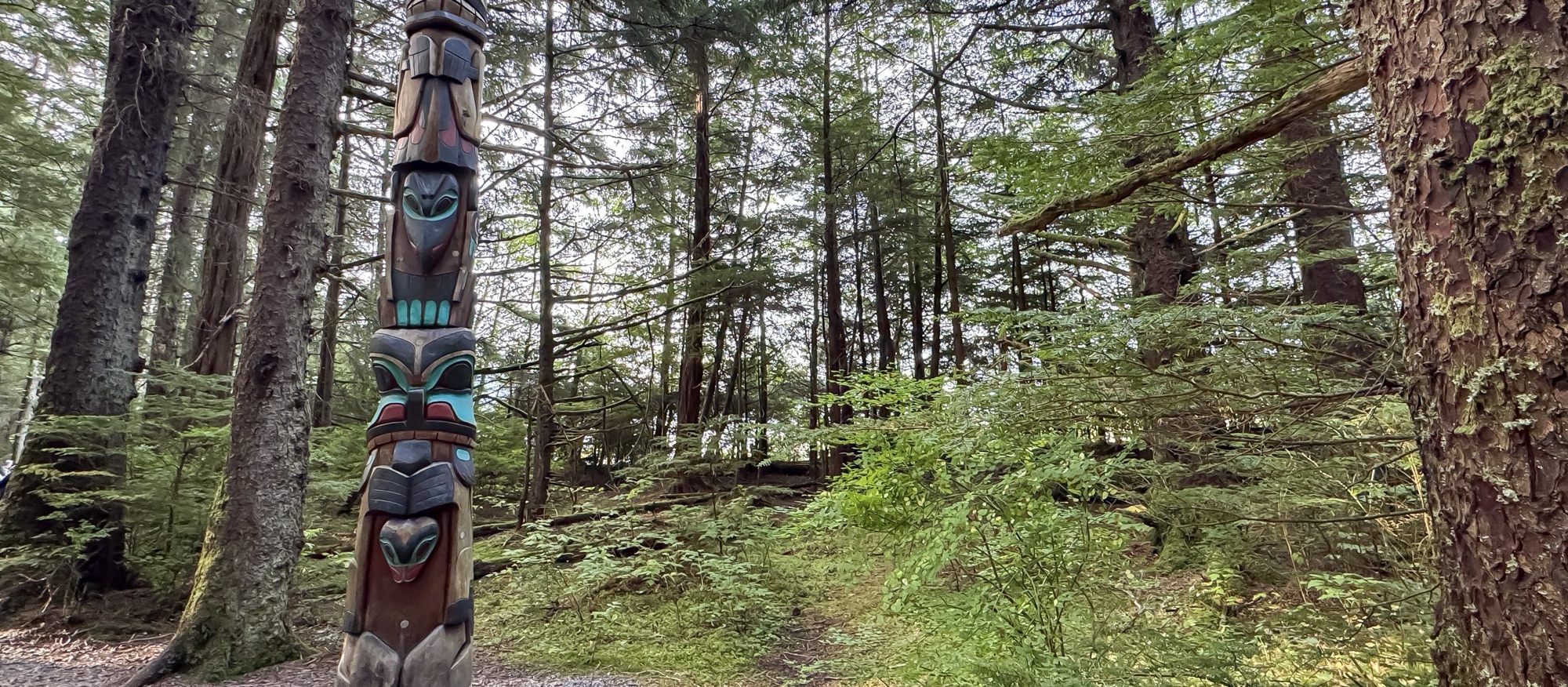
The Renewal of Tlingit Art and Heritage, and the CCC’s Role

By the early 20th century, many traditional Tlingit totem poles had fallen into disrepair or been removed from their original sites. As Alaska modernized and colonial influences grew, Indigenous art and cultural practices faced increasing threats of erasure. But in the 1930s, a unique opportunity for renewal emerged through the work of the Civilian Conservation Corps (CCC).
In Sitka, the CCC partnered with Tlingit elders and master carvers to restore and recarve totem poles that had once stood in villages across southeastern Alaska. These efforts were not merely artistic—they were acts of cultural preservation. The CCC’s work helped revive traditional carving techniques, document oral histories, and reintroduce sacred symbols and clan stories to public spaces.
Under the guidance of Tlingit artists like George Benson and Tommy Joseph (among others in later generations), the CCC crews created replicas of historic poles and installed them along what is now the Totem Trail in Sitka National Historical Park. Each pole tells a story—of lineage, legend, and resilience—and together they form a living museum of Tlingit heritage.
This collaboration between federal workers and Indigenous communities was rare for its time and remains a powerful example of how government programs can support—not suppress—cultural identity. The CCC’s legacy in Sitka is not just in the wood they carved, but in the traditions they helped sustain.
To experience this legacy firsthand, continue to the next section for a virtual tour of the modern Totem Trail.