An Introduction to the Tlingit at Sitka
The Tlingit people are the Indigenous inhabitants of the southeastern coast of Alaska, including the area now known as Sitka. For thousands of years, the Tlingit have lived in harmony with the land and sea, developing a rich cultural tradition rooted in clan identity, oral history, and artistic expression.

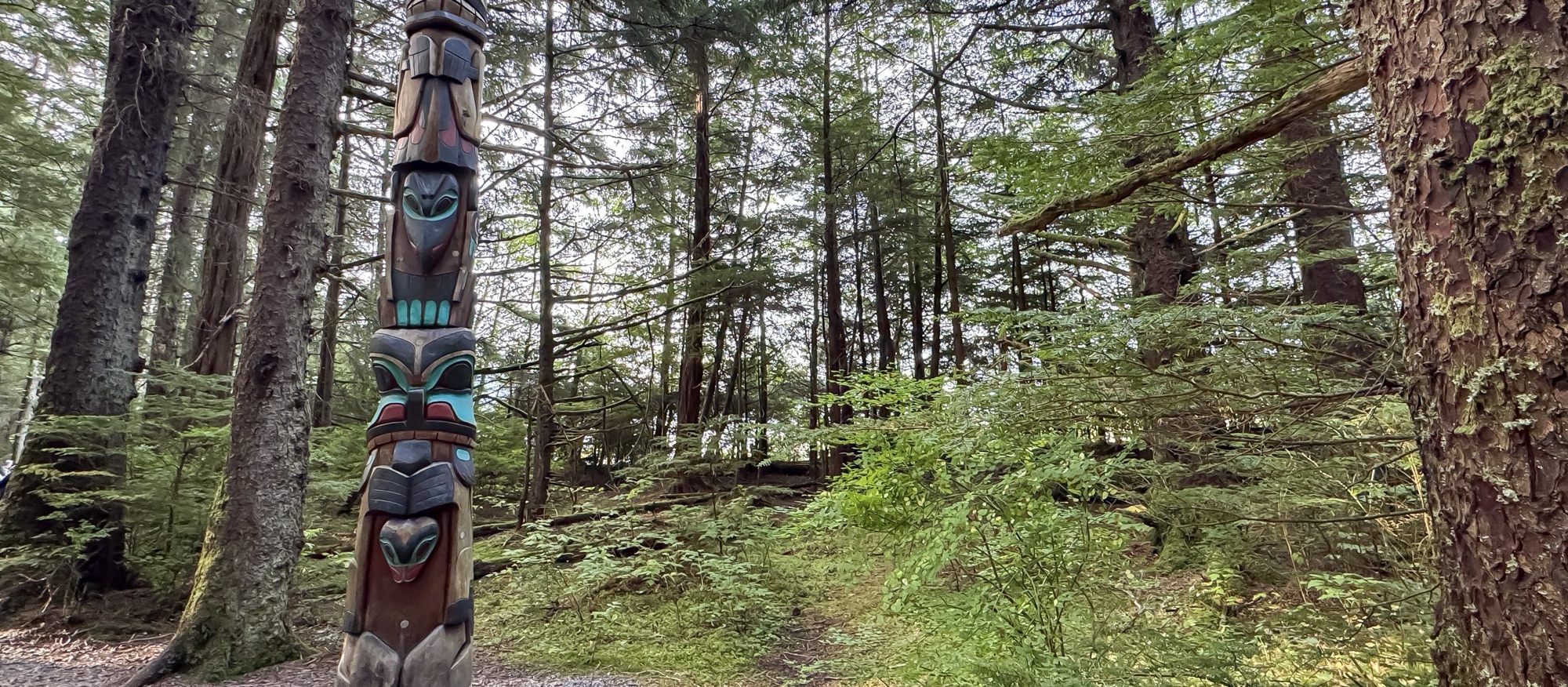
At the heart of Tlingit society is a complex system of matrilineal clans, each associated with specific crests, stories, and ancestral lands. Totem poles—towering carvings that depict clan symbols, animals, and historical events—serve as visual representations of these identities and are central to Tlingit cultural heritage.
Before Russian colonization, Sitka (known to the Tlingit as Sheet’ká) was a thriving Tlingit community and a hub of trade, ceremony, and governance. The arrival of Russian settlers in the late 18th century brought conflict and displacement, but the Tlingit people maintained their cultural resilience through adaptation, resistance, and preservation of tradition.

Today, the Tlingit continue to play a vital role in Sitka’s cultural landscape. Their language, art, and stories are being revitalized through education, community programs, and partnerships—such as those formed during the CCC’s efforts to restore totem poles in the 1930s.
To understand the historical forces that shaped Sitka’s transformation, continue to the next section exploring the Russian presence in Sitka and Alaska.