Tag: Ranger PamPaw’s Guide

  • Ranger PamPaw’s Guide To

    Big Bend National Park

    Brewster County, West Texas  ·  Where the Desert Meets the Sky

    ▶   A Note from Ranger PamPaw

    I have a connection to Big Bend that stretches back further than I can remember — literally. In 1964, my family brought me to this park when I was just one year old. My grandparents, who were travelers at heart and had explored parks and landmarks across the country and around the world, made sure Big Bend was on that list. My grandmother captured the whole trip on 8mm film, and I still have that footage today. There is something quietly extraordinary about watching those faded, flickering frames — knowing that the canyon walls and desert skies in the background are the same ones I have returned to dozens of times since.

    In November of 1995, I brought the woman who would become my wife to Big Bend for the first time. We camped in the Chisos Basin, climbed Emory Peak, and wandered every corner of the park we could reach. We have always looked back on that trip as one that brought us together. We have never made it back to Emory Peak — but it remains our spot. Then in 2005, we brought two of our sons on a spring break trip, and watched them discover their own favorite corner of the park: the big sandhill at the mouth of Boquillas Canyon, where they could have played for hours. In 2014, our daughter spent the summer as an intern at Big Bend — another family first, another generation of Tezels finding their footing in this remarkable place.

    There is one image that never leaves me: sitting up in the Chisos Basin as the sun drops toward the horizon, watching the light pour through The Window and spill out into the Chihuahuan Desert below. It is the kind of moment that stops you cold and reminds you exactly why these places exist. Big Bend is not convenient. It is not easy to get to. But I have never once regretted the drive.

    — Ranger PamPaw

    ▶   Quick Facts

    DesignationNational Park
    EstablishedJune 12, 1944
    LocationBrewster County, West Texas
    Size801,163 acres (1,252 sq mi) — larger than Rhode Island
    Entrance Fee$30 per vehicle (7 consecutive days) · $25 per motorcycle · America the Beautiful Pass accepted
    PaymentCashless — credit/debit card only at all entrance stations
    Best SeasonSeptember through early May (avoid summer — desert temps can exceed 115°F)
    Nearest CityAlpine, TX (~80 miles); Midland, TX (~230 miles)
    Park HeadquartersPanther Junction Visitor Center
    UNESCO DesignationInternational Biosphere Reserve · Globally Important Bird Area
    NPS Websitenps.gov/bibe

    ▶   Texas’ Gift to the Nation

    A Park Born from Texas Pride

    Big Bend National Park did not come to be the way most national parks do. It began as a state initiative — in 1933, the Texas Legislature established Texas Canyons State Park in the remote canyon country along the Rio Grande. The name was soon changed to Big Bend State Park, and the Chisos Mountains were added to its boundaries. The National Park Service investigated the site in 1934 and quickly recognized it as, in their own words, “decidedly the outstanding scenic area of Texas.” Congress passed enabling legislation on June 20, 1935, and over the next several years, the State of Texas worked to acquire the land — using public funds, private donations, and the determined efforts of Texas businessman Amon Carter and others who believed this wild, remote country deserved the same protection as Yellowstone or the Grand Canyon.

    On June 6, 1944 — D-Day — Amon Carter personally presented the deed to the park to President Franklin D. Roosevelt on behalf of the people of Texas. Six days later, on June 12, 1944, Big Bend National Park was officially established. President Roosevelt, who had taken a personal interest in the park for years, reportedly felt the nation deserved some good news that week. Texans have called it “Texas’ Gift to the Nation” ever since — and it is a gift that keeps giving, to anyone willing to make the journey.

    A Land of Extraordinary Contrasts

    At 801,163 acres — larger than the entire state of Rhode Island — Big Bend is the largest protected area of Chihuahuan Desert topography in the United States. It is also the only national park in the country to contain an entire mountain range within its boundaries: the Chisos Mountains, rising more than a mile above the surrounding desert floor to Emory Peak at 7,825 feet. The result is an almost theatrical range of environments packed into one park. Temperatures at Rio Grande Village on the river can top 115°F in summer, while the Chisos Basin sits up to 20°F cooler, wrapped in pinyon pine, juniper, and Texas madrone.

    The Rio Grande forms 118 miles of the park’s southern boundary, carving three of the most spectacular river canyons in North America — Santa Elena, Mariscal, and Boquillas — before winding eastward into the Chihuahuan Desert. The park protects more than 1,200 species of plants, 450 species of birds, 56 species of reptiles, and 75 species of mammals. Geological features span millions of years: sea fossils from ancient oceans, dinosaur bones, volcanic dikes, and the slow, layered storytelling of deep time written in stone.

    Ten Thousand Years of Human History

    Long before the park had a name, people had been living in and moving through this landscape for nearly 10,000 years. The Chisos Indians — nomadic hunters and gatherers — inhabited the Big Bend for centuries before the Mescalero Apache pushed through in the early 18th century, followed by the Comanche, who used the famous Comanche Trail on their raids into Mexico. Spanish explorers mapped and named the Rio Grande. Miners, ranchers, and homesteaders came and went, leaving behind ruins, stories, and a deep human texture that is very much part of the park’s identity today. The archaeological record is rich, and the ghost towns and old ranch sites scattered across the desert add a poignant, human-scale counterpoint to the grandeur of the canyons and mountains.

    Why Big Bend Matters

    Big Bend is one of the least-visited major national parks in the country — not because it lacks for grandeur, but because it demands something of you before you arrive. The nearest major city is hundreds of miles away. The roads are long and remote. Cell service is largely absent. But that very remoteness is the point. Big Bend is one of the last places in the lower 48 where you can genuinely feel the scale of the American wilderness — where the sky goes on forever, the river runs free through canyon walls hundreds of feet high, and the silence is something you carry back with you long after you leave.


    ▶   Touring the Park: The Chisos Mountains

    The Chisos Basin

    The Chisos Basin is the heart of the park and the hub for most visitors. Cradled in a volcanic depression in the Chisos Mountains at around 5,400 feet elevation, it offers a cooler refuge from the desert heat, a full-service lodge and restaurant, camping, and access to many of the park’s most beloved trails. The iconic profile of Casa Grande looms over the basin, and The Window — a natural notch in the western rim — frames spectacular sunset views over the Chihuahuan Desert. If you can arrange only one evening in the park, spend it at The Window overlook as the sun goes down.

    Lost Mine Trail ⭐ Ranger PamPaw Favorite

    The Lost Mine Trail is, in this guide’s opinion, the single best hike in Big Bend. Beginning at Panther Pass on the Basin Road, the 4.8-mile round-trip trail climbs through pine-oak woodland with sweeping views of the Chisos Mountains and the desert basin opening below. The trail is well-marked and moderately strenuous — a steady climb with a big payoff. The ridgeline views near the summit take in layer upon layer of landscape, from the high peaks to the Rio Grande canyon country far below. Go early to beat the heat and the crowds.

    📺 Watch: Lost Mine Trail | Tuesdays on the Trails | Big Bend National Park

    The Window Trail

    The Window Trail drops 5.6 miles round-trip from the Chisos Basin trailhead down through Oak Creek Canyon to the lip of The Window pour-off — a narrow slot where the canyon floor drops away into the desert below. It is a pleasant descent through shaded riparian vegetation, with the reward of standing at the pour-off edge looking west across the Chihuahuan Desert. Remember: what goes down must come back up, and the return climb in afternoon heat can be demanding. An easier alternative is the Window View Trail, a short, mostly flat 0.3-mile walk from the lodge area that delivers a classic view of The Window from above.

    Emory Peak & The South Rim

    For those with the legs and the time, the High Chisos trails are among the finest backcountry experiences in the Southwest. Emory Peak — the park’s highest point at 7,825 feet — requires a strenuous 9-mile round-trip from the Chisos Basin trailhead, with a short rock scramble near the summit that rewards with 360-degree views across Texas and into Mexico. The South Rim loop (12–14 miles depending on route) offers one of the most dramatic overnight or long day-hike experiences in the park, with sheer cliff views dropping away to the desert thousands of feet below. These trails are best tackled in spring or fall; carry plenty of water and plan your start time carefully.


    ▶   Touring the Park: The Chihuahuan Desert

    Grapevine Hills Trail

    The 2.2-mile round-trip Grapevine Hills Trail is a desert gem and a wonderful introduction to Big Bend’s igneous rock landscape. The trail winds through a jumbled field of rounded granite boulders before arriving at a natural balanced rock formation — two massive boulders wedged between canyon walls, framing a perfect window to the sky. The hike is relatively easy and suitable for most ability levels, making it a great option for families or as a warm-up for longer days. The trailhead is reached via a dirt road off the Maverick Road, so high-clearance vehicles are recommended.

    Tuff Canyon

    Tuff Canyon is one of the most geologically fascinating stops along the Ross Maxwell Scenic Drive, and one of the easiest to visit. About 30 million years ago, violent volcanic eruptions showered this part of the Chihuahuan Desert with ash and rock fragments that accumulated while still glowing hot, welding together under heat and pressure into the pale, layered material called tuff. Blue Creek, fed by rains in the distant Chisos Mountains, has since carved a spectacular narrow gorge through those layers, exposing the volcanic story in the canyon walls. Three railing-protected overlooks — reached via a 0.5-mile loop on the canyon rim — offer vertiginous views straight down into the gorge. For a more immersive experience, a short spur trail descends to the canyon floor, where you can walk between walls pocked with holes left by bats and embedded with darker volcanic clasts. The contrast between the soft pale tuff and the harder dark rhyolite further up the canyon tells the full story of Big Bend’s fiery past. Plan about 30–45 minutes; combine it with Santa Elena Canyon for a full Ross Maxwell Scenic Drive day.


    ▶   Touring the Park: The River Canyons

    Santa Elena Canyon

    Santa Elena Canyon is one of the most dramatic natural features in the entire national park system. At the end of the Ross Maxwell Scenic Drive, the Rio Grande squeezes between canyon walls that rise 1,500 feet straight up — one wall in the United States, the other in Mexico. The 1.7-mile round-trip trail crosses Terlingua Creek (a rock-hop in dry seasons, a wade in wet ones), climbs stone steps into the canyon’s narrow mouth, and delivers a view of sheer vertical limestone that is genuinely humbling. It is a short hike but one of the most memorable in the park. The drive out on the Ross Maxwell Scenic Drive is itself well worth the time.

    📺 Watch: Santa Elena Canyon Trail | Tuesdays on the Trail | Big Bend National Park

    Boquillas Canyon

    On the eastern side of the park, Boquillas Canyon is quieter than Santa Elena but equally stunning in its own way. The 1.4-mile round-trip trail winds through desert scrub before reaching the river and the canyon entrance, where towering limestone walls glow orange and gold in the afternoon light. Just before the canyon mouth, a large sandhill on the Mexican bank has a way of stopping kids in their tracks — it begs to be climbed, slid down, and climbed again. The Boquillas Canyon area is also the location of the park’s international border crossing to the small Mexican village of Boquillas del Carmen, a unique and worthwhile side trip when the crossing is open.

    📺 Watch: Boquillas Canyon Trail | Big Bend National Park | Tuesdays on the Trail (Special Edition)


    ▶   Know Before You Go

    The Remoteness is Real

    Big Bend’s isolation is not an inconvenience — it is a defining characteristic of the park. The nearest major services are in Alpine, roughly 80 miles away, or Midland, more than 200 miles. There are two gas stations within the park, and a couple of small stores where you can pick up basic supplies — but do not count on them for a full resupply. Come prepared. Fill up before you enter, bring more water than you think you need (a gallon per person per day is the minimum recommendation), and plan your meals. The park has a hard time recruiting and retaining staff precisely because of this remoteness, so services inside the park may be limited or unavailable on any given day.

    Cell Service & Connectivity

    Cell service is limited to the area around Panther Junction (park headquarters) and is largely absent everywhere else in the park. Download your offline maps before you arrive, save NPS trail guides to your device, and let someone know your itinerary. This is not a park where you want to rely on a live connection for navigation or emergency communication. Satellite communicators are a worthwhile investment for anyone heading into the backcountry.

    When to Visit

    Big Bend is fundamentally a winter park. The optimal window runs from September through early May, when temperatures in the desert are manageable and the mountains are at their finest. Summers are brutally hot — desert temperatures routinely top 100°F and can exceed 115°F at lower elevations. The Chisos Mountains run up to 20°F cooler than Rio Grande Village, but summer heat in the basin is still serious. Even in the optimal season, avoid holiday weekends and spring break periods if you can — the park can become very busy, and the infrastructure strains under the load. Weekday visits in October, November, February, or March offer the best combination of weather, crowds, and trail conditions.

    Lodging & Camping

    The Chisos Mountains Lodge is the only lodge inside the park, offering motel-style rooms and historic stone cottages originally built by the Civilian Conservation Corps. It books up well in advance during peak season — reserve early. The park has three developed campgrounds: Chisos Basin, Rio Grande Village, and Cottonwood (near Castolon). All three have their own character, and experienced visitors often have a strong preference. For those seeking more solitude, the park offers backcountry road campsites accessible by high-clearance vehicle and true backcountry sites in the Chisos requiring permits. Just outside the park, options like Big Bend Station provide a comfortable base for multi-day visits.

    ▶   Park Map

    Big Bend National Park Map

    ▶   First Encounters

    Before this visit, Ranger PamPaw sat down to share what Big Bend means to him — the first park he ever visited, the first park they visited as a couple, and a place that has woven itself through a lifetime of family milestones. Watch the First Encounters episode before you go.

    Our First Visits to Big Bend National Park | First Encounters Series

    ▶   Further Exploration

    ▶   The Ranger PamPaw Podcast

    Hear More About Big Bend

    Big Bend has been a part of Ranger PamPaw’s life longer than just about anywhere else — and it comes up throughout the podcast. Subscribe to The Ranger PamPaw Podcast for stories, perspectives, and park wisdom from a lifetime on the road.

  • Pullman National Historical Park

    Ranger PamPaw’s Guide To

    Pullman National Historical Park

    Chicago, Illinois  ·  America’s First Planned Industrial Community

    ▶  A Note from Ranger PamPaw

    I’ll be honest — I wasn’t sure what to expect from a national park sitting squarely inside one of America’s great cities. But Pullman stopped me in my tracks. Stand on the corner of 111th and Cottage Grove and the whole story presses in on you at once: the brick rowhouses still occupied, the clock tower freshly restored, and the weight of three overlapping American dramas — industrial ambition, labor uprising, and a civil rights movement born from railroad cars. This isn’t history under glass. It lives in the neighborhood around you. Don’t rush it.

    ▶  Quick Facts

    DesignationNational Historical Park (redesignated 2022; originally National Monument 2015)
    Location610 E. 111th Street, Chicago, IL 60628 (Pullman community area, Far South Side)
    EstablishedFebruary 19, 2015 (as National Monument); redesignated National Historical Park, December 2022
    SignificanceAmerica’s first planned industrial company town; site of the landmark 1894 Pullman Strike; birthplace of the Brotherhood of Sleeping Car Porters
    Visitor Center HoursTuesday–Sunday, 11 AM–3 PM (or by appointment); closed Mondays
    AdmissionFree (NPS Visitor Center); Historic Pullman Foundation museum: free, donations welcome
    Getting ThereBy car: exit I-94 at 111th St. (#66A); by Metra Electric: 111th St.–Pullman station (express ~20 min from Millennium Park)
    Suggested Visit Length2–3 hours minimum; half day recommended to explore all three sites
    Park PartnersNPS · State of Illinois (Pullman State Historic Site) · City of Chicago · Historic Pullman Foundation · A. Philip Randolph Pullman Porter Museum
    Annual Passport StampAvailable at the NPS Visitor Center

    ▶  The Vision: George Pullman’s Model Town

    Building a Utopia — on Someone Else’s Terms

    George Pullman was already a wealthy man by the time he turned his ambitions to urban planning. Having made his first fortune raising Chicago’s buildings above their flooded foundations in the 1850s, he went on to build the Pullman Palace Car Company in 1867, transforming long-distance rail travel with luxury sleeping cars staffed by a workforce of formerly enslaved men. By 1880, with demand for his cars soaring and labor unrest simmering across the city, Pullman purchased 4,000 acres of land south of Chicago between the Illinois Central Railroad line and Lake Calumet — and set out to build the ideal industrial community from scratch.

    He commissioned architect Solon Spencer Beman and landscape designer Nathaniel Franklin Barrett to design every element: over 1,300 housing units built primarily as red brick rowhouses with indoor plumbing, a library, a church, an arcade of shops, a market hall, a school, and the showpiece Hotel Florence — named for his daughter — opened in 1881. Construction began in early 1880 and the first factory buildings were essentially complete by fall of that same year. By 1883, more than 8,000 people called Pullman home. Advertised as a model of worker welfare and civic design, the town drew national and international attention, becoming a celebrated attraction at the 1893 World’s Columbian Exposition in Chicago.

    The architecture was deliberately ornate for an industrial site. The Administration and Factory Complex — designed for efficient linear manufacturing in what was an early precursor to the assembly line — faced the Illinois Central tracks with a handsome Queen Anne and Romanesque facade mirrored in an artificial cooling reservoir called Lake Vista. What passengers on passing trains saw was not a smoky factory but something approaching a civic monument. That was entirely the point. But beneath the gleaming design, the terms were Pullman’s alone: rents were set to return a six percent profit, deducted automatically from paychecks, and no resident could own their home. The town was a controlled environment as much as a model one.

    ▶  The Strike of 1894: When a Nation Walked Off the Job

    Wages Cut, Rents Unchanged — and the Country Stopped

    The Panic of 1893 devastated the railroad industry. Orders for sleeping cars collapsed, and Pullman responded by slashing worker wages — in some cases by as much as a third — while leaving the rents on company housing entirely unchanged. Since rent was automatically deducted from paychecks, many workers were left with almost nothing to live on. Corporate dividends, meanwhile, remained untouched. On May 11, 1894, Pullman employees walked out. The company, having built up financial reserves to weather a short work stoppage, simply waited.

    What no one anticipated was the response of the American Railway Union, led by Eugene V. Debs. The ARU — whose 150,000 members included many Pullman workers — launched a nationwide boycott, refusing to handle any train carrying Pullman cars. Since Pullman cars ran on virtually every major railroad in the country, the boycott crippled rail traffic from Chicago to the coasts. The federal government, arguing that stalled mail cars violated the Sherman Antitrust Act, dispatched thousands of U.S. Marshals and Army troops to Chicago. Violence broke out. Dozens were killed or injured. After Debs and other ARU leaders were jailed, the strike and boycott collapsed. Most workers never got their jobs back on the original terms.

    The legal and political aftermath reverberated for decades. The Supreme Court upheld the government’s intervention in In re Debs (1895), affirming federal authority to crush strikes threatening interstate commerce. But the scale of the walkout also forced a reckoning: President Grover Cleveland, eager to repair his image with labor, signed legislation making Labor Day a federal holiday just days after ordering troops into Chicago. George Pullman died in 1897, ordering his grave encased in concrete and steel — reportedly fearing desecration by former workers. The Illinois Supreme Court forced the Pullman Company to sell its non-industrial holdings in 1898.

    ▶  The Porters and the Civil Rights Movement

    A. Philip Randolph and the Brotherhood That Changed America

    While African Americans had been explicitly barred from living in the Pullman district during the company town era, they had long formed the backbone of Pullman’s most visible workforce: the sleeping car porters. By the 1920s, porters made up 44 percent of the entire Pullman workforce, making the Pullman Company the single largest employer of African Americans in the United States. The work offered steady income and a degree of mobility unavailable in most other industries, but it also came with long hours, demanding service expectations, chronic disrespect, and wages set unilaterally by the company.

    In 1925, A. Philip Randolph — a New York labor organizer and editor of the socialist magazine The Messenger — founded the Brotherhood of Sleeping Car Porters in New York City. It was the first major labor union organized and led by African Americans. Organizing took twelve years of sustained effort against a company with enormous resources and a workforce that feared retaliation. But in 1937, the Brotherhood reached a landmark agreement with the Pullman Company: the first major labor contract ever negotiated between a corporation and an African American union. The NAACP recognized it as a watershed moment for the economic standing and dignity of Black workers across the country.

    The significance of the porters and the Brotherhood extends far beyond the railroad. Pullman porters carried Black newspapers — most famously the Chicago Defender — into the Jim Crow South, seeding the Great Migration. They built a Black middle class. Their children and grandchildren became lawyers, doctors, and civil rights leaders. Randolph himself went on to organize the 1963 March on Washington, at which Martin Luther King Jr. delivered his “I Have a Dream” speech. The story of the porters is not a footnote to the civil rights movement — it is one of the movement’s foundation stones.

    Why Pullman Matters

    Pullman National Historical Park preserves the convergence of three of America’s most consequential stories: the rise of industrial capitalism and the company town experiment, the labor movement’s hardest-fought battles for worker dignity, and the long arc of African American civil rights. No other national park site holds all three threads in the same square mile. It is also — still — a living neighborhood, which means the stakes of preservation here are immediate and human in a way that feels different from a battlefield or a wilderness area.

    ▶  Touring the Park: Three Experiences in One Visit

    Start at the Clock Tower

    Begin your visit at the NPS Visitor Center inside the beautifully restored Pullman Administration Clock Tower Building at 610 E. 111th Street. The building itself — the iconic landmark that survived the 1998 arson that destroyed much of the adjacent factory — opened as a visitor center on Labor Day 2021 after years of environmental cleanup and structural restoration. Inside, audio and visual exhibits walk you through the layered history of the district: the company town, the strike, and the porters’ civil rights story. Rangers are on hand, the gift shop carries Pullman-specific memorabilia, and this is where you’ll find your passport stamp. Plan at least 45 minutes here before venturing out.

    Walk the Historic District

    Step outside and you are immediately inside the historic district itself — a still-inhabited neighborhood of late 19th-century red brick rowhouses stretching between East 103rd and East 115th Streets. Many of these homes have been lovingly maintained and restored by residents over the past five decades, since the Pullman Civic Organization mobilized in the 1960s to prevent demolition. A self-guided walking tour takes you past workers’ cottages, supervisors’ homes (notably larger), the former market hall, and the Greenstone Church — the only church Pullman built for workers, its distinctive green serpentine stone imported from Pennsylvania. Hotel Florence, at the northeast corner of the district, recently completed extensive rehabilitation of its first floor and is worth a stop to see the original Victorian-era dining room.

    The A. Philip Randolph Pullman Porter Museum

    Located at 10406 S. Maryland Avenue, the A. Philip Randolph Pullman Porter Museum is the third anchor of the Pullman experience and arguably its most moving. Operated by the Historic Pullman Foundation, it tells the story of the Brotherhood of Sleeping Car Porters, the porters’ working lives, and A. Philip Randolph’s extraordinary career as an organizer, orator, and civil rights strategist. Exhibits include porter uniforms, tools of the trade, oral histories, and materials documenting the long campaign to win the 1937 contract. The museum is free to enter; a donation supports ongoing preservation work. Confirm hours in advance — the museum operates by request and appointment.

    ▶  Know Before You Go

    This is a multi-partner site. The NPS, the State of Illinois, the City of Chicago, and the Historic Pullman Foundation all operate pieces of the district. Which organization runs which tour and which building depends on where you are standing. Check ahead for each attraction’s current hours, especially for guided tours of the factory complex and Hotel Florence.

    The NPS Visitor Center is open Tuesday–Sunday, 11 AM–3 PM. It is closed on Mondays. If you are making a special trip, call ahead or check the NPS website for any seasonal or operational changes before you drive down.

    Consider taking the Metra. The Metra Electric line stops at 111th Street–Pullman station, just steps from the visitor center, with express trains running approximately 20 minutes from Millennium Station in the Loop. Arriving by train to a site where the railroad is the whole story adds a layer that a parking lot simply cannot.

    Wear comfortable shoes. Fully exploring the district — visitor center, Hotel Florence, the Randolph Museum, and the residential streets — involves a mile or more of walking. The neighborhood is flat, but the experience rewards a slow pace.

    Preservation is ongoing. Sections of the factory complex and the Hotel Florence annex remain under rehabilitation. New acquisitions are in progress. The park is actively growing — what you see today may be expanded the next time you visit.

    ▶  Park Map

    ▶  First Encounters: Watch Our Video Episode

    Join us for our First Encounters episode at Pullman National Historical Park — walking the streets of the historic district, exploring the restored clock tower, and reflecting on the stories that shaped American labor and civil rights.

    ▶  Further Exploration

    Dig deeper into the history of Pullman with these resources:

    • NPS Pullman National Historical Park — Official park site with hours, alerts, and programming updates.
    • Historic Pullman Foundation — Tour information, museum access, and preservation news.
    • A. Philip Randolph Pullman Porter Museum — The story of the Brotherhood of Sleeping Car Porters.
    • Recommended Reading: Pullman: An Experiment in Industrial Order and Community Planning by Stanley Buder — the definitive scholarly history of the company town.
    • Recommended Reading: The Brotherhood of Sleeping Car Porters by Jervis Anderson — a thorough account of Randolph’s organizing campaign and its civil rights legacy.
    • NPS America the Beautiful Pass — Admission to Pullman NHP is free, but the pass covers entrance fees at hundreds of other federal lands. Learn more here.

    Listen to The Ranger PamPaw Podcast

    Stories, perspective, and park wisdom from a lifetime in the National Parks. New episodes wherever you listen.

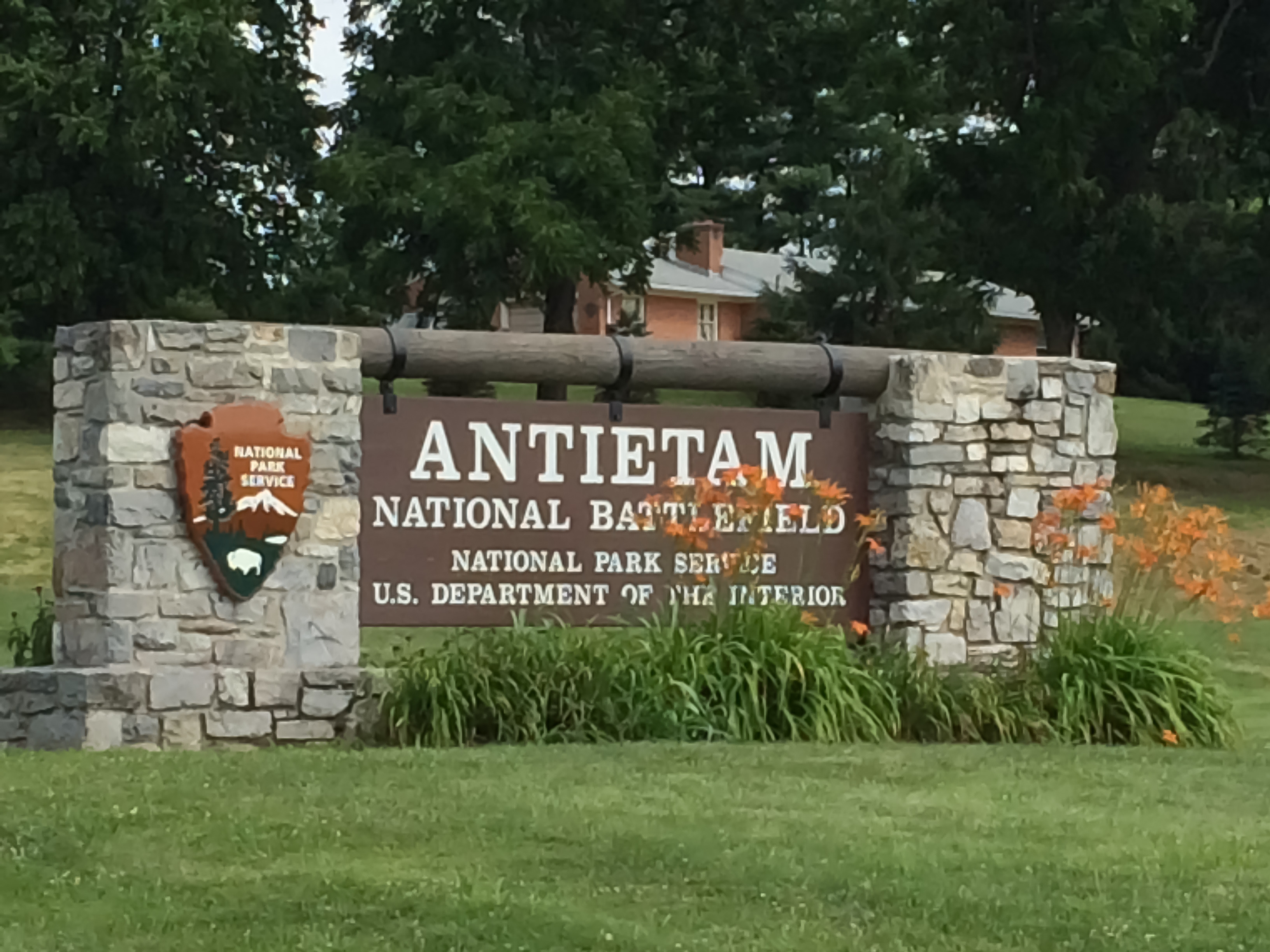
  • Antietam National Battlefield

    Antietam National Battlefield

    Antietam National Battlefield

    ▶ A Note from Ranger PamPaw

    “There are places in this country where the ground itself seems to carry the weight of what happened there. Antietam is one of those places.”

    September 17, 1862. A single day. More than 22,000 soldiers killed, wounded, or missing before the sun went down. The numbers alone are staggering — but the numbers don’t tell you what it felt like to walk those farm fields, to stand at Burnside Bridge and understand what it cost to cross it, or to look out over the Cornfield and try to comprehend what those men endured in less than three hours.

    What makes Antietam different from most Civil War sites is how well it has been preserved. The landscape is remarkably intact. The farm fields, the sunken road, the creek crossings — they are still there, still recognizable. When you walk this ground, you are not imagining a battle. You are standing on it. That kind of connection to history is rare, and it deserves your full attention.

    And then there is the bigger picture. The tactical outcome at Antietam was a draw. But it gave Lincoln the military footing he needed to issue the Emancipation Proclamation. The fate of slavery in America — and with it the soul of the Republic — turned on this one terrible day in a Maryland farm country. Go slowly when you visit. This place has earned it.

    — Ranger PamPaw

    ▶ Quick Facts

    Location5831 Dunker Church Road, Sharpsburg, MD 21782 · Washington County, western Maryland
    Established1890 — one of the first four national military parks established by Congress
    Size3,230 acres of preserved battlefield, farmland, and river corridor
    Admission$10 per person (ages 16+); Annual Pass and America the Beautiful Pass accepted · Free for ages 15 and under
    Visitor CenterOpen daily 9 a.m. – 5 p.m. (extended summer hours) · Closed Thanksgiving, Christmas, and New Year’s Day
    Phone(301) 432-5124
    Park Drive8.5-mile self-guided auto tour with 11 marked stops — audio tour available via the NPS App
    TrailsApproximately 8.5 miles of maintained hiking trails; mostly flat to gently rolling
    PetsLeashed pets permitted on all trails and in picnic areas; not permitted inside buildings
    Nearby ParksHarpers Ferry NHP (15 mi.), Monocacy NB (25 mi.), C&O Canal NHP (adjacent)

    ▶ The Battle

    Maryland Campaign, September 1862

    By the summer of 1862, Robert E. Lee had driven Union forces from the Virginia Peninsula and routed a Federal army at Second Bull Run. Sensing an opportunity to shift the war onto Northern soil — and perhaps earn British and French diplomatic recognition for the Confederacy — Lee led his Army of Northern Virginia across the Potomac into Maryland in early September.

    A stroke of extraordinary luck changed the campaign’s trajectory. Union soldiers discovered a copy of Lee’s operational orders — Special Orders No. 191 — wrapped around three cigars in a Maryland field. The document revealed that Lee had divided his army. General George B. McClellan, commanding the Army of the Potomac, knew exactly where Lee’s forces were scattered. He had the chance to destroy them piecemeal. He moved — but not fast enough.

    Lee managed to reunite most of his army near Sharpsburg, Maryland, with his back to the Potomac River. On September 17, McClellan attacked. The battle that followed was not a model of Federal coordination — attacks came piecemeal across three separate sectors of the field — but the fighting was savage at every point of contact.

    Three Phases, One Day

    The battle unfolded in three overlapping phases across the landscape you can still walk today:

    • The North Woods and the Cornfield (Morning): Fighting began around dawn in the East Woods and the 30-acre cornfield owned by farmer David Miller. Units charged and countercharged across the same ground repeatedly. In roughly two hours, approximately 8,000 men fell in and around that cornfield alone. Union General Joseph Hooker later wrote that the corn was cut as closely as could have been done with a knife — by musket fire.
    • Bloody Lane (Midday): A sunken farm road in the center of the Confederate line — worn down by years of wagon traffic — became a natural rifle trench. Confederate soldiers held it for nearly four hours against wave after wave of Union assaults. When it finally fell, the road was so choked with Confederate dead that witnesses said you could walk its length without stepping on the ground. History named it Bloody Lane.
    • Burnside Bridge (Afternoon): On the Union left, General Ambrose Burnside spent most of the day trying to cross a narrow stone bridge over Antietam Creek — defended by just a few hundred Georgia sharpshooters on the bluffs above. His forces finally crossed in the early afternoon and pushed toward Sharpsburg — only to be driven back by A.P. Hill’s Confederate division, which arrived at the last moment after a 17-mile forced march from Harpers Ferry.

    When darkness fell, both armies held roughly the positions they had started with. More than 22,700 soldiers were killed, wounded, or missing. Lee retreated across the Potomac the following night. McClellan did not pursue.

    ▶ The Larger Meaning

    The Emancipation Proclamation

    Abraham Lincoln had been waiting for a Union military victory. He had drafted the Emancipation Proclamation months earlier but was advised not to issue it after a string of Federal defeats — it would look like an act of desperation. Antietam gave him the opening he needed.

    Five days after the battle — on September 22, 1862 — Lincoln issued the preliminary Emancipation Proclamation, declaring that all enslaved persons in states still in rebellion would be “forever free” as of January 1, 1863. The final proclamation followed on New Year’s Day.

    The political impact was immediate and far-reaching. It reframed the war’s purpose — from a conflict to preserve the Union into a crusade to end slavery. It made it nearly impossible for Britain or France to formally recognize the Confederacy, as both countries had abolished slavery and could not be seen siding with a slaveholders’ rebellion. And it opened the door for nearly 180,000 Black soldiers to serve in the Union Army, a force that would prove decisive in the war’s final years.

    Antietam was not the end of anything. Terrible battles lay ahead. But the direction of the war — and the nation — shifted in those Maryland farm fields on September 17, 1862. That is why this ground matters.

    ▶ Touring the Battlefield

    Start at the Visitor Center

    The Henry Kyd Douglas Visitor Center should be your first stop. The museum inside provides essential context — particularly if you’re not already familiar with the Maryland Campaign. The 26-minute film Antietam Visit is well-produced and highly recommended before you head out onto the field. Rangers are available to answer questions and can help you prioritize based on your available time.

    The 8.5-Mile Auto Tour

    The self-guided driving tour follows the battle’s progression through 11 numbered stops, beginning at the Dunker Church and moving generally from north to south. Allow at least two hours if you plan to get out of your car at the major stops — longer if you want to walk any of the trails. The NPS App includes a free audio tour keyed to each stop.

    • Stop 1 — Dunker Church: The white-washed brick church of the German Baptist Brethren (a pacifist sect) became a landmark for both armies and changed hands several times during the battle. The restored building is a quiet, powerful place to begin.
    • Stop 2 — North Woods / The Cornfield: The open farmland where the battle’s first and most ferocious fighting erupted at dawn. A walking trail crosses the Cornfield and connects to the East and West Woods.
    • Stop 5 — Bloody Lane (Sunken Road): Walk the entire length of the sunken road — about a quarter mile. The observation tower at the east end provides a sweeping view of the central battlefield that is essential for understanding the day’s middle phase.
    • Stop 9 — Burnside Bridge: The three-arched stone bridge over Antietam Creek is one of the most photographed sites in the National Park System. A short loop trail takes you across the bridge and up to the Georgia sharpshooters’ firing positions on the bluffs — an eye-opening perspective on why those few hundred Confederates were able to hold it for hours.
    • Antietam National Cemetery: Located at the north end of the tour, the cemetery holds the remains of more than 4,700 Union soldiers. A solemn and important stop. (Confederate dead were largely buried in local church cemeteries and in Hagerstown’s Rose Hill Cemetery.)

    ▶ Trails & Walking Routes

    Antietam offers approximately 8.5 miles of maintained foot trails. The terrain is mostly flat to gently rolling Maryland farmland — accessible for most visitors. Several trails connect directly to auto tour stops, making it easy to combine driving and walking.

    • Cornfield / North Woods Trail (approx. 1.5 mi.): Loops through the East Woods, the Cornfield, and the North Woods. Interpretive markers throughout. Best done in the morning when the light across the open fields is extraordinary.
    • Bloody Lane Trail (approx. 0.5 mi.): Follows the sunken road from Mumma Farm to the observation tower. Short, flat, and historically dense — don’t skip it.
    • Burnside Bridge Trail (approx. 1.3 mi.): Loops from the bridge parking area across Burnside Bridge, up to the Confederate bluff positions, and returns along Antietam Creek. The creek-side section is particularly pleasant in spring and fall.
    • Final Attack Trail (approx. 1.75 mi.): Traces the route of A.P. Hill’s division and Burnside’s late-afternoon advance. Less visited than the northern trails and a good choice for those who want a quieter walk.

    ▶ Know Before You Go

    • No food or gas inside the park. The town of Sharpsburg (immediately adjacent) is very small. Hagerstown, about 12 miles north, is the best base for dining, lodging, and services. Shepherdstown, WV (just across the Potomac) is a charming alternative with good restaurants and lodging.
    • September 17 is the battle’s anniversary. The park holds commemorative programs each year around the anniversary. It is also one of the busiest days of the year — plan accordingly.
    • Summer heat is real. There is almost no shade on the open battlefield. Bring water, wear sunscreen, and consider an early morning visit in July and August.
    • Ranger-led programs run seasonally. Walking tours of the Cornfield, Bloody Lane, and Burnside Bridge are offered on weekends from spring through fall. Check the park’s website or the NPS App for current schedules.
    • The C&O Canal towpath is adjacent to the park. The Chesapeake & Ohio Canal NHP runs along the Potomac River at the park’s southern edge. A short connector trail links the two sites — a worthwhile add-on for hikers and cyclists.
    • Photography. Dawn and dusk light on the open fields and Burnside Bridge are exceptional. The Cornfield in early morning mist is one of the most evocative landscapes on any Civil War battlefield.

    Why This Place Matters

    September 17, 1862 was the single bloodiest day in American military history — before or since. That fact alone demands our attention. But Antietam’s significance runs deeper than the casualty count.

    Lee’s first invasion of the North failed here. British intervention on behalf of the Confederacy — which had seemed plausible just weeks earlier — became politically untenable. And Lincoln found his moment. Without Antietam, the Emancipation Proclamation may never have been issued — or at least not when it was, in the form it took, with the impact it had.

    The battlefield is also a testament to preservation. Much of what you see today — the fields, the roads, the bridge, the church — survives in something close to its 1862 condition. That kind of landscape integrity is increasingly rare and genuinely fragile. It is worth protecting, and it is worth visiting with the care and attention it deserves.

    ▶ First Encounters

    PLACEHOLDER-YOUTUBE-URL

    ▶ Resources & Further Reading

    Ranger PamPaw Podcast — Tezels on the Road

    Hear the Story on the Ranger PamPaw Podcast

    Parks, perspective, and stories earned from a lifetime in the National Parks — from someone who was actually there. The Ranger PamPaw Podcast goes deeper on the history, the landscape, and the meaning behind the places that define America.

  • Monocacy National Battlefield

    Ranger PamPaw’s Guide To

    Monocacy National Battlefield

    The Battle That Saved Washington · Frederick, Maryland

    ▶ A Note from Ranger PamPaw

    “Most people drive right past Monocacy on their way to Gettysburg or Antietam. That’s a mistake worth correcting.”

    Monocacy is one of those parks that quietly carries enormous weight. On a sweltering July day in 1864, a vastly outnumbered Union force made a stand here that bought Washington, D.C. the time it needed to be reinforced. The Confederates won the battle. But they lost their last real chance to change the war.

    I’ve had the privilege of visiting hundreds of National Park Service units over the course of my career. What strikes me about Monocacy is how intact it feels. The farm fields, the river, the ridge lines — much of what you see today is what those soldiers saw. That’s rare. That’s worth your time.

    — Ranger PamPaw

    ▶ Quick Facts

    Location4632 Araby Church Road, Frederick, MD 21704 · Maryland Route 355 / Urbana Pike, south of Frederick
    Established1934 — one of the earliest Civil War battlefields preserved by the federal government
    Size1,647 acres of preserved farmland, woodlands, and river corridor
    AdmissionFree — no entrance fee. Open year-round.
    Visitor Center HoursThursday–Monday, 9 AM–5 PM · Closed Tuesday, Wednesday, Thanksgiving, Christmas, New Year’s Day
    Phone(301) 662-3515
    Nearest CityFrederick, Maryland — less than 2 miles north
    Nearby ParksAntietam (~35 mi), Gettysburg (~50 mi), Harpers Ferry NHP, Catoctin Mountain Park, C&O Canal NHP

    ▶ The Battle: Context and Significance

    The Confederate Plan — Summer 1864

    By the summer of 1864, the war had turned against the Confederacy on nearly every front. General Ulysses Grant had the Army of the Potomac grinding toward Richmond, and Sherman was pushing into Georgia. Confederate General Jubal Early was tasked with a bold diversionary mission: march his Army of the Valley down through the Shenandoah, cross into Maryland, threaten — or even capture — Washington, D.C., and force Grant to pull troops away from Richmond.

    It was an audacious plan with real potential. Washington’s defenses had been stripped to feed the front lines. A Confederate force at the gates of the capital could have influenced the 1864 presidential election, potentially ending Lincoln’s administration and opening a path to peace on Confederate terms.

    July 9, 1864 — The Stand at Monocacy Junction

    General Lew Wallace commanded a scratch force of about 5,800 Union soldiers. Early’s Army of the Valley numbered nearly 15,000. Wallace knew he could not stop Early — but he could slow him down.

    The fighting centered on the junction of the Baltimore & Ohio Railroad and the Monocacy River — a critical chokepoint on the road to Washington. Union forces held the ford crossings and the railroad bridge. Confederates eventually found an unguarded ford downstream, flanked the Union position, and broke the Federal line. The battle lasted most of the day.

    The Union lost — but Wallace bought nearly 24 hours. When Early’s army finally reached the outskirts of Washington on July 11, they found Fort Stevens reinforced with troops rushed up from Grant’s lines. Early probed the defenses, concluded the city was now too strong, and withdrew. President Lincoln himself watched the skirmishing from the fort’s parapet — the only sitting president to observe combat during his administration.

    📍 Why This Battle Matters

    Monocacy is often called “The Battle That Saved Washington.” Without Wallace’s delay, Early’s army reaches a poorly defended capital on July 10 — before reinforcements arrived. The battle also preserved Lincoln’s ability to win reelection in November, which preserved the Union’s commitment to fighting the war to a complete conclusion. For a battle where the Union lost, its strategic consequences were enormous.

    ▶ What to See and Do

    Start: The Visitor Center

    The visitor center sits on the former Best Farm — the site where Confederate artillery was positioned during the battle. Begin here. The electric (light-animated) battle map program is the single best tool for understanding the day’s action before you head out onto the landscape. Plan 30–45 minutes inside.

    • Hours: Thursday–Monday, 9 AM–5 PM. Closed Tuesday & Wednesday.
    • Junior Ranger: Pick up a booklet here — available for all ages, no charge.
    • Passport Stamp: Ask rangers about the cancellation stamp and any bonus stamps available during your visit.
    • Ranger-led programs offered seasonally — check nps.gov/mono for the current schedule.

    The Self-Guided Auto Tour

    Approximately 4–6 miles round trip on public roads. Plan 90 minutes to two hours if you stop at each site. Follow the printed brochure map rather than GPS alone — the audio guide available via the website may not perfectly align with current stops.

    Further Exploration & Resources

    First Encounters

  • Coronado National Memorial

    Perched on the US–Mexico border in the rugged Huachuca Mountains of southern Arizona, Coronado National Memorial commemorates one of history’s most audacious journeys — the 1540–1542 expedition of Francisco Vásquez de Coronado in search of the legendary Seven Cities of Gold. This companion guide to our First Encounters episode offers practical context, history, and planning information to help you prepare for your own first visit.

    Quick Facts

    • Location: Hereford, Arizona — south of Sierra Vista, near the Mexico border
    • Established: 1952
    • Commemorates: The Coronado Expedition of 1540–1542, the first organized European exploration of the American Southwest
    • Setting: Southeast flank of the Huachuca Mountains, bordered by Coronado National Forest
    • Entrance Fee: None
    • Hours: Open daily, dawn to dusk; Visitor Center open 8:00 AM – 4:00 PM (closed Thanksgiving and Christmas)
    • Address: 4101 E. Montezuma Canyon Road, Hereford, AZ 85615

    Why Coronado National Memorial Matters

    In 1540, Francisco Vásquez de Coronado led one of the most ambitious overland expeditions in history — 339 European soldiers and more than a thousand Aztec allies crossing arid deserts and rugged mountains in search of mythical cities of gold. They found something far more complex: a living world of Indigenous nations, dramatic landscapes, and cultural traditions that would be forever changed by the encounter.

    Coronado National Memorial marks the approximate spot where that expedition crossed into what is now Arizona, entering through the San Pedro River valley near Montezuma Pass. The site honors not just the expedition itself, but the centuries of cultural collision, exchange, and influence that followed — a story that still resonates in the Southwest today. It also stands as a gesture of goodwill between the United States and Mexico, recognizing the shared history that binds both nations.

    The Coronado Expedition

    Born in Salamanca, Spain in 1510, Francisco Vásquez de Coronado arrived in Mexico in 1535 and was appointed governor of Nueva Galicia. Fueled by reports from a priest named Fray Marcos de Niza — who claimed to have seen glittering cities to the north — Coronado was chosen to lead an expedition northward in search of the Seven Cities of Cíbola.

    On July 7, 1540, the expedition reached the first of these supposed golden cities — and found instead a rocky Zuni pueblo called Hawikuh. No gold. No jewels. What followed was a two-year journey through the Southwest and Great Plains, reaching as far as present-day Kansas, driven by one rumor of riches after another. Though Coronado returned to Mexico in failure, his expedition opened the door to Spanish colonization of the Southwest and set in motion centuries of cultural transformation for the Indigenous peoples of the region.

    Visiting the Memorial

    The entrance road climbs gradually into oak woodland before reaching the visitor center, which offers exhibits on Coronado’s expedition, the region’s ecology, and the area’s pre-contact history. Nine archaeological sites associated with the Cochise Culture — spanning from roughly 9000 B.C. to 2100 B.C. — surround the memorial.

    From the visitor center, the road continues up Montezuma Canyon — paved for the first five miles, then becoming a narrow, unpaved road with tight switchbacks — climbing to Montezuma Pass at 6,575 feet. Vehicles longer than 24 feet are not permitted on this upper road. The views from the pass sweep across the San Pedro River Valley and San Rafael Valley, with distant mountains visible deep into Mexico.
    Trails

    The memorial offers eight miles of trails through grasslands, oak forests, and mountain terrain:

    • Coronado Cave Trail: 0.75 miles from the visitor center (1.5 miles round trip) to a 600-foot-long limestone cavern. A free permit is required from the visitor center. Bring two flashlights per person, sturdy shoes, and water. Allow about two hours for the round trip and cave visit.
    • Coronado Peak Trail: A short, steep climb from Montezuma Pass to the summit at 6,864 feet, offering 360-degree panoramic views — including into Mexico. Part of the Arizona National Scenic Trail.
    • Joe’s Canyon Trail: A 6.2-mile trail descending 1,350 feet from Montezuma Pass through grassland and oak woodland back to the visitor center. Best done one-way with a car shuttle.
    • Yaqui Ridge Trail: Just over one mile, descending 500 feet to the international boundary marker at the US–Mexico border — also the southern terminus of the 800-mile Arizona Trail.

    A Birder’s Paradise

    Southeast Arizona is one of the top birding destinations in North America, and Coronado National Memorial sits at the convergence of four major ecosystems — the Rocky Mountains, Sierra Madre Mountains, Sonoran Desert, and Chihuahuan Desert. This remarkable overlap creates extraordinary habitat diversity. Visitors regularly spot roadrunners, Gambel’s quail, Mexican jays, peregrine falcons, hummingbirds, and vermilion flycatchers. The park provides a downloadable bird checklist on its website.

    Know Before You Go

    • No food, water, or Wi-Fi is available within the park — bring everything you need
    • The upper road to Montezuma Pass is unpaved, narrow, and not suitable for vehicles over 24 feet
    • The memorial borders Mexico — be aware of your surroundings, as the area sees smuggling and border crossing activity
    • Elevation at Montezuma Pass is 6,575 feet — altitude effects are common; stay hydrated
    • Afternoon thunderstorms are common during summer monsoon season (July–September)
    • Firearms must be securely stored; hunting and wood gathering are not permitted
    • A free cave permit is required before hiking to Coronado Cave — pick it up at the visitor center

    The Arizona Trail Connection

    Coronado National Memorial holds a unique distinction: it is the southern terminus of the Arizona National Scenic Trail, a continuous 800-mile route stretching from the US–Mexico border all the way to the Utah state line. Standing at the Yaqui Ridge trailhead, you’re at the very beginning — or very end — of one of America’s great long-distance trails.

    Visitor Center & Nearby Amenities

    The visitor center offers exhibits, a picnic area, and staff who can answer questions and issue cave permits. There are no restaurants or lodging within the park. Sierra Vista, about 20 miles north, is the closest city with a full range of dining, lodging, and services — including EV charging stations. The nearby San Pedro Riparian National Conservation Area and Kartchner Caverns State Park make excellent additions to a longer visit.

    Further Exploration

    First Encounters Video

  • Fort Bowie National Historic Site

    Ranger PamPaw’s Guide To

    Fort Bowie National Historic Site

    Where the Apache Wars Were Fought · Apache Pass, Arizona

    ▶ A Note from Ranger PamPaw

    “Fort Bowie is intentionally off the beaten path — and that’s exactly the point. This is a historic site you earn.”

    Fort Bowie National Historic Site sits in historic Apache Pass in southeastern Arizona — reachable only by a scenic drive on an unpaved road and a memorable hike into the ruins. This companion guide adds practical planning details and historical context to our First Encounters episode, so you can plan your own first visit with confidence.

    The approach through Apache Pass sets the stage — wide landscapes, rugged terrain, and a landscape that explains why this corridor mattered. The park itself emphasizes that reaching the fort is half the adventure, because visitors approach on foot through the same ground that shaped the history here.

    — Ranger PamPaw

    ▶ Quick Facts

    Park UnitFort Bowie National Historic Site
    LocationApache Pass, southeastern Arizona (near Bowie and Willcox)
    AdmissionFree — no entrance fee
    AccessUnpaved road to trailhead; fort and visitor center reached on foot via a walk-in trail
    Why It MattersFort Bowie and Apache Pass were central to U.S. Army operations during the Apache Wars and the broader struggle over control of this corridor and its vital water source
    First-Timer MindsetThis is a site you earn — the approach is part of the story

    ▶ Know Before You Go

    • Bring water and sun protection: Much of the hike is exposed with limited shade.
    • Plan time for the walk: The experience includes the approach, the interpretive stops along the trail, and time exploring the ruins.
    • Services are limited: Treat this as a remote historic site — arrive prepared.

    ▶ The Walk In: A Hike Through History

    The classic Fort Bowie experience is the walk from the trailhead into the heart of Apache Pass. Along the way, you encounter key layers of the story before you ever reach the fort: the remains of the Butterfield Overland Mail era, the post cemetery, and the terrain that made Apache Pass and its nearby springs so strategically important.

    Key Stops Along the Trail

    • Butterfield Stage Station ruins: Remnants of the mid‑19th‑century stage route that used Apache Pass as a corridor across the Southwest.
    • Post cemetery: A quiet, sobering reminder of the human cost of life and conflict at a remote outpost.
    • Approach to the fort: As the trail climbs, the landscape opens and the ruins begin to make sense in relation to the pass.

    ▶ Why Fort Bowie Matters

    The Bascom Affair and the Battle of Apache Pass

    Fort Bowie was established after conflict intensified in Apache Pass, including the Bascom Affair and the Battle of Apache Pass. The fort’s purpose was to protect travel through the pass and secure access to a dependable water source — an essential factor in this landscape.

    Cochise, Geronimo, and the Long Conflict

    For decades, Fort Bowie and Apache Pass were central to U.S. Army operations against the Chiricahua Apache — a conflict that shaped the course of the region and culminated after the era of leaders like Cochise and Geronimo.

    📍 Why This Site Matters

    Apache Pass and its springs were among the most strategically important landmarks in the 19th-century Southwest. The fort that grew here became the focal point of decades of conflict and negotiation between the U.S. Army and the Chiricahua Apache. Today it preserves not just ruins, but the landscape itself — the same terrain that made this pass worth fighting over.

    ▶ Suggested Visit Plan (Half Day)

    • Arrive prepared — water, sun protection, and sturdy shoes.
    • Walk in slowly, pausing at the stage station ruins and post cemetery.
    • Explore the fort ruins and interpretive areas at the site.
    • Return via an alternate route (if available) for broader views and additional context.

    First Encounters Video

    Further Exploration & Resources

    Have you visited Fort Bowie? What stood out most — the approach through Apache Pass, the trail-side ruins, or the scale of the fort site itself? Share your experience in the comments.

  • Gila Cliff Dwellings National Monument: Ranger PamPaw’s Guide

    Gila Cliff Dwellings National Monument: Ranger PamPaw’s Guide


    Tucked deep within the mountains of southwestern New Mexico, Gila Cliff Dwellings National Monument preserves the remarkable remains of ancient homes built within natural caves. This companion guide to our First Encounters episode offers practical context, history, and planning information to help you prepare for your own first visit.

    Quick Facts

    • Location: Southwestern New Mexico, north of Silver City
    • Established: 1907
    • Preserved Resource: Cliff dwellings built by the Mogollon culture in the late 1200s
    • Setting: Surrounded by the Gila Wilderness, the nation’s first designated wilderness area
    • Entrance Fee: None

    Why Gila Cliff Dwellings Matter

    The cliff dwellings preserved here were home to people of the Mogollon culture for a short period in the late 13th century. Built within five natural caves above Cliff Dweller Creek, these rooms sheltered families, stored food, and formed a small community nested into a rugged landscape.

    Unlike many Southwestern archaeological sites, Gila’s dwellings are not set in an arid desert environment. Instead, they sit within a wooded canyon, part of a mountain ecosystem that offered water, game, and plant resources.

    Visiting the Cliff Dwellings

    The paved road into Gila Cliff Dwellings National Monument winds through the Gila National Forest before ending at the trailhead for the Cliff Dwelling Trail. From there, a short but moderately steep loop trail leads visitors up into the canyon and directly into the caves.

    • Trail Length: About 1 mile round trip
    • Elevation Change: Approximately 180 feet
    • Access: Ladders and uneven stone steps are required to enter the dwellings

    Once inside, visitors can walk through the rooms and look out across the canyon much as the original occupants once did.

    Know Before You Go

    • Cell service is extremely limited or nonexistent
    • Summer temperatures can be warm, even in the mountains
    • Afternoon thunderstorms are common during monsoon season
    • The trail includes ladders and narrow passages that may be challenging for some visitors

    The Gila Wilderness Connection

    Gila Cliff Dwellings National Monument is uniquely situated inside the Gila Wilderness, the first area in the United States formally designated as wilderness. This setting shapes the experience of visiting the monument, giving it a sense of remoteness that feels increasingly rare.

    Visitors often combine a stop at the monument with hiking, camping, or scenic drives in the surrounding national forest.

    Visitor Center & Nearby Camping

    A joint National Park Service and U.S. Forest Service visitor center sits near the entrance to the monument, offering orientation, exhibits, and a small bookstore.

    Several Forest Service campgrounds are located nearby along the creek, making it easy to turn a visit into an overnight stay.

    Further Exploration

    First Encounters Video

  • Chiricahua National Monument

    Ranger PamPaw’s Guide To

    Chiricahua National Monument

    Arizona’s Wonderland of Rocks · Willcox, Arizona

    ▶ A Note from Ranger PamPaw

    “Chiricahua stops people in their tracks. There’s nowhere else in the park system quite like it.”

    Welcome to Arizona’s Wonderland of Rocks — a sky-island landscape of volcanic pinnacles, balanced rocks, and deep natural and cultural history. This guide supplements our First Encounters episode on Chiricahua, offering everything you need to plan your own visit.

    Few national monument units reward a slow visit more than this one. The drive in, the hike through the formations, the quiet of the campground at night — Chiricahua is the kind of place that earns a return trip before you’ve even left.

    — Ranger PamPaw

    ▶ Quick Facts

    Location12856 E Rhyolite Creek Rd, Willcox, AZ 85643
    Established1924 — to protect its unique hoodoos, balancing rocks, and cultural sites
    Why It’s FamousThousands of rhyolite rock pinnacles known as the “Wonderland of Rocks”
    AdmissionFree — no entrance or parking fees
    CampgroundBonita Canyon — 23 sites, reservation-only, vehicle length restrictions apply

    ▶ Highlights for First-Time Visitors

    Massai Point

    The 8-mile Bonita Canyon Drive leads to 360° views of the Wonderland of Rocks and surrounding valleys. A perfect introduction if you’re short on time.

    Echo Canyon Loop (3.3 miles, moderate)

    Slots, grottoes, balancing rocks, and dramatic cliff formations — this is the classic Chiricahua hike.

    Faraway Ranch Historic District

    Learn how the Erickson and Riggs families promoted the Wonderland of Rocks and paved the way for the monument’s creation. The ranch is under renovation but the grounds remain an excellent walk.

    ▶ Understanding the Geology

    The Turkey Creek Caldera

    Chiricahua’s formations originated from the Turkey Creek Caldera, whose massive eruption approximately 27 million years ago blanketed the region in volcanic ash. Over time, it welded into rhyolite tuff and eroded into today’s towers and spires.

    The Sky Islands

    The monument sits within the Sky Islands — isolated mountain ranges hosting diverse ecosystems ranging from desert scrub to pine forests. This ecological layering is part of what makes Chiricahua so distinctive even among Arizona’s national park units.

    📍 Why This Place Matters

    Chiricahua protects one of the most visually distinctive landscapes in the entire National Park System — and one of the least visited. The combination of volcanic geology, sky-island ecology, Apache cultural history, and pioneer ranching heritage makes it far more layered than it first appears. Give it a full day and it will reward you.

    ▶ Hiking Options

    • Echo Canyon Loop (3.3 mi) — Best first-timer experience; grottoes and slot canyons.
    • Echo Canyon Grottoes (1 mi) — Short, high-reward walk.
    • Heart of Rocks — Longer, strenuous route with named formations; great on a second visit.
    • Massai Point Nature Trail (0.5 mi) — Easy overlook walk.

    ▶ Camping at Bonita Canyon

    This shaded, historic campground offers 23 sites — reservation only — with flush toilets and potable water. No hookups or dump station. Vehicle length limit: typically 29 feet.

    ⚠️ Seasonal Alerts

    Chiricahua frequently experiences spring fire restrictions and limited access for large vehicles. Always check current alerts on the NPS website before your visit.

    First Encounters

    Further Exploration & Resources

Verified by MonsterInsights