Tag: Texas

  • Ranger PamPaw’s Guide

    Blackwell School
    National Historic Site

    Marfa, Texas  |  West Texas High Desert


    ▶ A Note from Ranger PamPaw

    There are places in the National Park System where the story lands differently than you expect. Blackwell School is one of them. Standing on that dusty half-acre lot in Marfa, you’re looking at adobe walls that held 600 children who weren’t allowed to use their own language. The school is small. The history isn’t. The Blackwell School Alliance fought for nearly two decades to keep those two buildings standing, because they understood what tends to happen when physical evidence of injustice disappears: the injustice gets easier to argue never happened. Walk through this place with that in mind.

    ▶ Quick Facts

    DesignationNational Historic Site
    EstablishedJuly 17, 2024 (authorized October 17, 2022)
    Location501 South Abbott Street, Marfa, Texas 79843
    Park Size0.77 acres
    Structures1909 Adobe Schoolhouse; 1927 Band Hall
    Operating Years1909–1965 (56 years as segregated school)
    HoursSaturdays & Sundays, 12:00 PM – 4:00 PM CST (weekday tours by advance request)
    AdmissionFree
    NPS Unit Number430th unit of the National Park System
    Managed ByNPS, in partnership with the Blackwell School Alliance
    Nearby ParksBig Bend National Park (~90 mi south), Fort Davis NHS (~24 mi north)
    Contact432-426-3224 ext. 223 | nps.gov/blsc

    ▶ The History of Blackwell School

    Marfa in the Late 19th Century

    Marfa came into existence in 1883 as a water stop and freight station along the Southern Pacific Railroad in the high desert of Presidio County, West Texas. The town sits at roughly 4,700 feet elevation, 45 miles from the Rio Grande and the U.S.-Mexico border. From the start, the community reflected the demographic reality of the region: a significant population of Mexican and Mexican American families alongside Anglo settlers, but with the social hierarchies common to the post-Reconstruction American Southwest.

    Marfa’s first school opened in 1885 and initially served all children. Within seven years, the town built a separate school for Anglo children, leaving the original building for everyone else. By 1909, the Marfa school board authorized funds for a new two-room adobe schoolhouse exclusively for children of Mexican descent. That building, constructed on South Abbott Street, is what visitors see today.

    De Facto Segregation

    Texas law, in 1909, mandated the separation of Black and white students. It said nothing specific about students of Mexican descent. The 1876 Texas Constitution categorized Mexican Americans as legally white, yet Marfa, like school districts across Texas and the broader Southwest, simply chose to segregate them anyway. School administrators justified the practice by labeling Hispanic students “intellectually inferior” and claiming language deficiencies regardless of individual ability. This was de facto segregation, written by prejudice rather than statute.

    The situation was not unique to Marfa. Across Texas and the American Southwest, school districts created what they called “Mexican schools,” limiting Hispanic children to underfunded, understaffed facilities that operated on the premise that these students needed only a basic education before entering manual labor. Resources ran thin: outdated textbooks, substandard furniture, and classrooms staffed mostly by Anglo teachers, many of whom spoke no Spanish.

    Principal Jesse Blackwell and School Growth

    In 1922, Jesse Blackwell became principal of what was then called the Ward School or Mexican School. Born in 1871 in Rusk County, Texas, Blackwell had worked his family’s 500-acre farm as a teenager before attending college in summer sessions and beginning a teaching career in 1890. When he arrived in Marfa, the school held one building and roughly 120 students in grades one through eight.

    Over his 25-year tenure, Blackwell expanded the campus substantially. By the time he retired in 1947, the school covered five acres and four buildings, serving more than 600 students at peak enrollment in the late 1940s. He established a Spanish-speaking interscholastic league connecting Mexican schools across the region and raised academic standards. In 1940 the school was named in his honor. Blackwell was, by most accounts, a dedicated educator within a fundamentally inequitable system.

    The Burial of Spanish

    Students at Blackwell had spoken their first language, Spanish, from day one. The school’s instruction was English-only from the beginning, but for decades Spanish still moved through the schoolyard and hallways. In 1954, teacher Evelyn Davis changed that. She banned Spanish on campus and marked its prohibition with a ceremony. Students wrote “I will not speak Spanish in school” on slips of paper. A Spanish dictionary was placed in a cardboard coffin. Children wore pallbearer costumes. The box was lowered into a hole dug at the base of the school’s flagpole and buried. Davis called it “Burying Mr. Spanish.”

    From that day forward, speaking Spanish at Blackwell meant punishment. Students were paddled, given demerits, or sent home. Former student Maggie Nuñez Marquez recalled being spanked and kept home for three days for failing to comply. The ceremony forced children to perform the erasure of their own cultural identity, in front of classmates, in a school that already told them every day they were worth less than the students at the Anglo school across town.

    Community, Pride, and Resilience

    What happened inside Blackwell School was more than institutional harm. Students also built something real together. The school fielded football teams, including a six-man squad that won its first game in September 1950. The marching band was known for its quality, with a PTA that ran carnivals and fundraisers to pay for instruments and uniforms. “Our band uniforms were just beautiful,” remembered Maggie Marquez. The school operated at the center of Marfa’s Hispanic community, and that community poured itself into it.

    When Blackwell students eventually transferred to Marfa High School after integration, many excelled. Former student Lionel Salgado, who attended Blackwell in the 1940s, recalled: “Our teachers were really good and kind, and a lot of those kids were bright kids. They’d get up to Marfa High School and be valedictorian or salutatorian.” The prevailing assumption that Hispanic students had neither the ability nor the desire to continue their education turned out to be exactly that: an assumption built by segregation, not reality.

    Integration, Closure, and Near-Erasure

    Despite the Supreme Court’s 1954 Brown v. Board of Education ruling, and a 1948 Texas case (Delgado v. Bastrop Independent School District) that found segregated education of students of Mexican descent unconstitutional, Marfa’s schools did not integrate until 1965. When the Marfa Independent School District finally merged its students, Blackwell’s students were told to pick up their chairs and desks and carry the furniture themselves to their new school about a mile away.

    The school closed. MISD sold most of the campus to the Marfa Housing Authority in 1969, and the other buildings were demolished. By the 1970s only two structures remained: the original 1909 schoolhouse and the 1927 Band Hall. By the early 2000s MISD was considering selling or demolishing those too. Most of the official school records had been lost. The physical evidence of 56 years of segregated education in Marfa was on the verge of disappearing entirely.

    ▶ Significance and National Recognition

    The Blackwell School Alliance

    In 2006, a group of former Blackwell students learned the building might be demolished. They met with the Marfa school board, asked for a reprieve, and formed the Blackwell School Alliance, a nonprofit dedicated to preserving the buildings and the stories attached to them. The following year they signed a 99-year lease on the property. Alumni began donating photographs, yearbooks, trophies, uniforms, and memorabilia. The Alliance converted the two remaining buildings into a community museum.

    In 2007, the Alliance organized a ceremony they called “Unburying Mr. Spanish.” Alumni brought a Spanish dictionary to the school grounds, placed it in a small coffin, dug a hole, and then immediately pulled it back out. Sally Williams lifted the dictionary over her head. Fifty-three years after Davis’s ceremony had buried the Spanish language, the community reclaimed it.

    A National Park is Born

    The Alliance’s work attracted national attention. In December 2019, the Blackwell School was listed on the National Register of Historic Places. On October 17, 2022, President Biden signed the Blackwell School National Historic Site Act, authorizing the site as a unit of the National Park System. The legislation passed with bipartisan support.

    Authorization alone was not enough. The law required NPS to acquire the 0.77-acre tract containing the schoolhouse before officially establishing the park. The National Park Foundation funded the land purchase in June 2024. On July 17, 2024, Secretary of the Interior Deb Haaland formally established Blackwell School National Historic Site as the 430th unit of the National Park System. It became only the second NPS unit specifically dedicated to Hispanic American history, after César E. Chávez National Monument.

    ▶ Touring Blackwell School

    The Two Buildings

    The site consists of two structures on a compact lot. The 1909 Schoolhouse is a one-story adobe building with 24-inch-thick plastered walls on a stone foundation, a modified hip roof, and a front-gabled entry. It has three rooms. This is the original building authorized by the Marfa school board in 1909 and the only building in the United States known to survive that is directly associated with the segregated education of students of Mexican descent. The 1927 Band Hall is a smaller adobe classroom building added to accommodate the school’s growing student population. Both structures retain their original adobe construction and clay tile work.

    Inside, visitors find interpretive panels with quotes and stories from former students and teachers, photographs spanning the school’s decades of operation, and memorabilia donated by alumni. Yearbooks, band uniforms, trophies, and personal items fill the space. The NPS continues building out the interpretive program in partnership with the Blackwell School Alliance and the local community.

    Marfa as a Destination

    Marfa draws visitors from around the world, primarily for its contemporary art scene. Since the 1970s, when artist Donald Judd relocated here and began installing large-scale permanent works, the town has grown into a distinctive cultural hub. Galleries, artist residencies, and Judd’s Chinati Foundation fill a community of roughly 1,700 people. The surrounding Chihuahuan Desert landscape is striking, and the area served as the filming location for No Country for Old Men and There Will Be Blood. The Blackwell School adds a layer to Marfa that the art scene alone cannot provide.

    ▶ Know Before You Go

    Hours: The site is open Saturdays and Sundays year-round from 12:00 PM to 4:00 PM CST. Weekday group tours are available by advance request, with at least one month’s notice required. Contact the park at 432-426-3224 ext. 223 or through nps.gov/blsc.

    Admission: Free. No entrance fee.

    Getting There: Marfa sits on U.S. Highway 90 in Presidio County, West Texas. It is roughly 190 miles southeast of El Paso, 60 miles west of Alpine, and 24 miles south of Fort Davis. The Blackwell School is at 501 South Abbott Street in a residential part of town. Nearest commercial airport is Midland International Air and Space Port (MAF), about 150 miles northeast.

    Weather: Marfa sits at 4,688 feet in the Chihuahuan Desert. Summers are warm with afternoon thunderstorms, common July through September. Winters are mild but can bring freezing temperatures and occasional snow. Spring and fall offer the most comfortable visiting conditions. Dress in layers and carry water year-round.

    Accessibility: The site is small and on relatively level ground. Contact the park directly for the latest accessibility information as NPS continues to develop the site.

    Cell Service: Marfa has limited cell and internet service. Download offline maps before leaving a major city. The NPS app supports offline park information.

    Nearby Parks: Fort Davis National Historic Site is about 24 miles north on U.S. 17. Big Bend National Park is roughly 90 miles to the south. Guadalupe Mountains National Park and Carlsbad Caverns National Park in New Mexico are both accessible on a multi-day West Texas itinerary.

    Why This Place Matters

    The Blackwell School is the only known surviving structure in the United States directly tied to the de facto segregated education of students of Mexican descent. Every other building from that era is gone. The adobe walls on South Abbott Street are what remains of a practice that affected hundreds of communities across Texas and the Southwest, erased from the landscape so thoroughly that most Americans don’t know it happened.

    Blackwell School is also the second NPS unit in the entire National Park System dedicated specifically to Hispanic American history. That number tells its own story about which histories the park system has prioritized. The alumni who formed the Blackwell School Alliance in 2006 understood that if they didn’t act, their history would not exist in any tangible form. They were right. Their persistence over nearly two decades produced one of the newest and most consequential additions to the National Park System.

    When you visit Blackwell School, you’re standing in a place that nearly didn’t exist anymore. That is worth the drive to Marfa.


    ▶ Find It on the Map

    ▶ First Encounters: Blackwell School NHS

    Watch Ranger PamPaw’s First Encounters episode from Blackwell School National Historic Site — a first look at a place most people have never heard of and won’t soon forget.

    ▶ Further Exploration

    Before you go or after you return, these resources go deeper into the Blackwell School story and the history it represents.

    ▶ The Ranger PamPaw Podcast

    Park stories, perspectives, and a lifetime in the field. Listen to the Ranger PamPaw Podcast on your favorite podcast platform for deeper conversations about the places that define America’s public lands.

    Apple Podcasts  |  Spotify  |  Amazon Music  |  RSS Feed

  • Ranger PamPaw’s Guide To

    Big Bend National Park

    Brewster County, West Texas  ·  Where the Desert Meets the Sky

    ▶   A Note from Ranger PamPaw

    I have a connection to Big Bend that stretches back further than I can remember — literally. In 1964, my family brought me to this park when I was just one year old. My grandparents, who were travelers at heart and had explored parks and landmarks across the country and around the world, made sure Big Bend was on that list. My grandmother captured the whole trip on 8mm film, and I still have that footage today. There is something quietly extraordinary about watching those faded, flickering frames — knowing that the canyon walls and desert skies in the background are the same ones I have returned to dozens of times since.

    In November of 1995, I brought the woman who would become my wife to Big Bend for the first time. We camped in the Chisos Basin, climbed Emory Peak, and wandered every corner of the park we could reach. We have always looked back on that trip as one that brought us together. We have never made it back to Emory Peak — but it remains our spot. Then in 2005, we brought two of our sons on a spring break trip, and watched them discover their own favorite corner of the park: the big sandhill at the mouth of Boquillas Canyon, where they could have played for hours. In 2014, our daughter spent the summer as an intern at Big Bend — another family first, another generation of Tezels finding their footing in this remarkable place.

    There is one image that never leaves me: sitting up in the Chisos Basin as the sun drops toward the horizon, watching the light pour through The Window and spill out into the Chihuahuan Desert below. It is the kind of moment that stops you cold and reminds you exactly why these places exist. Big Bend is not convenient. It is not easy to get to. But I have never once regretted the drive.

    — Ranger PamPaw

    ▶   Quick Facts

    DesignationNational Park
    EstablishedJune 12, 1944
    LocationBrewster County, West Texas
    Size801,163 acres (1,252 sq mi) — larger than Rhode Island
    Entrance Fee$30 per vehicle (7 consecutive days) · $25 per motorcycle · America the Beautiful Pass accepted
    PaymentCashless — credit/debit card only at all entrance stations
    Best SeasonSeptember through early May (avoid summer — desert temps can exceed 115°F)
    Nearest CityAlpine, TX (~80 miles); Midland, TX (~230 miles)
    Park HeadquartersPanther Junction Visitor Center
    UNESCO DesignationInternational Biosphere Reserve · Globally Important Bird Area
    NPS Websitenps.gov/bibe

    ▶   Texas’ Gift to the Nation

    A Park Born from Texas Pride

    Big Bend National Park did not come to be the way most national parks do. It began as a state initiative — in 1933, the Texas Legislature established Texas Canyons State Park in the remote canyon country along the Rio Grande. The name was soon changed to Big Bend State Park, and the Chisos Mountains were added to its boundaries. The National Park Service investigated the site in 1934 and quickly recognized it as, in their own words, “decidedly the outstanding scenic area of Texas.” Congress passed enabling legislation on June 20, 1935, and over the next several years, the State of Texas worked to acquire the land — using public funds, private donations, and the determined efforts of Texas businessman Amon Carter and others who believed this wild, remote country deserved the same protection as Yellowstone or the Grand Canyon.

    On June 6, 1944 — D-Day — Amon Carter personally presented the deed to the park to President Franklin D. Roosevelt on behalf of the people of Texas. Six days later, on June 12, 1944, Big Bend National Park was officially established. President Roosevelt, who had taken a personal interest in the park for years, reportedly felt the nation deserved some good news that week. Texans have called it “Texas’ Gift to the Nation” ever since — and it is a gift that keeps giving, to anyone willing to make the journey.

    A Land of Extraordinary Contrasts

    At 801,163 acres — larger than the entire state of Rhode Island — Big Bend is the largest protected area of Chihuahuan Desert topography in the United States. It is also the only national park in the country to contain an entire mountain range within its boundaries: the Chisos Mountains, rising more than a mile above the surrounding desert floor to Emory Peak at 7,825 feet. The result is an almost theatrical range of environments packed into one park. Temperatures at Rio Grande Village on the river can top 115°F in summer, while the Chisos Basin sits up to 20°F cooler, wrapped in pinyon pine, juniper, and Texas madrone.

    The Rio Grande forms 118 miles of the park’s southern boundary, carving three of the most spectacular river canyons in North America — Santa Elena, Mariscal, and Boquillas — before winding eastward into the Chihuahuan Desert. The park protects more than 1,200 species of plants, 450 species of birds, 56 species of reptiles, and 75 species of mammals. Geological features span millions of years: sea fossils from ancient oceans, dinosaur bones, volcanic dikes, and the slow, layered storytelling of deep time written in stone.

    Ten Thousand Years of Human History

    Long before the park had a name, people had been living in and moving through this landscape for nearly 10,000 years. The Chisos Indians — nomadic hunters and gatherers — inhabited the Big Bend for centuries before the Mescalero Apache pushed through in the early 18th century, followed by the Comanche, who used the famous Comanche Trail on their raids into Mexico. Spanish explorers mapped and named the Rio Grande. Miners, ranchers, and homesteaders came and went, leaving behind ruins, stories, and a deep human texture that is very much part of the park’s identity today. The archaeological record is rich, and the ghost towns and old ranch sites scattered across the desert add a poignant, human-scale counterpoint to the grandeur of the canyons and mountains.

    Why Big Bend Matters

    Big Bend is one of the least-visited major national parks in the country — not because it lacks for grandeur, but because it demands something of you before you arrive. The nearest major city is hundreds of miles away. The roads are long and remote. Cell service is largely absent. But that very remoteness is the point. Big Bend is one of the last places in the lower 48 where you can genuinely feel the scale of the American wilderness — where the sky goes on forever, the river runs free through canyon walls hundreds of feet high, and the silence is something you carry back with you long after you leave.


    ▶   Touring the Park: The Chisos Mountains

    The Chisos Basin

    The Chisos Basin is the heart of the park and the hub for most visitors. Cradled in a volcanic depression in the Chisos Mountains at around 5,400 feet elevation, it offers a cooler refuge from the desert heat, a full-service lodge and restaurant, camping, and access to many of the park’s most beloved trails. The iconic profile of Casa Grande looms over the basin, and The Window — a natural notch in the western rim — frames spectacular sunset views over the Chihuahuan Desert. If you can arrange only one evening in the park, spend it at The Window overlook as the sun goes down.

    Lost Mine Trail ⭐ Ranger PamPaw Favorite

    The Lost Mine Trail is, in this guide’s opinion, the single best hike in Big Bend. Beginning at Panther Pass on the Basin Road, the 4.8-mile round-trip trail climbs through pine-oak woodland with sweeping views of the Chisos Mountains and the desert basin opening below. The trail is well-marked and moderately strenuous — a steady climb with a big payoff. The ridgeline views near the summit take in layer upon layer of landscape, from the high peaks to the Rio Grande canyon country far below. Go early to beat the heat and the crowds.

    📺 Watch: Lost Mine Trail | Tuesdays on the Trails | Big Bend National Park

    The Window Trail

    The Window Trail drops 5.6 miles round-trip from the Chisos Basin trailhead down through Oak Creek Canyon to the lip of The Window pour-off — a narrow slot where the canyon floor drops away into the desert below. It is a pleasant descent through shaded riparian vegetation, with the reward of standing at the pour-off edge looking west across the Chihuahuan Desert. Remember: what goes down must come back up, and the return climb in afternoon heat can be demanding. An easier alternative is the Window View Trail, a short, mostly flat 0.3-mile walk from the lodge area that delivers a classic view of The Window from above.

    Emory Peak & The South Rim

    For those with the legs and the time, the High Chisos trails are among the finest backcountry experiences in the Southwest. Emory Peak — the park’s highest point at 7,825 feet — requires a strenuous 9-mile round-trip from the Chisos Basin trailhead, with a short rock scramble near the summit that rewards with 360-degree views across Texas and into Mexico. The South Rim loop (12–14 miles depending on route) offers one of the most dramatic overnight or long day-hike experiences in the park, with sheer cliff views dropping away to the desert thousands of feet below. These trails are best tackled in spring or fall; carry plenty of water and plan your start time carefully.


    ▶   Touring the Park: The Chihuahuan Desert

    Grapevine Hills Trail

    The 2.2-mile round-trip Grapevine Hills Trail is a desert gem and a wonderful introduction to Big Bend’s igneous rock landscape. The trail winds through a jumbled field of rounded granite boulders before arriving at a natural balanced rock formation — two massive boulders wedged between canyon walls, framing a perfect window to the sky. The hike is relatively easy and suitable for most ability levels, making it a great option for families or as a warm-up for longer days. The trailhead is reached via a dirt road off the Maverick Road, so high-clearance vehicles are recommended.

    Tuff Canyon

    Tuff Canyon is one of the most geologically fascinating stops along the Ross Maxwell Scenic Drive, and one of the easiest to visit. About 30 million years ago, violent volcanic eruptions showered this part of the Chihuahuan Desert with ash and rock fragments that accumulated while still glowing hot, welding together under heat and pressure into the pale, layered material called tuff. Blue Creek, fed by rains in the distant Chisos Mountains, has since carved a spectacular narrow gorge through those layers, exposing the volcanic story in the canyon walls. Three railing-protected overlooks — reached via a 0.5-mile loop on the canyon rim — offer vertiginous views straight down into the gorge. For a more immersive experience, a short spur trail descends to the canyon floor, where you can walk between walls pocked with holes left by bats and embedded with darker volcanic clasts. The contrast between the soft pale tuff and the harder dark rhyolite further up the canyon tells the full story of Big Bend’s fiery past. Plan about 30–45 minutes; combine it with Santa Elena Canyon for a full Ross Maxwell Scenic Drive day.


    ▶   Touring the Park: The River Canyons

    Santa Elena Canyon

    Santa Elena Canyon is one of the most dramatic natural features in the entire national park system. At the end of the Ross Maxwell Scenic Drive, the Rio Grande squeezes between canyon walls that rise 1,500 feet straight up — one wall in the United States, the other in Mexico. The 1.7-mile round-trip trail crosses Terlingua Creek (a rock-hop in dry seasons, a wade in wet ones), climbs stone steps into the canyon’s narrow mouth, and delivers a view of sheer vertical limestone that is genuinely humbling. It is a short hike but one of the most memorable in the park. The drive out on the Ross Maxwell Scenic Drive is itself well worth the time.

    📺 Watch: Santa Elena Canyon Trail | Tuesdays on the Trail | Big Bend National Park

    Boquillas Canyon

    On the eastern side of the park, Boquillas Canyon is quieter than Santa Elena but equally stunning in its own way. The 1.4-mile round-trip trail winds through desert scrub before reaching the river and the canyon entrance, where towering limestone walls glow orange and gold in the afternoon light. Just before the canyon mouth, a large sandhill on the Mexican bank has a way of stopping kids in their tracks — it begs to be climbed, slid down, and climbed again. The Boquillas Canyon area is also the location of the park’s international border crossing to the small Mexican village of Boquillas del Carmen, a unique and worthwhile side trip when the crossing is open.

    📺 Watch: Boquillas Canyon Trail | Big Bend National Park | Tuesdays on the Trail (Special Edition)


    ▶   Know Before You Go

    The Remoteness is Real

    Big Bend’s isolation is not an inconvenience — it is a defining characteristic of the park. The nearest major services are in Alpine, roughly 80 miles away, or Midland, more than 200 miles. There are two gas stations within the park, and a couple of small stores where you can pick up basic supplies — but do not count on them for a full resupply. Come prepared. Fill up before you enter, bring more water than you think you need (a gallon per person per day is the minimum recommendation), and plan your meals. The park has a hard time recruiting and retaining staff precisely because of this remoteness, so services inside the park may be limited or unavailable on any given day.

    Cell Service & Connectivity

    Cell service is limited to the area around Panther Junction (park headquarters) and is largely absent everywhere else in the park. Download your offline maps before you arrive, save NPS trail guides to your device, and let someone know your itinerary. This is not a park where you want to rely on a live connection for navigation or emergency communication. Satellite communicators are a worthwhile investment for anyone heading into the backcountry.

    When to Visit

    Big Bend is fundamentally a winter park. The optimal window runs from September through early May, when temperatures in the desert are manageable and the mountains are at their finest. Summers are brutally hot — desert temperatures routinely top 100°F and can exceed 115°F at lower elevations. The Chisos Mountains run up to 20°F cooler than Rio Grande Village, but summer heat in the basin is still serious. Even in the optimal season, avoid holiday weekends and spring break periods if you can — the park can become very busy, and the infrastructure strains under the load. Weekday visits in October, November, February, or March offer the best combination of weather, crowds, and trail conditions.

    Lodging & Camping

    The Chisos Mountains Lodge is the only lodge inside the park, offering motel-style rooms and historic stone cottages originally built by the Civilian Conservation Corps. It books up well in advance during peak season — reserve early. The park has three developed campgrounds: Chisos Basin, Rio Grande Village, and Cottonwood (near Castolon). All three have their own character, and experienced visitors often have a strong preference. For those seeking more solitude, the park offers backcountry road campsites accessible by high-clearance vehicle and true backcountry sites in the Chisos requiring permits. Just outside the park, options like Big Bend Station provide a comfortable base for multi-day visits.

    ▶   Park Map

    Big Bend National Park Map

    ▶   First Encounters

    Before this visit, Ranger PamPaw sat down to share what Big Bend means to him — the first park he ever visited, the first park they visited as a couple, and a place that has woven itself through a lifetime of family milestones. Watch the First Encounters episode before you go.

    Our First Visits to Big Bend National Park | First Encounters Series

    ▶   Further Exploration

    ▶   The Ranger PamPaw Podcast

    Hear More About Big Bend

    Big Bend has been a part of Ranger PamPaw’s life longer than just about anywhere else — and it comes up throughout the podcast. Subscribe to The Ranger PamPaw Podcast for stories, perspectives, and park wisdom from a lifetime on the road.

  • South Padre 2025 – Day 3: Crossing Borders and Coastal Charm

    South Padre 2025 – Day 3: Crossing Borders and Coastal Charm

    Today was a day of discovery, history, and relaxation as we ventured beyond South Padre Island to explore the vibrant culture of Nuevo Progreso, Mexico.

    We began our morning by crossing the Progreso International Bridge, stepping into the colorful streets of Nuevo Progreso. The crowded streets were surrounded by shops filled with handcrafted goods, local art, and vendors sharing their wares. After browsing through the bustling stores and booths we stopped for lunch at the Red Snapper, a local favorite known for its fresh seafood and laid-back atmosphere. The food was delicious.

    On our way back to South Padre, we made a stop in Port Isabel, where we visited the Port Isabel Lighthouse State Historic Site. We climbed to the top for panoramic views of the bay and the Queen Isabella Causeway stretching toward South Padre Island. Just a short walk away, we explored the Port Isabel Museums, which offered a fascinating glimpse into the region’s maritime history and cultural heritage.

    As the sun began to set, we returned to Margaritaville Beach Resort, our home base for the trip. After dinner, we took one last evening stroll along the beach, soaking in the golden hues of the sky and the gentle rhythm of the waves. The day ended poolside, surrounded by glowing palm trees and the relaxed vibe that Margaritaville is known for.

    From international adventures to coastal charm, Day 3 was a perfect blend of exploration and serenity.


    Click here for more photos and videos of our South Padre 2025 Trip

  • 🌴 South Padre 2025 – Day 2: Turtles, Birds, and Towers of Sand

    🌴 South Padre 2025 – Day 2: Turtles, Birds, and Towers of Sand

    Our second day on South Padre Island was packed with wildlife, sunshine, and a bit of sandy artistry.

    We kicked off the morning at Sea Turtle Inc., where we met some of the island’s most beloved residents. From temporary rescuees to permanent resident sea turtles, the center offered a fascinating look at conservation in action. It was inspiring to see how much care goes into protecting these creatures of the sea — and the educational exhibits made it easy to appreciate the challenges they face.

    Lunch was a breezy affair at Tequila Sunset, where we grabbed a table on the deck overlooking the water. It’s hard to beat good food with a view like that.

    In the early afternoon, we wandered through the South Padre Island Birding and Nature Center. The boardwalks took us through marshes and mangroves teeming with life — herons, coots, and even a Roseate Spoonbill. The center also host some resident alligators that became to habituated to human areas on the island.

    Then came one of the day’s highlights: sandcastle lessons with Anubis Morrison at Sandy Feet Sandcastles. With expert guidance, we learned the secrets of stacking, carving, and detailing — and by the end, we had a good idea of how to create our own sand “art”. It’s amazing how a pile of sand can become something magical with the right tools and a little know-how.

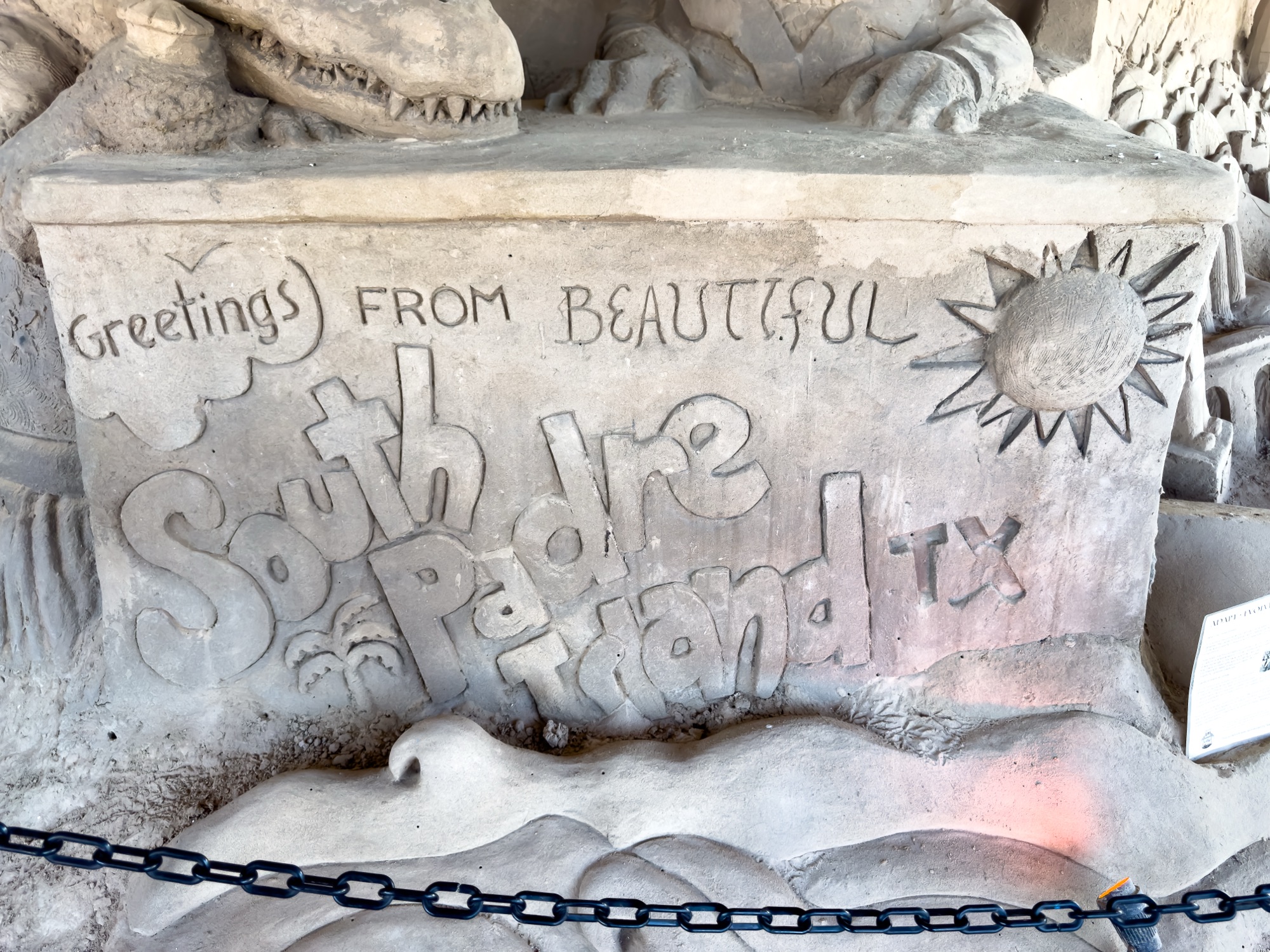
    To wrap up the day, we visited the South Padre Island Sand Castle Village, where Anubis’ own masterpiece stood among a collection of stunning sculptures. Each castle was a work of art, full of whimsy and intricate detail. It was the perfect way to end a day that celebrated creativity and nature in equal measure.

  • Southbound to the Sea: Kicking Off Our South Padre Getaway

    Southbound to the Sea: Kicking Off Our South Padre Getaway

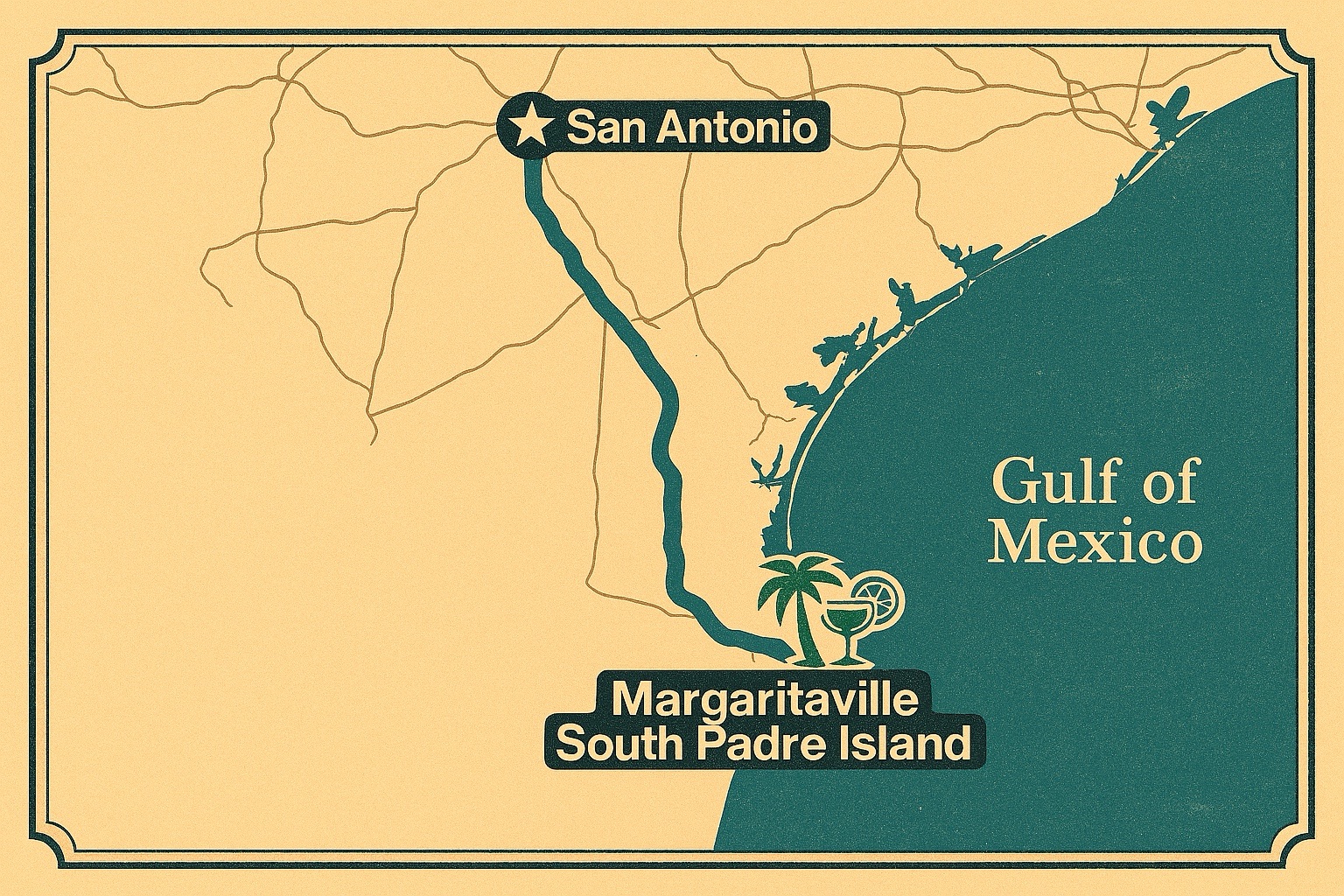
    We hit the road around noon, leaving San Antonio behind and heading south toward the coast for a much-needed escape. With bags packed and an audiobook queued, we head to island time—because nothing says “vacation mode” like the promise of sun, surf, sand, and relaxation.

    Our destination? Margaritaville South Padre Island, where the beach meets laid-back island vibes. It’s the perfect spot to unwind, recharge, and soak in the coastal beauty of Texas. Whether it’s morning walks on the beach, sunset views over the Gulf, or simply lounging with a cold drink in hand, we’re ready to embrace every moment.

    Stay tuned as we share highlights from our tropical timeout—#SouthPadre2025 is just getting started!

  • 🦣 A Mammoth-Sized Memory in Waco

    Exploring Prehistoric Texas with Our Granddaughter

    In early May, on our way to a convention in Dallas, we made a delightful stop at Waco Mammoth National Monument—and we’re so glad we did! This hidden gem in Central Texas offered a fascinating glimpse into the Ice Age, and sharing it with our granddaughter made the experience even more special.

    The highlight of our visit was the Dig Shelter, where we stood just feet away from the fossilized remains of Columbian mammoths, preserved exactly where they were discovered. The shelter is beautifully designed, allowing visitors to view the excavation site while learning about the mammoths’ story and the ongoing research.

    Our granddaughter was captivated by the size of the bones and the idea that these gentle giants once roamed the very ground we were standing on. The rangers were friendly and knowledgeable, and the shaded trails made for a peaceful walk through the surrounding woods.

    We captured a few moments on video, which you can watch below, and we’ve also shared a gallery of photos from our visit here:

    👉 View Our Waco Mammoth Photo Album

    If you’re ever passing through Waco, this site is well worth a stop—especially for families. It’s a perfect blend of science, history, and wonder.

    Until the next adventure,

    —The Tezels

    Watch our TikTok Post

    Bones of a camel embedded in the stone at the dig site.
Verified by MonsterInsights