Tag: National Park

  • Ranger PamPaw’s Guide To

    Big Bend National Park

    Brewster County, West Texas  ·  Where the Desert Meets the Sky

    ▶   A Note from Ranger PamPaw

    I have a connection to Big Bend that stretches back further than I can remember — literally. In 1964, my family brought me to this park when I was just one year old. My grandparents, who were travelers at heart and had explored parks and landmarks across the country and around the world, made sure Big Bend was on that list. My grandmother captured the whole trip on 8mm film, and I still have that footage today. There is something quietly extraordinary about watching those faded, flickering frames — knowing that the canyon walls and desert skies in the background are the same ones I have returned to dozens of times since.

    In November of 1995, I brought the woman who would become my wife to Big Bend for the first time. We camped in the Chisos Basin, climbed Emory Peak, and wandered every corner of the park we could reach. We have always looked back on that trip as one that brought us together. We have never made it back to Emory Peak — but it remains our spot. Then in 2005, we brought two of our sons on a spring break trip, and watched them discover their own favorite corner of the park: the big sandhill at the mouth of Boquillas Canyon, where they could have played for hours. In 2014, our daughter spent the summer as an intern at Big Bend — another family first, another generation of Tezels finding their footing in this remarkable place.

    There is one image that never leaves me: sitting up in the Chisos Basin as the sun drops toward the horizon, watching the light pour through The Window and spill out into the Chihuahuan Desert below. It is the kind of moment that stops you cold and reminds you exactly why these places exist. Big Bend is not convenient. It is not easy to get to. But I have never once regretted the drive.

    — Ranger PamPaw

    ▶   Quick Facts

    DesignationNational Park
    EstablishedJune 12, 1944
    LocationBrewster County, West Texas
    Size801,163 acres (1,252 sq mi) — larger than Rhode Island
    Entrance Fee$30 per vehicle (7 consecutive days) · $25 per motorcycle · America the Beautiful Pass accepted
    PaymentCashless — credit/debit card only at all entrance stations
    Best SeasonSeptember through early May (avoid summer — desert temps can exceed 115°F)
    Nearest CityAlpine, TX (~80 miles); Midland, TX (~230 miles)
    Park HeadquartersPanther Junction Visitor Center
    UNESCO DesignationInternational Biosphere Reserve · Globally Important Bird Area
    NPS Websitenps.gov/bibe

    ▶   Texas’ Gift to the Nation

    A Park Born from Texas Pride

    Big Bend National Park did not come to be the way most national parks do. It began as a state initiative — in 1933, the Texas Legislature established Texas Canyons State Park in the remote canyon country along the Rio Grande. The name was soon changed to Big Bend State Park, and the Chisos Mountains were added to its boundaries. The National Park Service investigated the site in 1934 and quickly recognized it as, in their own words, “decidedly the outstanding scenic area of Texas.” Congress passed enabling legislation on June 20, 1935, and over the next several years, the State of Texas worked to acquire the land — using public funds, private donations, and the determined efforts of Texas businessman Amon Carter and others who believed this wild, remote country deserved the same protection as Yellowstone or the Grand Canyon.

    On June 6, 1944 — D-Day — Amon Carter personally presented the deed to the park to President Franklin D. Roosevelt on behalf of the people of Texas. Six days later, on June 12, 1944, Big Bend National Park was officially established. President Roosevelt, who had taken a personal interest in the park for years, reportedly felt the nation deserved some good news that week. Texans have called it “Texas’ Gift to the Nation” ever since — and it is a gift that keeps giving, to anyone willing to make the journey.

    A Land of Extraordinary Contrasts

    At 801,163 acres — larger than the entire state of Rhode Island — Big Bend is the largest protected area of Chihuahuan Desert topography in the United States. It is also the only national park in the country to contain an entire mountain range within its boundaries: the Chisos Mountains, rising more than a mile above the surrounding desert floor to Emory Peak at 7,825 feet. The result is an almost theatrical range of environments packed into one park. Temperatures at Rio Grande Village on the river can top 115°F in summer, while the Chisos Basin sits up to 20°F cooler, wrapped in pinyon pine, juniper, and Texas madrone.

    The Rio Grande forms 118 miles of the park’s southern boundary, carving three of the most spectacular river canyons in North America — Santa Elena, Mariscal, and Boquillas — before winding eastward into the Chihuahuan Desert. The park protects more than 1,200 species of plants, 450 species of birds, 56 species of reptiles, and 75 species of mammals. Geological features span millions of years: sea fossils from ancient oceans, dinosaur bones, volcanic dikes, and the slow, layered storytelling of deep time written in stone.

    Ten Thousand Years of Human History

    Long before the park had a name, people had been living in and moving through this landscape for nearly 10,000 years. The Chisos Indians — nomadic hunters and gatherers — inhabited the Big Bend for centuries before the Mescalero Apache pushed through in the early 18th century, followed by the Comanche, who used the famous Comanche Trail on their raids into Mexico. Spanish explorers mapped and named the Rio Grande. Miners, ranchers, and homesteaders came and went, leaving behind ruins, stories, and a deep human texture that is very much part of the park’s identity today. The archaeological record is rich, and the ghost towns and old ranch sites scattered across the desert add a poignant, human-scale counterpoint to the grandeur of the canyons and mountains.

    Why Big Bend Matters

    Big Bend is one of the least-visited major national parks in the country — not because it lacks for grandeur, but because it demands something of you before you arrive. The nearest major city is hundreds of miles away. The roads are long and remote. Cell service is largely absent. But that very remoteness is the point. Big Bend is one of the last places in the lower 48 where you can genuinely feel the scale of the American wilderness — where the sky goes on forever, the river runs free through canyon walls hundreds of feet high, and the silence is something you carry back with you long after you leave.


    ▶   Touring the Park: The Chisos Mountains

    The Chisos Basin

    The Chisos Basin is the heart of the park and the hub for most visitors. Cradled in a volcanic depression in the Chisos Mountains at around 5,400 feet elevation, it offers a cooler refuge from the desert heat, a full-service lodge and restaurant, camping, and access to many of the park’s most beloved trails. The iconic profile of Casa Grande looms over the basin, and The Window — a natural notch in the western rim — frames spectacular sunset views over the Chihuahuan Desert. If you can arrange only one evening in the park, spend it at The Window overlook as the sun goes down.

    Lost Mine Trail ⭐ Ranger PamPaw Favorite

    The Lost Mine Trail is, in this guide’s opinion, the single best hike in Big Bend. Beginning at Panther Pass on the Basin Road, the 4.8-mile round-trip trail climbs through pine-oak woodland with sweeping views of the Chisos Mountains and the desert basin opening below. The trail is well-marked and moderately strenuous — a steady climb with a big payoff. The ridgeline views near the summit take in layer upon layer of landscape, from the high peaks to the Rio Grande canyon country far below. Go early to beat the heat and the crowds.

    📺 Watch: Lost Mine Trail | Tuesdays on the Trails | Big Bend National Park

    The Window Trail

    The Window Trail drops 5.6 miles round-trip from the Chisos Basin trailhead down through Oak Creek Canyon to the lip of The Window pour-off — a narrow slot where the canyon floor drops away into the desert below. It is a pleasant descent through shaded riparian vegetation, with the reward of standing at the pour-off edge looking west across the Chihuahuan Desert. Remember: what goes down must come back up, and the return climb in afternoon heat can be demanding. An easier alternative is the Window View Trail, a short, mostly flat 0.3-mile walk from the lodge area that delivers a classic view of The Window from above.

    Emory Peak & The South Rim

    For those with the legs and the time, the High Chisos trails are among the finest backcountry experiences in the Southwest. Emory Peak — the park’s highest point at 7,825 feet — requires a strenuous 9-mile round-trip from the Chisos Basin trailhead, with a short rock scramble near the summit that rewards with 360-degree views across Texas and into Mexico. The South Rim loop (12–14 miles depending on route) offers one of the most dramatic overnight or long day-hike experiences in the park, with sheer cliff views dropping away to the desert thousands of feet below. These trails are best tackled in spring or fall; carry plenty of water and plan your start time carefully.


    ▶   Touring the Park: The Chihuahuan Desert

    Grapevine Hills Trail

    The 2.2-mile round-trip Grapevine Hills Trail is a desert gem and a wonderful introduction to Big Bend’s igneous rock landscape. The trail winds through a jumbled field of rounded granite boulders before arriving at a natural balanced rock formation — two massive boulders wedged between canyon walls, framing a perfect window to the sky. The hike is relatively easy and suitable for most ability levels, making it a great option for families or as a warm-up for longer days. The trailhead is reached via a dirt road off the Maverick Road, so high-clearance vehicles are recommended.

    Tuff Canyon

    Tuff Canyon is one of the most geologically fascinating stops along the Ross Maxwell Scenic Drive, and one of the easiest to visit. About 30 million years ago, violent volcanic eruptions showered this part of the Chihuahuan Desert with ash and rock fragments that accumulated while still glowing hot, welding together under heat and pressure into the pale, layered material called tuff. Blue Creek, fed by rains in the distant Chisos Mountains, has since carved a spectacular narrow gorge through those layers, exposing the volcanic story in the canyon walls. Three railing-protected overlooks — reached via a 0.5-mile loop on the canyon rim — offer vertiginous views straight down into the gorge. For a more immersive experience, a short spur trail descends to the canyon floor, where you can walk between walls pocked with holes left by bats and embedded with darker volcanic clasts. The contrast between the soft pale tuff and the harder dark rhyolite further up the canyon tells the full story of Big Bend’s fiery past. Plan about 30–45 minutes; combine it with Santa Elena Canyon for a full Ross Maxwell Scenic Drive day.


    ▶   Touring the Park: The River Canyons

    Santa Elena Canyon

    Santa Elena Canyon is one of the most dramatic natural features in the entire national park system. At the end of the Ross Maxwell Scenic Drive, the Rio Grande squeezes between canyon walls that rise 1,500 feet straight up — one wall in the United States, the other in Mexico. The 1.7-mile round-trip trail crosses Terlingua Creek (a rock-hop in dry seasons, a wade in wet ones), climbs stone steps into the canyon’s narrow mouth, and delivers a view of sheer vertical limestone that is genuinely humbling. It is a short hike but one of the most memorable in the park. The drive out on the Ross Maxwell Scenic Drive is itself well worth the time.

    📺 Watch: Santa Elena Canyon Trail | Tuesdays on the Trail | Big Bend National Park

    Boquillas Canyon

    On the eastern side of the park, Boquillas Canyon is quieter than Santa Elena but equally stunning in its own way. The 1.4-mile round-trip trail winds through desert scrub before reaching the river and the canyon entrance, where towering limestone walls glow orange and gold in the afternoon light. Just before the canyon mouth, a large sandhill on the Mexican bank has a way of stopping kids in their tracks — it begs to be climbed, slid down, and climbed again. The Boquillas Canyon area is also the location of the park’s international border crossing to the small Mexican village of Boquillas del Carmen, a unique and worthwhile side trip when the crossing is open.

    📺 Watch: Boquillas Canyon Trail | Big Bend National Park | Tuesdays on the Trail (Special Edition)


    ▶   Know Before You Go

    The Remoteness is Real

    Big Bend’s isolation is not an inconvenience — it is a defining characteristic of the park. The nearest major services are in Alpine, roughly 80 miles away, or Midland, more than 200 miles. There are two gas stations within the park, and a couple of small stores where you can pick up basic supplies — but do not count on them for a full resupply. Come prepared. Fill up before you enter, bring more water than you think you need (a gallon per person per day is the minimum recommendation), and plan your meals. The park has a hard time recruiting and retaining staff precisely because of this remoteness, so services inside the park may be limited or unavailable on any given day.

    Cell Service & Connectivity

    Cell service is limited to the area around Panther Junction (park headquarters) and is largely absent everywhere else in the park. Download your offline maps before you arrive, save NPS trail guides to your device, and let someone know your itinerary. This is not a park where you want to rely on a live connection for navigation or emergency communication. Satellite communicators are a worthwhile investment for anyone heading into the backcountry.

    When to Visit

    Big Bend is fundamentally a winter park. The optimal window runs from September through early May, when temperatures in the desert are manageable and the mountains are at their finest. Summers are brutally hot — desert temperatures routinely top 100°F and can exceed 115°F at lower elevations. The Chisos Mountains run up to 20°F cooler than Rio Grande Village, but summer heat in the basin is still serious. Even in the optimal season, avoid holiday weekends and spring break periods if you can — the park can become very busy, and the infrastructure strains under the load. Weekday visits in October, November, February, or March offer the best combination of weather, crowds, and trail conditions.

    Lodging & Camping

    The Chisos Mountains Lodge is the only lodge inside the park, offering motel-style rooms and historic stone cottages originally built by the Civilian Conservation Corps. It books up well in advance during peak season — reserve early. The park has three developed campgrounds: Chisos Basin, Rio Grande Village, and Cottonwood (near Castolon). All three have their own character, and experienced visitors often have a strong preference. For those seeking more solitude, the park offers backcountry road campsites accessible by high-clearance vehicle and true backcountry sites in the Chisos requiring permits. Just outside the park, options like Big Bend Station provide a comfortable base for multi-day visits.

    ▶   Park Map

    Big Bend National Park Map

    ▶   First Encounters

    Before this visit, Ranger PamPaw sat down to share what Big Bend means to him — the first park he ever visited, the first park they visited as a couple, and a place that has woven itself through a lifetime of family milestones. Watch the First Encounters episode before you go.

    Our First Visits to Big Bend National Park | First Encounters Series

    ▶   Further Exploration

    ▶   The Ranger PamPaw Podcast

    Hear More About Big Bend

    Big Bend has been a part of Ranger PamPaw’s life longer than just about anywhere else — and it comes up throughout the podcast. Subscribe to The Ranger PamPaw Podcast for stories, perspectives, and park wisdom from a lifetime on the road.

  • Trail Guide – Dune Succession Trail

    Where the Sand Dunes Meet the Shores of Lake Michigan

    The Dune Succession Trail at Indiana Dunes National Park is one of the most quietly remarkable short hikes in the National Park System — not because of what happened here, but because of what is still happening. This one-mile loop at West Beach walks you through four distinct stages of ecological succession, from open sand on the Lake Michigan shoreline through a sheltered jack pine grove, up 250 to 270 boardwalk stairs to a sweeping dune-crest view over the water, and back down to the beach. It is a trail where the geology, the botany, and the view all work together to tell the same story: how this shoreline has been building itself, one generation of plants at a time, since the glaciers retreated roughly 14,000 years ago.

    Trail Facts

    • Distance: ~1.0 mile (loop, including road return segment)
    • Elevation Gain: ~100 feet — concentrated in 250–270 boardwalk stairs
    • Difficulty: Moderate (easy terrain, strenuous stair sections)
    • Trail Type: Loop (boardwalk, beach sand, paved road return)
    • Typical Hiking Time: 45–60 minutes
    • Trailhead Address: 300 West Beach Road, Gary, IN 46403
    • Fees: Day-use fee required at West Beach (no fee for trail only, outside summer season)
    • Pets: Allowed on leash (6 ft or shorter); not permitted in lifeguarded swim areas

    Indiana Dunes National Park is one of the most visited national parks in the country and one of the most ecologically diverse — home to over 350 bird species and nearly 1,100 plant species within a surprisingly compact stretch of Lake Michigan shoreline. The Dune Succession Trail is the park’s signature short hike and its best single introduction to what makes Indiana Dunes unlike anywhere else.

    Getting to the Trailhead

    The Dune Succession Trail begins at the West Beach area of Indiana Dunes National Park, accessed via West Beach Road off County Line Road near Gary, Indiana. The large West Beach parking lot has room for several hundred cars. The trailhead is at the northeast corner of the parking lot, where the trail joins the road heading toward the bathhouse. Follow the road toward the lake — the trail breaks off to the left about 0.2 miles before you reach the bathhouse, marked by signage pointing into the dunes. The road itself becomes the return leg of the loop, making this a true point-to-point circuit back to the parking area.

    Indiana Dunes National Park sits on the southern shore of Lake Michigan in northwest Indiana, roughly 40 miles southeast of downtown Chicago. It is easily reached from Chicago via I-90/94 or the South Shore Line commuter rail — making it one of the most accessible national parks in the country for urban visitors. From Indianapolis, the drive is about two hours north on I-65.

    Hiking the Trail

    From the trailhead at the northeast corner of the parking lot, the trail immediately steps onto boardwalk and begins climbing into the dunes. The boardwalk is the defining feature of the first section — it guides you up and over the initial dune face while protecting the fragile vegetation on either side. Marram grass and cottonwood anchor the sand here, pioneer species doing the slow work of stabilizing a surface that would otherwise shift with every wind. This is Stage One of the succession the trail is named for, and the boardwalk puts you right in the middle of it.

    The trail descends into the swale between the first and second dune ridges, where the jack pine grove waits — and the character of the hike changes entirely. The jack pines are low and wind-sculpted, clinging to a sandy substrate that most trees cannot tolerate. They are Stage Two: pioneer trees that moved into open dune sand long after the grasses arrived, providing shade and organic matter that will eventually allow the black oaks and hickories of the mature forest to take hold. Standing in the grove, sheltered from the lake wind, it is easy to forget you are on a dune at all. Take your time here. It is one of the quietest and most distinctive spots on any trail in the Great Lakes region.

    From the swale, the trail climbs again — and this is where the stairs begin. The boardwalk ascends the face of the second dune ridge in a long, sustained staircase of 250 to 270 steps. It is a genuine workout, but the view building with every landing keeps you moving. At the crest, the lake opens up: Lake Michigan, wide and blue-grey, stretching north to the horizon. On a clear day, the Chicago skyline appears to the west across the water. Even in overcast conditions, the scale of the view is arresting — an inland sea, framed by dune grass and the tops of oaks below.

    Highlights Along the Way

    The Boardwalk and the Four Stages of Succession

    The trail’s name is its curriculum. Ecological succession is the process by which bare ground is progressively colonized by increasingly complex communities of plants and animals over time — and the Indiana dunes are one of the places where that process was first formally studied. In the early 1900s, University of Chicago botanist Henry Cowles conducted groundbreaking research here, documenting how plants colonize open sand and gradually transform it into forest. The concept he developed — plant succession — became foundational to the science of ecology. Walking the Dune Succession Trail, you are walking through Cowles’s original field site, with the four stages of that progression laid out before you in the space of a single mile: open sand, cottonwood and marram grass, jack pine, and mature deciduous forest.

    The Jack Pine Grove

    The grove in the swale between the first and second dune ridges is one of the most memorable spots on the trail. Jack pines are tough, resinous trees adapted to poor soils and fire — in many ecosystems they depend on fire to open their cones and release seeds. Here, they fill a transitional role: too hardy for bare sand, too shade-intolerant to survive once the oaks close in above them, they occupy an ecological middle ground that exists only because the dunes keep shifting the timeline. Every swale and ridge at West Beach is at a slightly different stage of succession, which is why the grove feels like its own enclosed world rather than simply a section of larger forest.

    The Dune Crest and Lake Michigan View

    The climb up the boardwalk stairs delivers one of the better views available on a short trail anywhere in the Midwest. From the dune crest, Lake Michigan dominates the northern horizon — one of the five Great Lakes, holding roughly 21 percent of the world’s surface fresh water. The Chicago skyline, visible on clear days about 40 miles to the west, provides a striking contrast: one of the world’s great cities, framed by a glacially formed freshwater sea and a shoreline that has been ecologically active for ten thousand years. The descent from the crest drops you quickly through mature deciduous forest — black oak, sassafras, hickory — before the trail emerges onto the beach.

    West Beach and the Return Loop

    The trail deposits you onto West Beach, where the sand is wide and the lake stretches away to the north. A short walk along the shoreline before climbing the steps back up to the bathhouse reminds you how unusual this landscape is — a Great Lakes beach within an hour of one of the largest cities in North America, protected as a national park since 1966 and elevated to full National Park status in 2019. The return leg follows West Beach Road back through the parking area, completing the loop through all four ecological zones in the space of about a mile.

    What Makes This Trail Special

    The Dune Succession Trail is short, but it earns its place in the National Park System. In about a mile, it walks you through a living ecology textbook — the same landscape where the science of plant succession was born — while delivering a lake view that stops most people in their tracks. The jack pine grove in the swale is something you don’t expect and don’t forget. The stairs are a genuine workout that pays off at the top. And arriving on the beach at the end, stepping out of the forest onto Lake Michigan sand, is one of those small trail moments that lands differently than it has any right to. Indiana Dunes is one of the most ecologically complex and historically significant stretches of shoreline in the country, and the Dune Succession Trail is the best single hour you can spend understanding why.

    Tips for Visiting

    • The trailhead is at the northeast corner of the West Beach parking lot — follow the road toward the bathhouse and watch for the trail sign breaking left into the dunes after about 0.2 miles.
    • Wear sturdy shoes with grip. The boardwalk stairs can be slippery in wet or sandy conditions, and the beach section is soft sand.
    • Stay on the boardwalk. The dune vegetation is fragile — even a few footsteps off-trail can trigger erosion that takes years to recover.
    • Bring water. There are no water sources on the trail itself; the bathhouse at West Beach has facilities available seasonally.
    • A day-use fee applies at West Beach during the summer season (Memorial Day through Labor Day). The America the Beautiful pass is accepted. Outside of peak season, the fee area may be unstaffed.
    • Come early on weekends in summer — the West Beach parking lot can fill by mid-morning. Weekday mornings are ideal for a quieter experience on both the trail and the beach.

    The Science of the Dunes — and the Park’s History

    Indiana Dunes National Park exists in part because of its science. In the early twentieth century, University of Chicago botanist Henry Cowles studied the succession of plant communities on these dunes and published findings that helped establish ecology as a formal discipline. His work showed that bare sand dunes were not static landscapes but dynamic systems moving through predictable stages of plant colonization — a concept that reshaped how scientists understood the natural world. The dunes Cowles studied are the same dunes you walk through on the Succession Trail today.

    The park itself has a longer history of advocacy. Environmental champion Stephen Mather, the first director of the National Park Service, championed the preservation of these dunes in the 1910s. Decades of local advocacy — led in part by poet Carl Sandburg and conservationist Jens Jensen — eventually resulted in the creation of Indiana Dunes National Lakeshore in 1966. In February 2019, Congress redesignated it as Indiana Dunes National Park, making it one of the newest units in the National Park System and one of the most visited.

    Tuesdays on the Trail Video

    This trail guide pairs with our Tuesdays on the Trail video episode, where we hike the Dune Succession Trail at West Beach and walk through the four stages of dune succession — from boardwalk to jack pine grove to the Lake Michigan view at the top.

    Final Thoughts

    The Dune Succession Trail does not ask a lot — a mile, an hour, a good pair of shoes for the stairs. What it offers in return is harder to summarize: a forest growing out of sand, a grove of jack pines that feels like its own world, a lake view earned step by step, and a beach at the end that makes the whole loop feel like a small and complete story. Indiana Dunes National Park is closer to more Americans than almost any other unit in the system, and the Dune Succession Trail is the best single argument for why it deserves the trip.

    Helpful Links & Resources


    Tezels on the Road

    More trails. More stories. More perspective.

    Tezels on the Road | Tuesdays on the Trail Channel

  • Trail Guide – Overlook Ridge Trail

    Overlook Ridge Trail

    Fort Bowie National Historic Site • Arizona

    The Overlook Ridge Trail is the return option that changes how you understand Fort Bowie. Instead of retracing your steps, this route climbs above the fort and rewards you with sweeping views across Apache Pass—showing why this location mattered, and how carefully it was chosen.

    It’s a more exposed and more strenuous way back to the trailhead, but the perspective it provides is hard to match.

    Trail Overview

    • Trail Name: Overlook Ridge Trail
    • Park / Site: Fort Bowie National Historic Site
    • Location: Ridge above the fort ruins; reconnects with the main route to the trailhead.
    • Distance: Third-party estimates commonly place this segment around ~1.2–1.3 miles (varies by mapping source)
    • Difficulty: More strenuous than the main route (steeper, more exposed)
    • Best Use: As a return route to form a loop with the Fort Bowie Access Trail

    Where the Overlook Ridge Trail Fits

    Most visitors reach Fort Bowie by hiking the main access route through Apache Pass. From the fort area, the Overlook Ridge Trail provides an alternate return that climbs above the site and reconnects with the main trail closer to the trailhead.

    Hiking the Ridge

    The climb is where you feel the difference: the route is steeper and more exposed, and the ridge puts you out in the open where sun and wind are part of the experience. In return, you gain the big-picture view—looking down on the fort and across the surrounding landscape.

    Highlights Along the Way

    • High-angle views looking down on the fort ruins.
    • Wide views across Apache Pass and surrounding mountain ranges.
    • A stronger sense of why this site was strategically located.

    What Makes This Trail Special

    The Overlook Ridge Trail is about perspective. The main route brings you into the story through artifacts and landscape; the ridge brings you above the story and shows you the geography that shaped it. Together, the two trails make a loop that feels complete. [1](https://www.mypacer.com/routes/oi4b6v/overlook-ridge-trail-hiking-bowie-arizona)

    Tips for Visiting

    Watch the Trail on Tuesdays on the Trail

    We used the Overlook Ridge Trail as our return route from Fort Bowie, highlighting the views and the context it adds to the hike.

    Helpful Links & Resources

    Explore More with Tezels on the Road

    Find more trail guides, videos, and travel stories from our journeys through national parks and public lands.

  • Trail Guide – Fort Bowie Access Trail

    Fort Bowie Access Trail

    Fort Bowie National Historic Site • Arizona

    The Fort Bowie Access Trail is one of those hikes where the walk is inseparable from the place you’re visiting. Fort Bowie is a hike-in historic site reached on foot through Apache Pass, and that approach puts the story in the landscape long before you reach the fort ruins.

    Along the way, you pass layers of history—including the ruins of the Butterfield Overland Mail stage station and a small cemetery—before arriving at the broad hillside of fort foundations and interpretive areas.

    Trail Overview

    • Trail Name: Fort Bowie Access Trail
    • Park / Site: Fort Bowie National Historic Site
    • Location: Near Bowie, Arizona (Apache Pass)
    • Distance: ~1.5 miles one way to the fort / visitor center (about ~3 miles round trip)
    • Difficulty: Easy to Moderate (sun exposure; uneven footing in places)
    • Trail Type: Out & back (or combine with Overlook Ridge for a loop option)
    • Typical Hiking Time: ~2–3 hours round trip plus time exploring the ruins

    Getting to the Trailhead

    Getting to the Fort Bowie trailhead is part of the experience. From the highway, you follow an unpaved road through Apache Pass to the parking area. From there, Fort Bowie is reached on foot.

    Tip: Cell service can be limited in remote areas. Download maps ahead of time, start earlier in the day, and carry water—especially in warmer months.

    Hiking the Trail

    The walk in is about a mile and a half one way, and it does something few park sites do: it slows you down and places the story in the landscape before you ever reach the ruins.

    Along the trail, you pass the remains of the Butterfield Overland Mail stage station—an important stop along a transcontinental route—and then the post cemetery, a quiet reminder of the human cost of life and conflict in this place.

    Fort Bowie was established to protect Apache Pass and Apache Spring, a reliable water source that made this area strategically important. The fort and surrounding landscape became central to the conflict between the U.S. Army and the Chiricahua Apache during the Apache Wars.

    Highlights Along the Way

    • Apache Pass landscapes and big-sky desert views.
    • Butterfield stage station ruins (wide views and close detail)
    • Post cemetery and interpretive waysides
    • Fort foundations spread across a broad hillside

    History & Context

    Fort Bowie preserves the story of a landscape shaped by travel, water, and conflict. Today, the National Park Service describes the fort and visitor center as accessed by a three-mile scenic loop hike through the historic ground of Apache Pass.

    What Makes This Trail Special

    The Access Trail makes Fort Bowie feel earned. The approach builds context—stage route ruins, cemetery, water source, and landscape—so when you finally stand among the foundations, the place makes sense in a deeper way.

    Tips for Visiting

    • Water & sun: carry water and sun protection—shade can be limited.
    • Footing: expect uneven sections and desert wash crossings.
    • Time: allow extra time for waysides, ruins, and the visitor center area.

    Watch the Trail on Tuesdays on the Trail

    This trail guide pairs with our Tuesdays on the Trail episode on Fort Bowie—walking the route through Apache Pass and exploring the ruins.

    Helpful Links & Resources

    Explore More with Tezels on the Road

    Find more trail guides, videos, and travel stories from our journeys through national parks and public lands.

  • Gila Cliff Dwellings National Monument: Ranger PamPaw’s Guide

    Gila Cliff Dwellings National Monument: Ranger PamPaw’s Guide


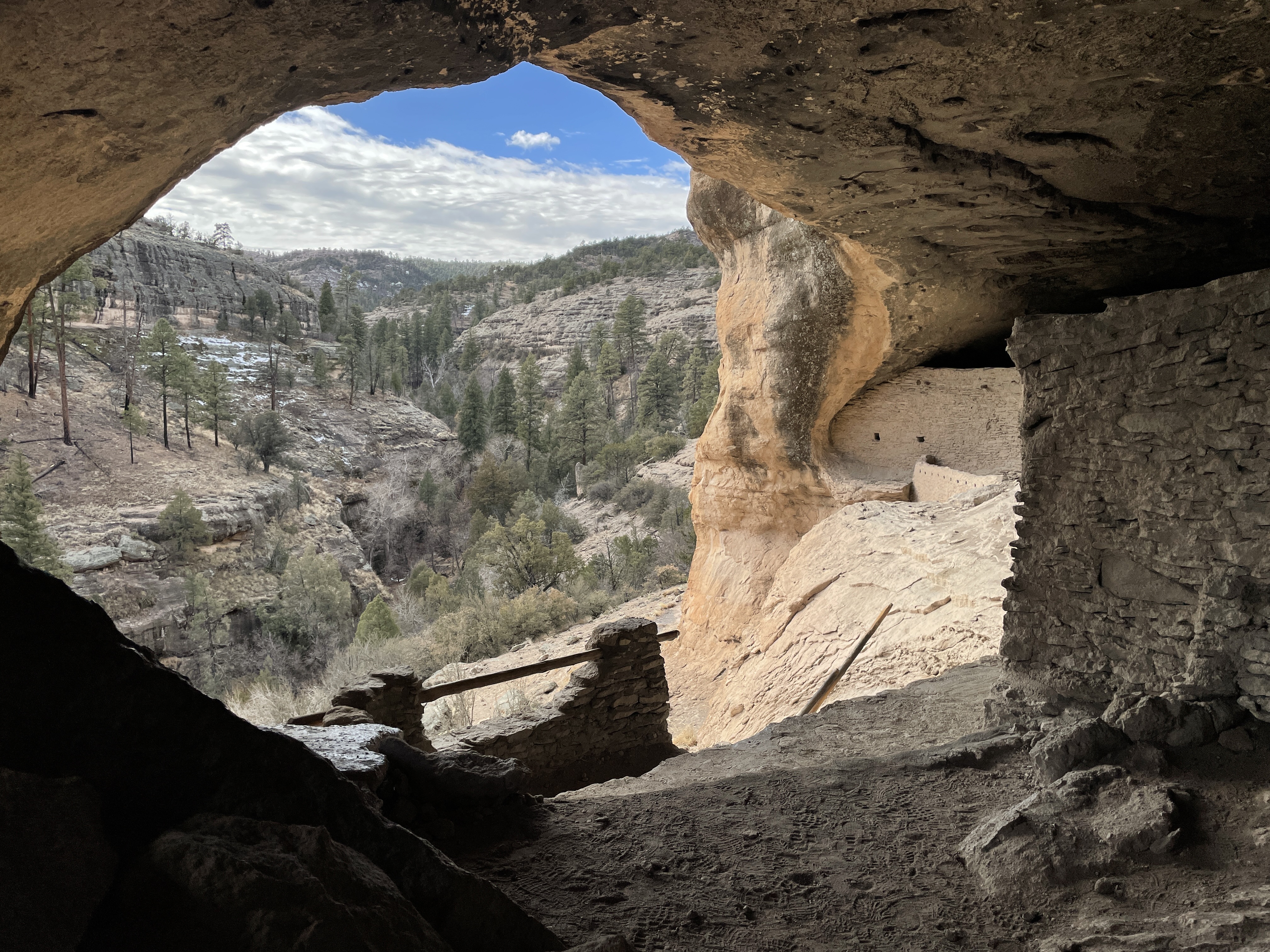
    Tucked deep within the mountains of southwestern New Mexico, Gila Cliff Dwellings National Monument preserves the remarkable remains of ancient homes built within natural caves. This companion guide to our First Encounters episode offers practical context, history, and planning information to help you prepare for your own first visit.

    Quick Facts

    • Location: Southwestern New Mexico, north of Silver City
    • Established: 1907
    • Preserved Resource: Cliff dwellings built by the Mogollon culture in the late 1200s
    • Setting: Surrounded by the Gila Wilderness, the nation’s first designated wilderness area
    • Entrance Fee: None

    Why Gila Cliff Dwellings Matter

    The cliff dwellings preserved here were home to people of the Mogollon culture for a short period in the late 13th century. Built within five natural caves above Cliff Dweller Creek, these rooms sheltered families, stored food, and formed a small community nested into a rugged landscape.

    Unlike many Southwestern archaeological sites, Gila’s dwellings are not set in an arid desert environment. Instead, they sit within a wooded canyon, part of a mountain ecosystem that offered water, game, and plant resources.

    Visiting the Cliff Dwellings

    The paved road into Gila Cliff Dwellings National Monument winds through the Gila National Forest before ending at the trailhead for the Cliff Dwelling Trail. From there, a short but moderately steep loop trail leads visitors up into the canyon and directly into the caves.

    • Trail Length: About 1 mile round trip
    • Elevation Change: Approximately 180 feet
    • Access: Ladders and uneven stone steps are required to enter the dwellings

    Once inside, visitors can walk through the rooms and look out across the canyon much as the original occupants once did.

    Know Before You Go

    • Cell service is extremely limited or nonexistent
    • Summer temperatures can be warm, even in the mountains
    • Afternoon thunderstorms are common during monsoon season
    • The trail includes ladders and narrow passages that may be challenging for some visitors

    The Gila Wilderness Connection

    Gila Cliff Dwellings National Monument is uniquely situated inside the Gila Wilderness, the first area in the United States formally designated as wilderness. This setting shapes the experience of visiting the monument, giving it a sense of remoteness that feels increasingly rare.

    Visitors often combine a stop at the monument with hiking, camping, or scenic drives in the surrounding national forest.

    Visitor Center & Nearby Camping

    A joint National Park Service and U.S. Forest Service visitor center sits near the entrance to the monument, offering orientation, exhibits, and a small bookstore.

    Several Forest Service campgrounds are located nearby along the creek, making it easy to turn a visit into an overnight stay.

    Further Exploration

    First Encounters Video

  • Chiricahua National Monument

    Ranger PamPaw’s Guide To

    Chiricahua National Monument

    Arizona’s Wonderland of Rocks · Willcox, Arizona

    ▶ A Note from Ranger PamPaw

    “Chiricahua stops people in their tracks. There’s nowhere else in the park system quite like it.”

    Welcome to Arizona’s Wonderland of Rocks — a sky-island landscape of volcanic pinnacles, balanced rocks, and deep natural and cultural history. This guide supplements our First Encounters episode on Chiricahua, offering everything you need to plan your own visit.

    Few national monument units reward a slow visit more than this one. The drive in, the hike through the formations, the quiet of the campground at night — Chiricahua is the kind of place that earns a return trip before you’ve even left.

    — Ranger PamPaw

    ▶ Quick Facts

    Location12856 E Rhyolite Creek Rd, Willcox, AZ 85643
    Established1924 — to protect its unique hoodoos, balancing rocks, and cultural sites
    Why It’s FamousThousands of rhyolite rock pinnacles known as the “Wonderland of Rocks”
    AdmissionFree — no entrance or parking fees
    CampgroundBonita Canyon — 23 sites, reservation-only, vehicle length restrictions apply

    ▶ Highlights for First-Time Visitors

    Massai Point

    The 8-mile Bonita Canyon Drive leads to 360° views of the Wonderland of Rocks and surrounding valleys. A perfect introduction if you’re short on time.

    Echo Canyon Loop (3.3 miles, moderate)

    Slots, grottoes, balancing rocks, and dramatic cliff formations — this is the classic Chiricahua hike.

    Faraway Ranch Historic District

    Learn how the Erickson and Riggs families promoted the Wonderland of Rocks and paved the way for the monument’s creation. The ranch is under renovation but the grounds remain an excellent walk.

    ▶ Understanding the Geology

    The Turkey Creek Caldera

    Chiricahua’s formations originated from the Turkey Creek Caldera, whose massive eruption approximately 27 million years ago blanketed the region in volcanic ash. Over time, it welded into rhyolite tuff and eroded into today’s towers and spires.

    The Sky Islands

    The monument sits within the Sky Islands — isolated mountain ranges hosting diverse ecosystems ranging from desert scrub to pine forests. This ecological layering is part of what makes Chiricahua so distinctive even among Arizona’s national park units.

    📍 Why This Place Matters

    Chiricahua protects one of the most visually distinctive landscapes in the entire National Park System — and one of the least visited. The combination of volcanic geology, sky-island ecology, Apache cultural history, and pioneer ranching heritage makes it far more layered than it first appears. Give it a full day and it will reward you.

    ▶ Hiking Options

    • Echo Canyon Loop (3.3 mi) — Best first-timer experience; grottoes and slot canyons.
    • Echo Canyon Grottoes (1 mi) — Short, high-reward walk.
    • Heart of Rocks — Longer, strenuous route with named formations; great on a second visit.
    • Massai Point Nature Trail (0.5 mi) — Easy overlook walk.

    ▶ Camping at Bonita Canyon

    This shaded, historic campground offers 23 sites — reservation only — with flush toilets and potable water. No hookups or dump station. Vehicle length limit: typically 29 feet.

    ⚠️ Seasonal Alerts

    Chiricahua frequently experiences spring fire restrictions and limited access for large vehicles. Always check current alerts on the NPS website before your visit.

    First Encounters

    Further Exploration & Resources

  • Trail Guide – Cliff Dwelling Trail

    Cliff Dwellings Trail

    Gila Cliff Dwellings National Monument • New Mexico

    The Cliff Dwellings Trail at Gila Cliff Dwellings National Monument may be short, but it is one of the most memorable walks in the National Park System. This easy-to-moderate loop trail is the only way to see the monument, leading visitors through a shaded canyon and into ancient cliff dwellings built more than 700 years ago.

    • Distance: ~1 mile
    • Elevation Gain: ~180 feet
    • Difficulty: Easy to Moderate (ladders required)
    • Trail Type: Loop
    • Typical Hiking Time: ~1 hour

    This trail is the only way to access the park. While there are steps and ladders to access the cliff dwellings, most people, including families, should be able to hike at least part of the trail.

    Reaching Gila Cliff Dwellings National Monument is part of the experience. From Silver City, a winding mountain road leads deep into the Gila Wilderness, the first designated wilderness area in the United States. By the time you arrive at the trailhead at the end of Cliff Dwellings Road, the landscape already feels remote and quiet.

    In the late 1200s, people of the Mogollon culture built these dwellings and lived here for one or two generations. They constructed rooms from stone and mortar, raised families, and relied on the natural shelter provided by the caves.

    A series of ladders allows visitors to climb into the dwellings themselves. Walking through these rooms is the highlight of the hike, offering views across the canyon and a powerful sense of connection to the people who once lived here.

    The Cliff Dwellings Trail is more than a short walk. It combines natural beauty, cultural history, and a strong sense of place, all within the setting of the Gila Wilderness. Though brief, the experience leaves a lasting impression.

    • Wear sturdy shoes with good traction.
    • Take your time exploring the dwellings.
    • Visit earlier in the day for cooler temperatures and fewer crowds.
    • Follow posted rules to help protect these fragile structures.

    This trail guide pairs with our Tuesdays on the Trail video episode, where we walk the Cliff Dwellings Trail and explore the dwellings themselves.

    The Cliff Dwellings Trail may only be about a mile long, but it delivers one of the most meaningful trail experiences in southwestern New Mexico. For visitors willing to make the drive, it offers a rare chance to walk through history in a quiet, beautiful setting.

Verified by MonsterInsights