Tag: Caribbean Travel Blog

  • Southern Caribbean Cruise 2026 – Day 10

    Southern Caribbean Cruise 2026 – Day 10

    San Juan, Puerto Rico: History, Mofongo, and a Relaxed Farewell

    Our Southern Caribbean Cruise 2026 officially came to an end this morning as we woke up once again in San Juan, Puerto Rico. While the cruise itself was over, our Caribbean adventure wasn’t quite finished yet.

    After saying goodbye to the wonderful crew aboard the Grand Princess, we disembarked and headed to the airport to pick up a rental car. From there, we drove to the Courtyard by Marriott Isla Verde Beach Resort, where we dropped off our luggage and prepared to spend our final night in paradise.


    Exploring Old San Juan

    With the logistics out of the way, we made our way into Old San Juan, one of the most atmospheric and historic cities in the Caribbean. After parking, we spent the morning wandering the narrow, colorful streets of the old city, popping into shops and soaking in the sights and sounds of this vibrant port.

    Hunger eventually led us to Los Yeyo’s, a restaurant proudly known as “The House of Mofongo.” That alone made it an easy decision.

    We shared a crab mofongo along with a side of sweet plantains, and it did not disappoint. The mofongo arrived on a sizzling skillet, filling the air with an irresistible aroma. For those unfamiliar, mofongo is a traditional Puerto Rican dish made from fried plantains mashed with garlic and other ingredients. Los Yeyo’s crab mofongo was absolutely outstanding and easily one of our favorite meals of the trip.

    Castillo San Felipe del Morro (El Morro)

    After lunch, we continued exploring Old San Juan until we reached Castillo San Felipe del Morro, part of San Juan National Historic Site. Perched high on a promontory overlooking the entrance to San Juan Bay, El Morro is one of the most impressive fortifications in the Caribbean.

    Constructed over more than 250 years by Spanish engineers, El Morro reflects Spain’s determination to protect San Juan as a critical hub in the trans‑Atlantic trade routes. Walking along its massive walls and gazing out from its strategic vantage point, it’s easy to understand why such effort and resources were invested here. The fortress feels immense—an imposing, nearly impenetrable stronghold guarding the city.

    San Juan’s Defensive Network & Castillo San Cristóbal

    El Morro was only one element of San Juan’s elaborate defensive system. San Juan National Historic Site also preserves large sections of the original city walls, which completely encircled the city by 1783, as well as Fort San Juan de la Cruz (El Cañuelo) on the opposite side of the harbor.

    Our next stop was Castillo San Cristóbal, the largest fortification built by Spain in the New World. Unlike El Morro, San Cristóbal was designed primarily to defend the city from land-based attacks. Its sheer scale and layered defenses are just as impressive, showcasing remarkable military engineering and ingenuity.

    Together, these fortifications tell stories of ambition, empire, and conflict. For centuries, nations fought for control of this small but strategically vital island. Generations of soldiers lived and worked within these walls, and today visitors are inspired not only by the history, but also by the beauty and brilliance of this UNESCO World Heritage Site.

    A Relaxed Caribbean Evening

    After spending the afternoon immersed in over 500 years of history, we returned to the Courtyard by Marriott Isla Verde Beach Resort. Our room wasn’t quite ready, but that was hardly a problem. We found seats by the beach, ordered some sangria, and simply relaxed—reflecting on an unforgettable week in the Caribbean.

    Tomorrow brings a calm, easy morning before our late‑afternoon flight home to San Antonio. There’s no sign of winter weather here in San Juan, so we’re hoping that the weather on the mainland doesn’t affect our trip home.

  • 🛳️ Southern Caribbean Cruise 2026 – Day 8: Barbados’ Wild Atlantic Coast

    🛳️ Southern Caribbean Cruise 2026 – Day 8: Barbados’ Wild Atlantic Coast

    Our final port of call on our Southern Caribbean Cruise was Bridgetown, Barbados. While Barbados is often grouped with the Caribbean, the island actually sits outside the Caribbean Sea, fully exposed to the Atlantic Ocean. Overnight, we crossed the invisible line separating the Caribbean Sea from the Atlantic, arriving at an island that feels distinctly different from the others we visited on this cruise.

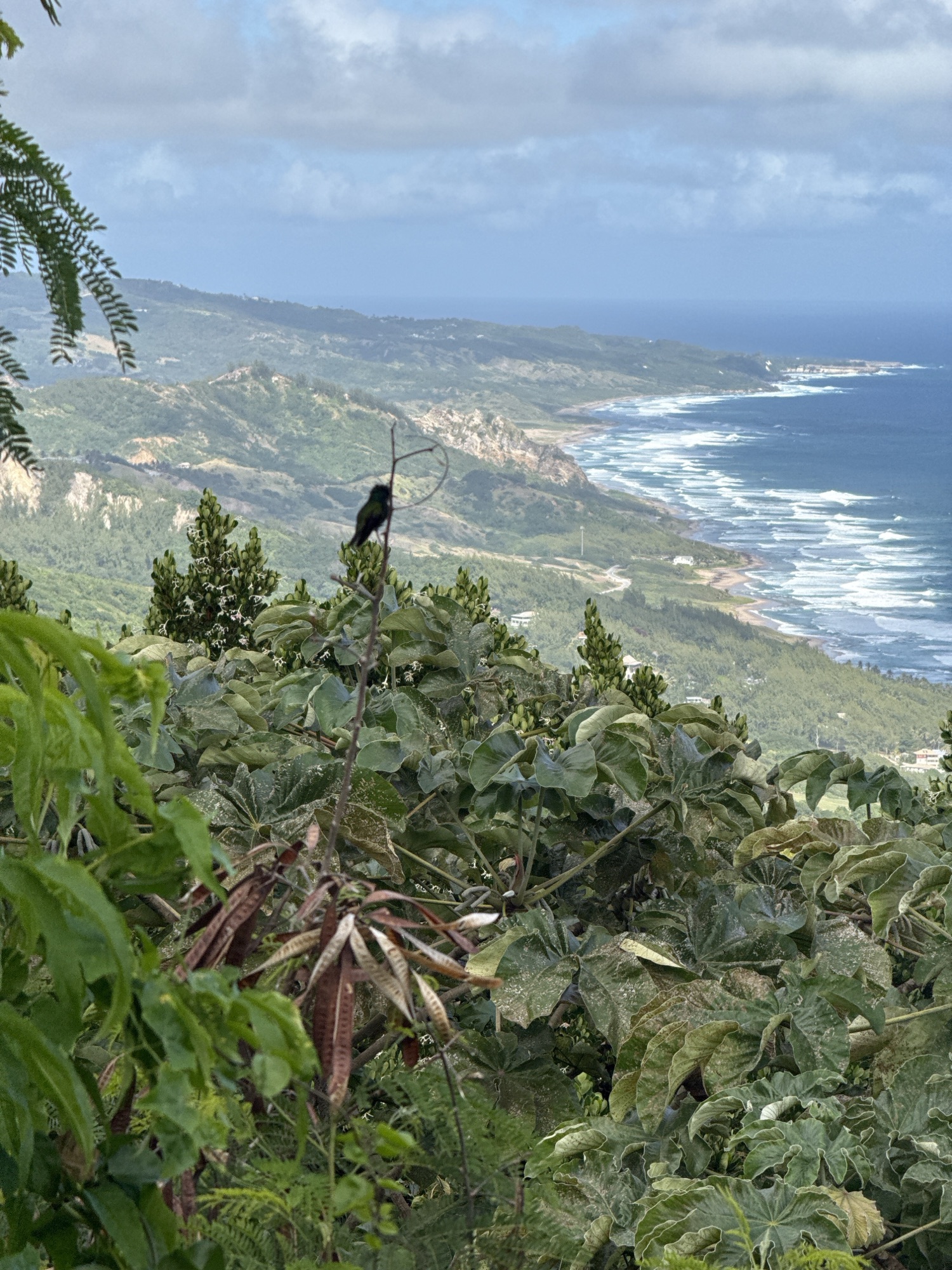
    Locals still refer to the Caribbean side of Barbados versus the Atlantic side, and the contrast is striking. The Caribbean-facing coast features calm waters and sandy beaches, while the Atlantic side is rugged and dramatic, with rocky shorelines and powerful surf. Very few boats operate along the Atlantic coast due to the treacherous tides and unforgiving shoreline.


    A Coral Island, Not a Volcanic One

    Unlike many of its Caribbean neighbors, Barbados is not volcanic. Instead, the island is an ancient coral reef that was uplifted from the ocean floor over time. Evidence of this coral origin is everywhere, especially in the limestone that makes up much of the island.

    Barbados is also not mountainous, but rather defined by gentle, rolling hills. These conditions created fertile soil, perfect for agriculture—and like much of the Caribbean, sugar cane once dominated the economy.


    4×4 Scenic Drive with Island Safari Barbados

    Today’s adventure was the 4×4 Scenic Panoramic Drive & Bathsheba Beach tour with Island Safari Barbados. Our guide, Andre, was equal parts informative and entertaining. While we were warned about plenty of bouncing during the off-road portions, the vehicle was comfortable, and the open sides provided fantastic views of the countryside.

    Climbing out of Bridgetown (before the 4×4 portion began), we passed through farmland growing sweet potatoes, cassava, and sugar cane. Along the way, we saw remnants of Barbados’ sugar plantation era—boiling houses, plantation homes, and even a 300-year-old stone bridge spanning a gully. Built by enslaved workers, the bridge stands as a sobering monument to the labor that sustained the sugar industry.


    Limestone Roads and Fossilized Coral

    The legacy of sugar cane also shaped Barbados’ road system. Cart paths were cut directly into the limestone to transport goods from inland plantations down to coastal ports. In many places, you can clearly see fossilized coral embedded in the stone, a reminder of the island’s ancient reef origins.

    One of the true off-road highlights was driving into a gully, formed when limestone caves collapse. Barbados is riddled with caves and gullies, and these areas provide some of the best up-close views of coral fossils.


    Hackleton’s Cliff: A View from 1,000 Feet

    About an hour into the tour, we made our first stop at Hackleton’s Cliff, located between the rural parishes of St. Joseph and St. John. Rising nearly perpendicular from the surrounding land, the cliff reaches 1,000 feet above sea level and offers sweeping views of Barbados’ Atlantic coastline.

    The cliff is named for Thomas Hackleton, a plantation owner who, according to local lore, died by riding his horse off the cliff after becoming entangled in a scandal. Hackleton and several others are buried here, adding a layer of haunting history to the already dramatic setting.


    Bathsheba Beach and the Atlantic Coast

    From Hackleton’s Cliff, we descended toward the coast, spotting Barbados Blackbelly sheep grazing in open fields and catching brief glimpses of the island’s famous green monkeys. Unfortunately, the monkeys were extremely camera-shy, denying us that elusive photo.

    Our second major stop was Bathsheba Beach, located on Barbados’ wild Atlantic shore. The name “Bathsheba” comes with its own legend—some say the mineral-rich waters resemble the biblical Bathsheba’s milk baths, believed to preserve beauty. Myth or not, the beach’s natural beauty is undeniable.

    We walked along the rocky shoreline, watching waves crash against dramatic rock formations while a few surfers took full advantage of the powerful Atlantic swells.


    A Nautical Farewell to Barbados

    As we sailed away from Barbados, we were treated to a fascinating maritime moment: the harbor pilot disembarking the Grand Princess. The ship doesn’t slow down as a small pilot boat pulls alongside and the pilot descends a rope ladder—a carefully choreographed nautical “dance” that’s always a thrill to watch.


    Evening Entertainment at Sea

    The evening brought excellent entertainment, starting with “Born to Dance” in the Princess Theater. Later, musicians from around the ship gathered in the Piazza to perform hits from around the world, creating a lively and celebratory atmosphere.

    Tomorrow brings a sea day as we head back toward San Juan. Our cruise may be nearing its end, but the memories—especially of Barbados’ wild Atlantic coast—will last long after we’re home.

Verified by MonsterInsights